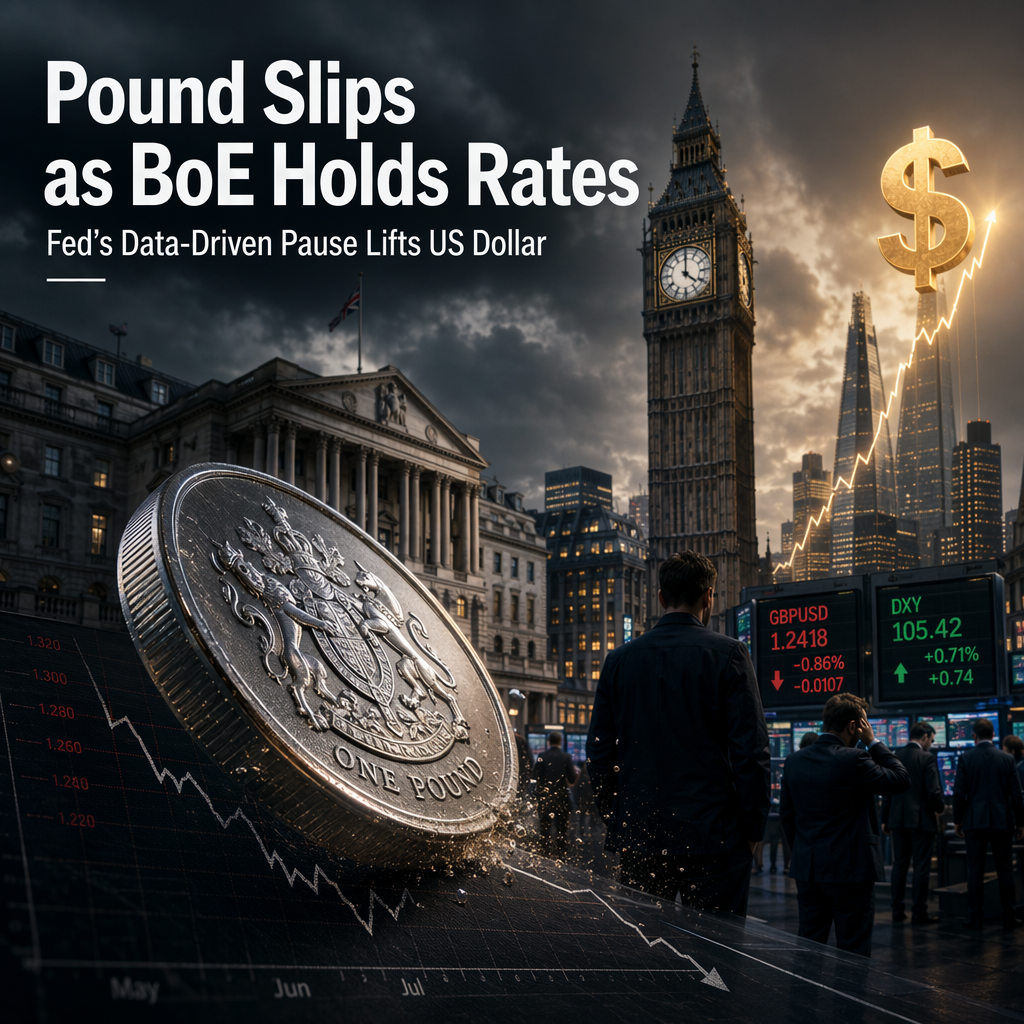
The British Pound Sterling (GBP) slipped against the US Dollar (USD) on Thursday, with the GBP/USD pair trading near a two-month low at the 1.3210 level after the Bank of England (BoE) decided to keep interest rates unchanged at 3.75% [1]. The BoE's Monetary Policy Committee voted 7-2 in favor of holding rates steady, reflecting a majority preference for patience amid ongoing uncertainty regarding the inflation outlook and recent volatility in energy prices. However, the split vote highlighted persistent inflation concerns, as two policymakers advocated for raising the rate to 4.00% [1].
BoE officials cautioned that the ongoing war in the Middle East has contributed to higher energy prices, with inflation rising to 3.3% and expected to increase further this year [1]. This cautious tone from the central bank limited the Pound's upside, as markets evaluated the possibility of future tightening should second-round inflation pressures intensify [1].
Meanwhile, the US Dollar remained firm following the Federal Reserve's decision to keep interest rates unchanged in the 3.50%-3.75% range during Kevin Warsh’s first meeting as Fed Chair. The Fed removed its previous reference to 'additional rate adjustments,' signaling a more data-dependent approach and reducing expectations for near-term easing [1].
Technical analysis indicates that GBP/USD continues to exhibit a bearish bias, trading at 1.3205 and remaining below both the 20-period Simple Moving Average (SMA) at 1.3363 and the 100-period SMA at 1.3404. The Relative Strength Index (RSI) is oversold around 25, suggesting the downtrend is stretched but still capped by significant overhead resistance. The absence of nearby support levels below the current price leaves the pair vulnerable to further declines if selling pressure persists [1].
CONCLUSION
The Bank of England's decision to hold rates and its cautious outlook on inflation, combined with the Federal Reserve's data-dependent stance, have pressured the British Pound while supporting the US Dollar. With technical indicators pointing to a stretched but ongoing downtrend, the GBP/USD pair remains vulnerable to further declines if market sentiment does not improve.