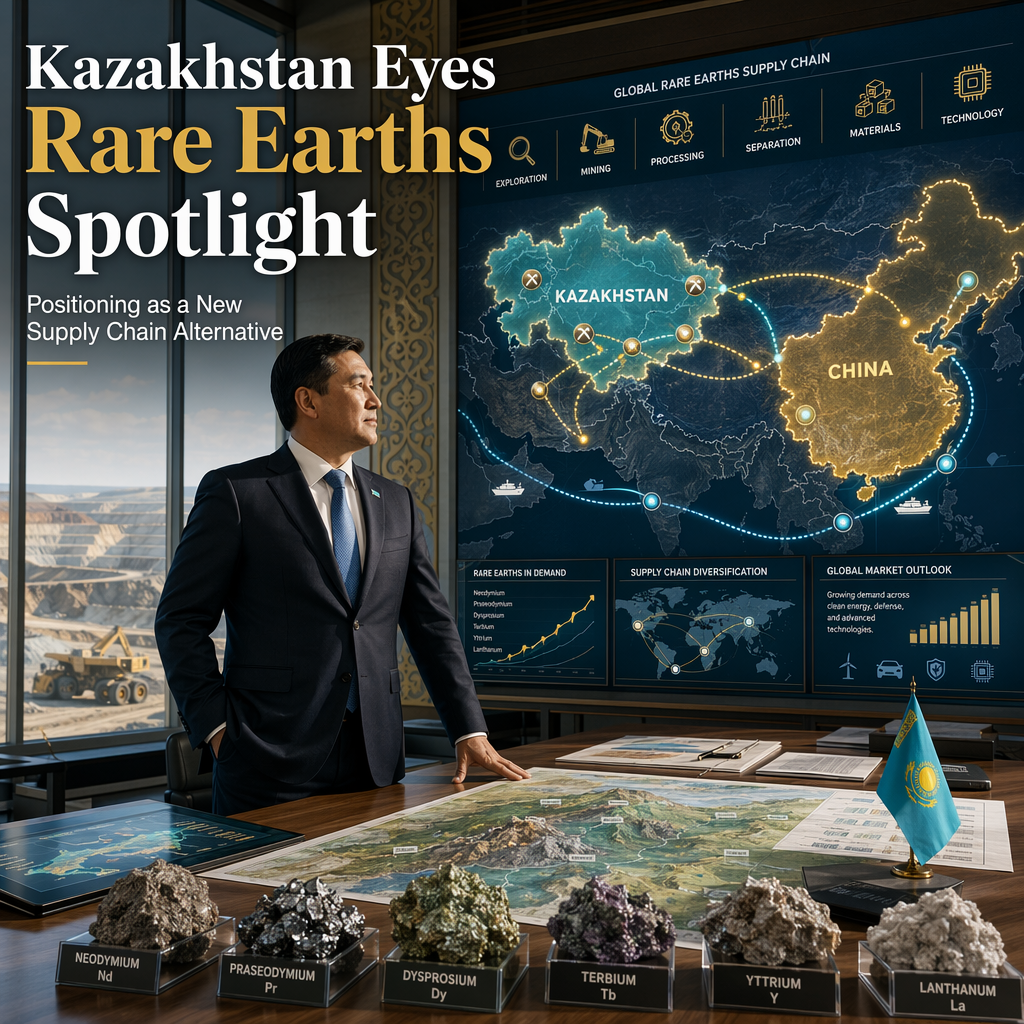
Kazakhstan has announced its intention to become a significant player in the global rare earths and minerals market, presenting itself as a potential alternative to China, which currently accounts for 70% of the world's rare-earth production and controls 90% of processing and refining operations [1]. The announcement was made at an event in Hilton Astana, where officials highlighted Kazakhstan's substantial mineral deposits and mining expertise, while also acknowledging the country's current limitations in processing and refining capabilities [1].
The move has attracted interest from governments and companies seeking to diversify supply chains and reduce reliance on China, particularly amid rising geopolitical tensions and concerns over the security of critical minerals used in electronics, renewable energy, and defense technologies [1]. Kazakhstan's government has expressed openness to foreign investment and technology transfers, aiming to accelerate the development of downstream processing infrastructure and expertise [1].
Industry analysts and sector experts caution that breaking China's dominance in rare earths will require significant capital, technical know-how, and time. One consultant noted, "Building a rare earths processing industry from scratch isn’t easy. The economics are challenging, and the technology is complex," but also suggested that Kazakhstan's resources and willingness could make it a key player in the long term [1].
While no specific trading advice or price levels were provided, the overall market sentiment is cautiously optimistic, reflecting Kazakhstan's potential to emerge as a credible alternative in the rare earths supply chain if it can overcome processing bottlenecks and attract sustained investment [1].
CONCLUSION
Kazakhstan's entry into the rare earths market is seen as a promising step toward diversifying global supply chains away from China. However, significant challenges in processing and refining remain, and success will depend on attracting investment and technical expertise. The market response is cautiously optimistic, with medium impact expected as Kazakhstan works to build its industry.