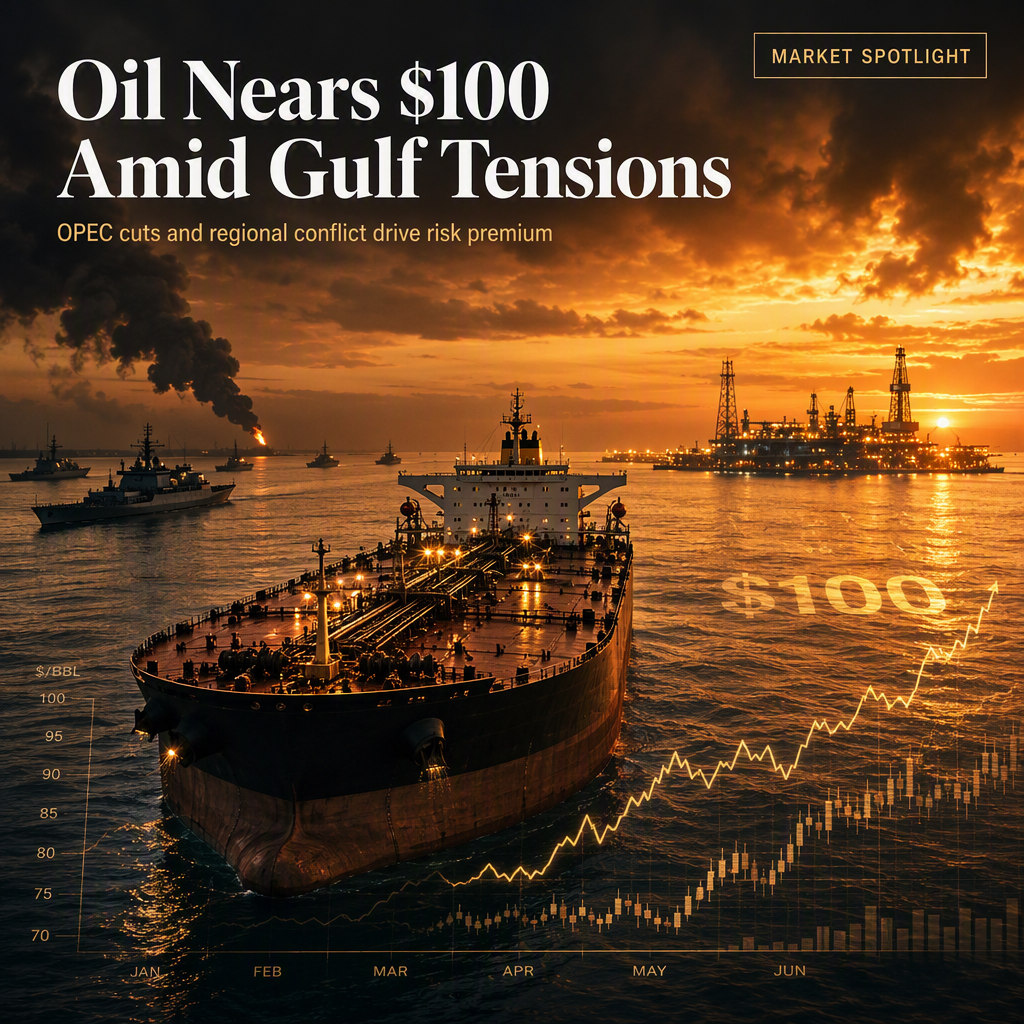
Oil prices are climbing, with ICE Brent crude approaching the $100 per barrel mark as tensions in the Middle East intensify and OPEC output declines, according to ING analysts Warren Patterson and Ewa Manthey [1]. The escalation includes US strikes on five Iranian oil tankers near Kharg Island, which were conducted in response to Iran's attempt to strike a US Navy warship. In retaliation, Iran fired ballistic missiles towards Jordan and issued warnings that vessels in the Persian Gulf could be targeted [1]. These developments have contributed to a significant risk premium in oil prices, with ING analysts suggesting that the market is likely to maintain this premium as long as flows through the Strait of Hormuz recover only gradually [1].
Preliminary OPEC production data, based on a Bloomberg survey, indicates that output in August fell by 900,000 barrels per day month-on-month to 19.91 million barrels per day. This decline was primarily driven by Saudi Arabia, whose output is estimated to have dropped by 1.12 million barrels per day amid the escalating regional tensions [1].
The analysts also note that China's substantial crude inventories mean that lower import levels are sustainable for now, which could help balance the market if Middle East tensions lead to further supply disruptions [1]. ING's view is that the oil market is poised to test the $100 per barrel level soon, given the current geopolitical and supply dynamics [1].
CONCLUSION
Rising geopolitical tensions in the Persian Gulf and significant OPEC output cuts are pushing Brent crude prices toward $100 per barrel. The market is expected to maintain a strong risk premium as supply disruptions persist and the situation remains volatile.