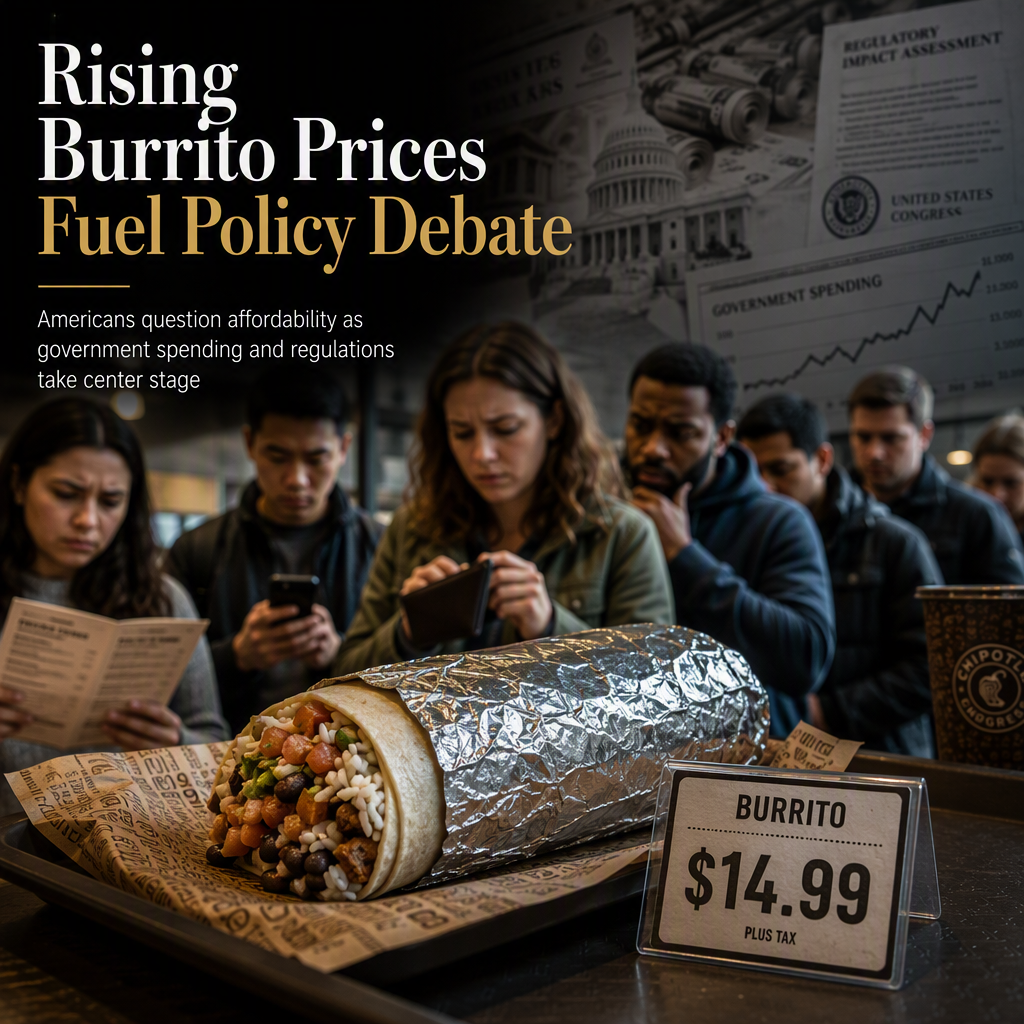
The rising cost of fast-casual meals, such as burritos, has become a focal point of public frustration, with many Americans expressing concern over affordability on social media platforms [1]. The article attributes the increase in burrito prices and broader cost-of-living challenges to government policies rather than to capitalism or corporate greed, as is often claimed [1]. Specifically, it points to the federal government's accumulation of approximately $40 trillion in debt, which is more than seven times the size of Germany's economy, and the Federal Reserve's actions during the COVID-19 era, including printing money and expanding its balance sheet, as key drivers of inflation and diminished purchasing power [1].
At the state and local levels, policies such as raising the minimum wage are cited as contributing factors to higher costs. The article argues that mandated wage increases lead to higher prices across businesses, as wage hikes for entry-level workers cascade upward, prompting businesses to raise prices to cover increased expenses [1]. Additionally, regulatory burdens, permitting requirements, sales taxes, and compliance costs are mentioned as obstacles that further increase the cost of living and hinder economic growth [1].
The article notes that the affordability crisis extends beyond food, affecting housing, healthcare, insurance, education, and taxes, all of which are described as being impacted by government intervention [1]. The ongoing frustration over rising costs and limited upward mobility is highlighted as a significant concern among Americans [1].
No specific market reactions, analyst opinions, or forward-looking statements are provided in the article [1].
CONCLUSION
The article links the rising cost of burritos and other essentials to government fiscal and regulatory policies, emphasizing their role in driving inflation and reducing affordability. While no direct market reactions are discussed, the piece underscores growing public dissatisfaction with the economic status quo and the impact of policy decisions on everyday expenses.