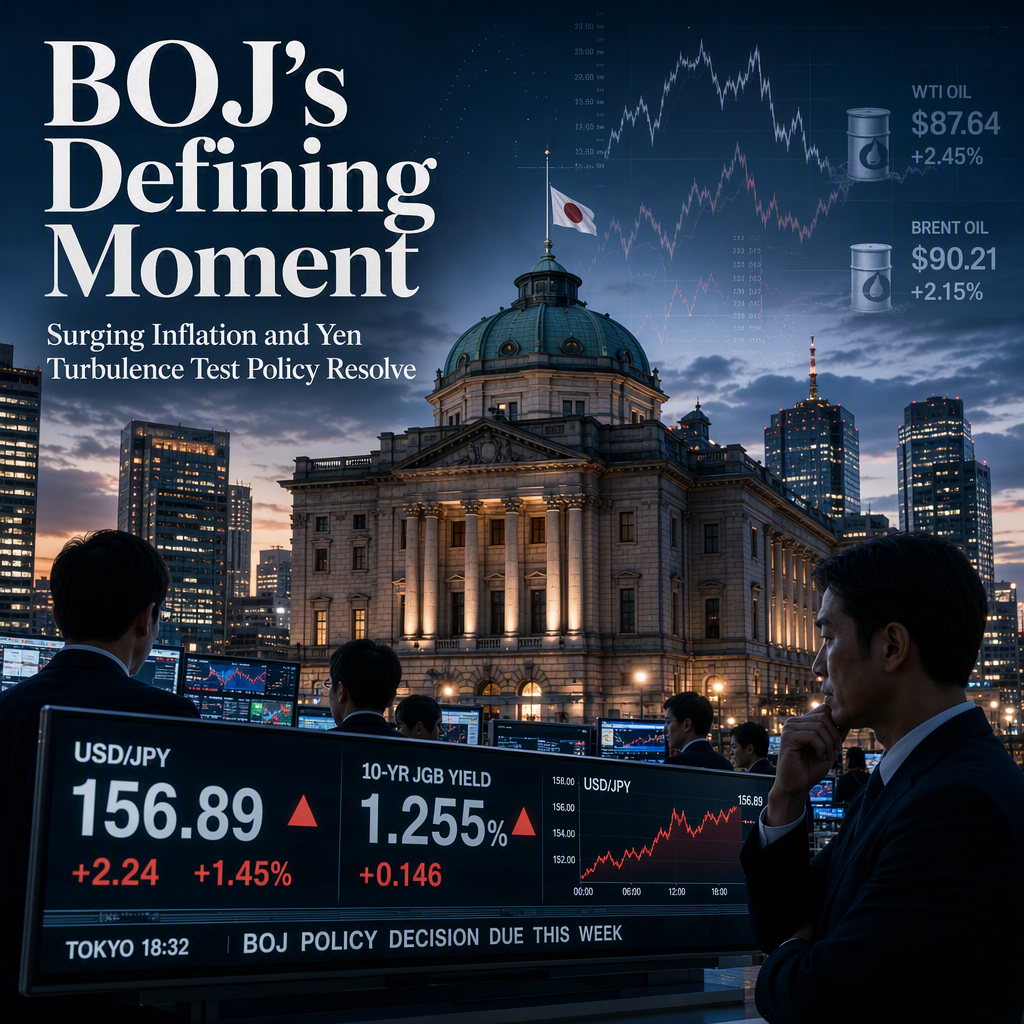
The Bank of Japan (BOJ) and the U.S. Federal Reserve are under intense scrutiny this week as global investors ramp up pressure on policymakers to address persistent inflation and shifting market expectations [1]. The BOJ is set to convene a key meeting, with financial markets in Japan and beyond closely monitoring for signals regarding the future direction of monetary policy, interest rates, and potential adjustments to its longstanding ultra-loose policy measures [2]. The possibility of changes to the BOJ's yield curve control program or hints at tightening are central concerns, as inflationary pressures and global rate movements continue to impact Japanese financial assets [2].
Brent crude oil has surpassed $100 per barrel, fueling renewed inflation fears across global markets [1]. The yen has appreciated sharply against the dollar, reaching the 152 level, which reflects heightened volatility and increased risk of intervention by Japanese authorities [1]. The ongoing sell-off in global bond markets has led investors to demand higher yields, and Japanese corporate pensions are returning to domestic bonds as long-term rates rise, signaling shifting expectations for domestic yields [1]. The debate over the implications of 3% yields for Japan's businesses and government spending plans is intensifying [1].
Market sentiment remains cautious, with analysts highlighting key support and resistance levels for the yen and U.S. Treasury yields [1]. Technical indicators suggest further volatility ahead as central banks prepare for critical policy decisions [1]. Traders are advised to monitor central bank statements closely for guidance on rate trajectories and intervention strategies, as the market expects the BOJ and Fed to communicate clearly to avoid further destabilization in currency and bond markets [1].
According to [2], the BOJ meeting is a focal point for investors, who are particularly interested in any signals regarding potential policy shifts. However, [1] emphasizes the broader context of global inflation and bond market volatility, as well as the risk of a 'new Plaza Accord' emerging amid Japan's battle against yen bears. Both sources agree that the BOJ's actions and communications this week will be critical for market stability.
CONCLUSION
The BOJ's upcoming policy meeting is drawing heightened attention as inflationary pressures and yen volatility challenge Japan's financial stability. Investors are poised for any signals of policy adjustment, with market sentiment remaining cautious amid global bond sell-offs and rising yields. Clear communication from the BOJ and Fed will be essential to prevent further market destabilization.