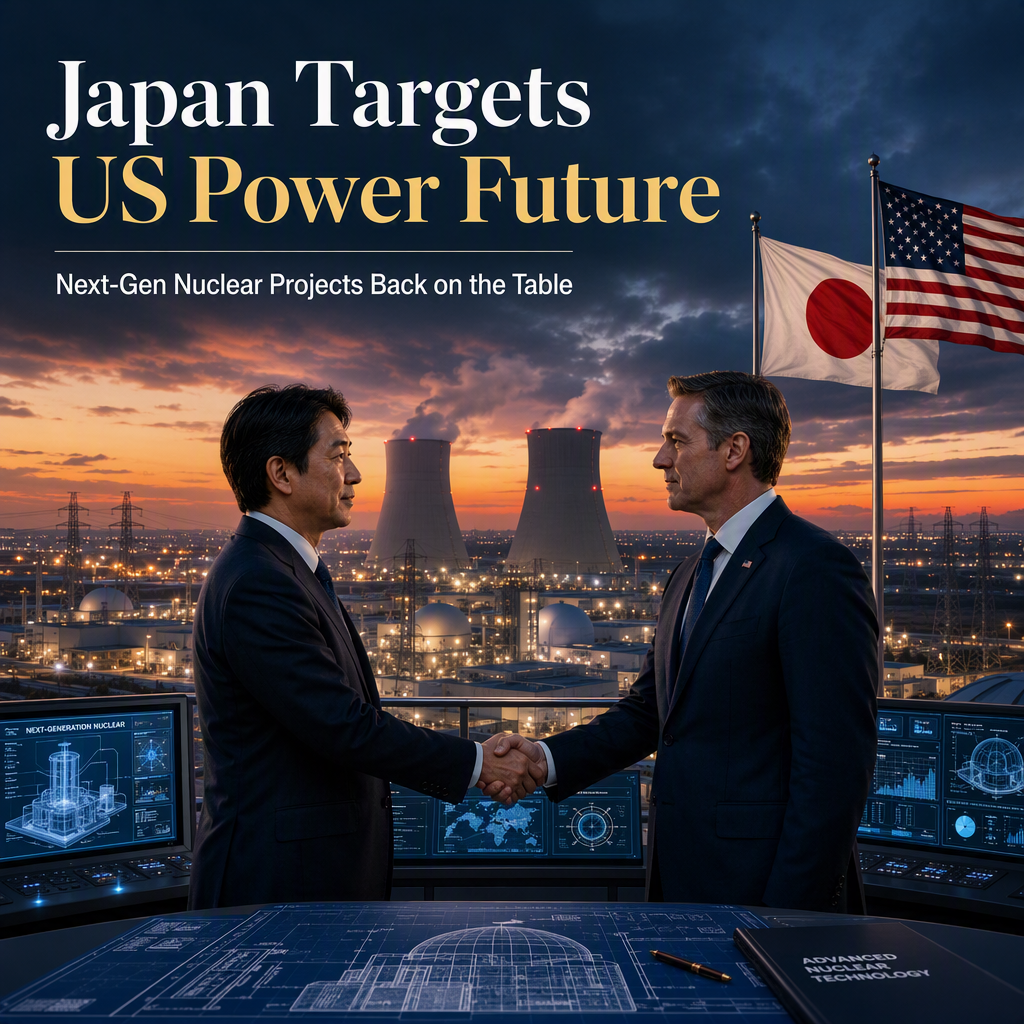
Japanese Minister of Economy, Trade and Industry Ryosei Akazawa announced that future investment projects under the U.S.-Japan tariff agreement are expected to focus on the power industry, with particular emphasis on next-generation nuclear initiatives potentially returning to the agenda [1]. Akazawa, who has led trade talks with President Donald Trump's administration, highlighted the energy sector as an area where Japan can significantly contribute, especially as the U.S. seeks to modernize its infrastructure and achieve climate targets [1].
The minister stated, “The energy field is one where Japan can make a significant contribution, particularly as the U.S. looks to modernize its infrastructure and meet climate targets,” underscoring the importance of stable and clean energy solutions for both countries [1]. He further noted that previously sidelined next-generation nuclear reactor projects could be reconsidered under the current trade framework, indicating a renewed interest in nuclear energy collaboration [1].
Trade discussions have also included large-scale industrial investments, with power generation and transmission infrastructure identified as critical areas for cooperation. Akazawa mentioned that Japan is evaluating the entire value chain, from core generation technologies to grid modernization and digitalization, as part of its investment strategy [1].
No specific financial figures, project names, or timelines were disclosed, but Akazawa reaffirmed Japan’s commitment to strengthening its economic relationship with the U.S., particularly in sectors that support long-term growth and energy security [1].
CONCLUSION
Japan is preparing to deepen its investment in the U.S. power sector, with next-generation nuclear projects potentially returning to the agenda. While no concrete financial details or project names were revealed, the focus on energy infrastructure signals medium market impact and positive sentiment for future bilateral cooperation.