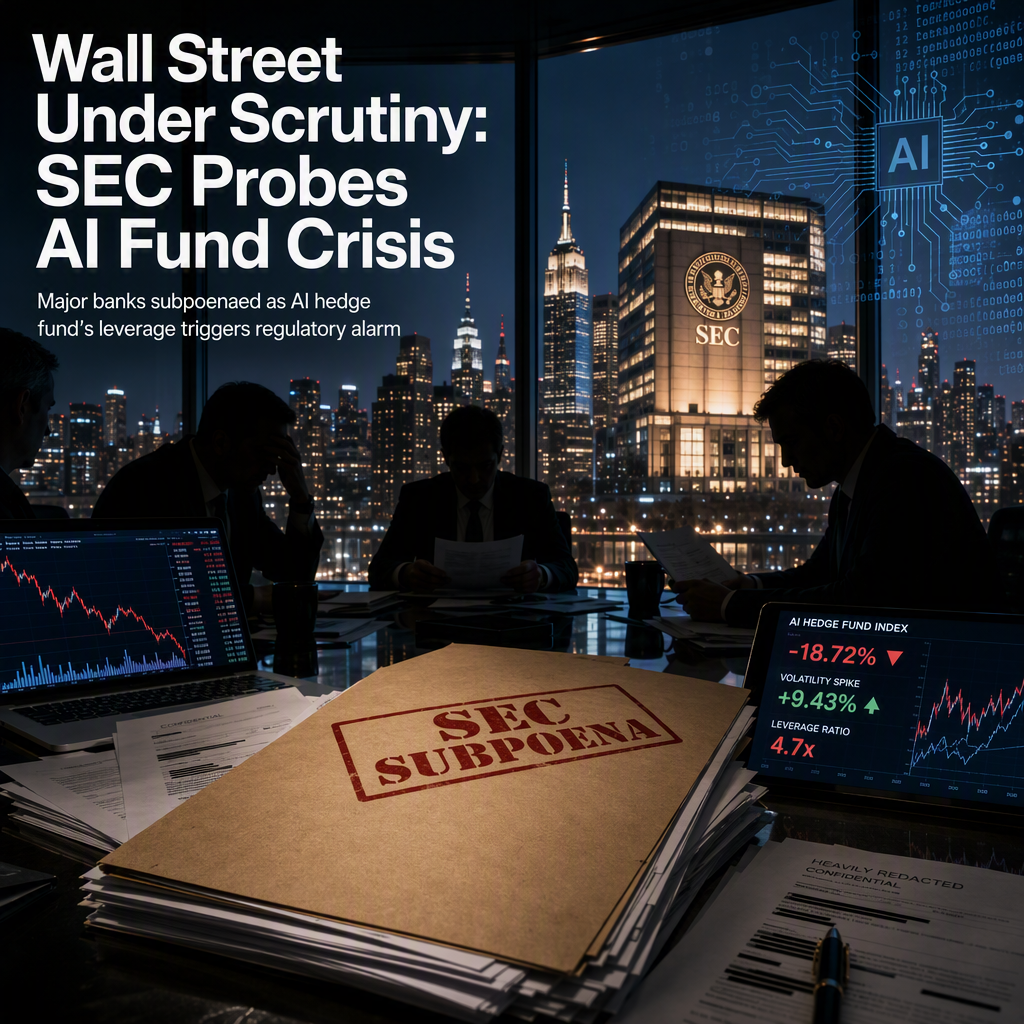
The Securities and Exchange Commission (SEC) has reportedly issued subpoenas to several major Wall Street banks, including Goldman Sachs, JP Morgan, Citigroup, and Bank of America, as part of an investigation into their involvement in the near-collapse of the AI-focused hedge fund Situational Awareness [1]. The SEC is seeking information regarding the fund’s trades, use of leverage, and communications with these investment banks, according to a source cited by Reuters [1].
Situational Awareness, led by former OpenAI researcher Leopold Aschenbrenner, saw its assets plummet from approximately $45 billion to around $10 billion in late July, following significant losses during a tech sector sell-off [1]. The fund was forced to unwind much of its publicly listed portfolio, which consisted of large, concentrated, and highly leveraged positions—including SK Hynix and CoreWeave—after losses triggered several margin calls from its prime brokers [1].
Citadel, the multi-strategy hedge fund led by Ken Griffin, purchased these positions at a reported discount of about 10%. In a letter to investors, Griffin stated that Citadel has since offloaded roughly 80% of the risk associated with the Situational Awareness portfolio, and both SK Hynix and CoreWeave have subsequently rallied [1].
The SEC’s information request does not imply that the banks or Situational Awareness—which reportedly operated with leverage as high as 400%—are accused of any wrongdoing. Regulatory inquiries of this nature can conclude without enforcement action [1]. Situational Awareness commented that it is a highly regulated business and will cooperate fully with any regulatory request [1].
This incident has highlighted the increasing role of leverage in the ongoing AI investment boom and has drawn regulatory attention to the risks associated with highly leveraged funds [1].
CONCLUSION
The SEC’s subpoenas of major Wall Street banks underscore regulatory concerns about the risks posed by highly leveraged AI-focused hedge funds. While no wrongdoing has been alleged, the situation has brought renewed scrutiny to leverage practices in the AI investment sector and could prompt further regulatory oversight.