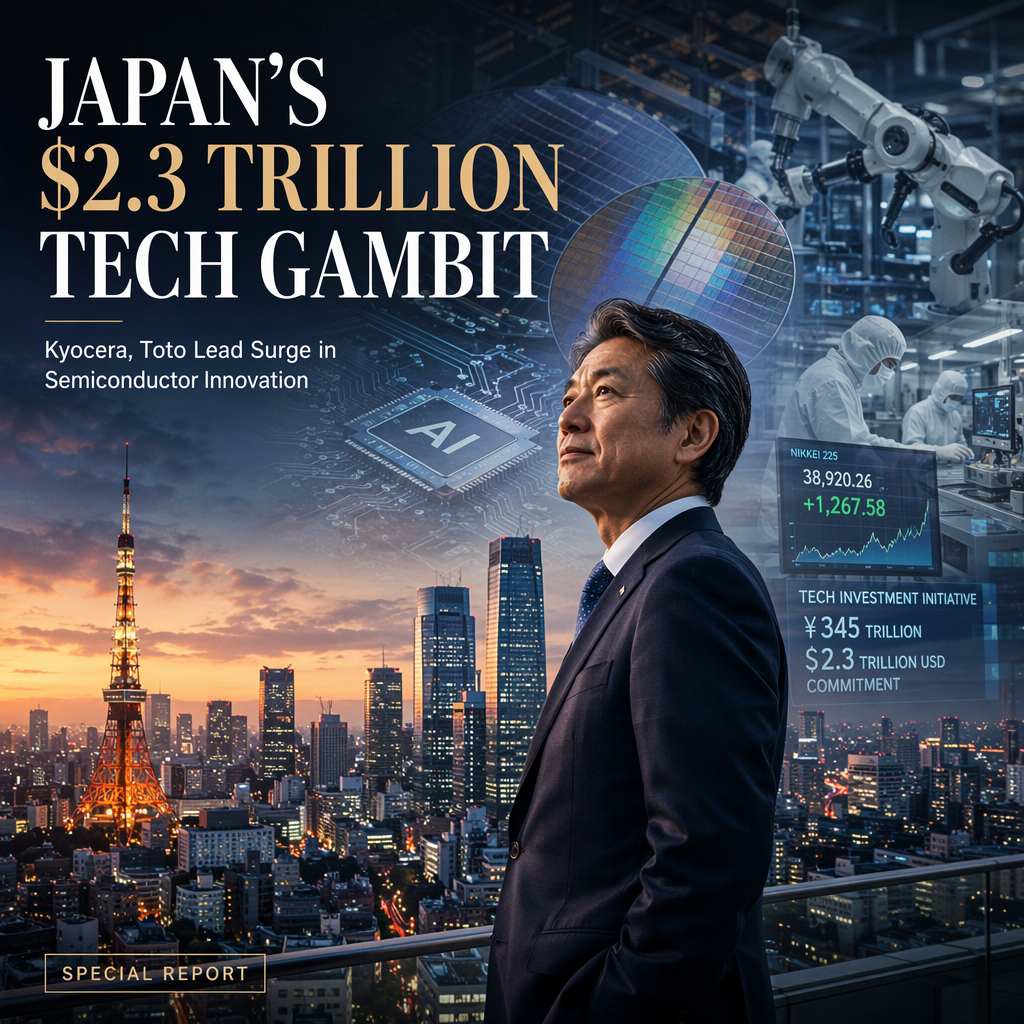
Japan has announced an ambitious $2.3 trillion investment strategy targeting 17 key sectors, including semiconductors, AI-powered robots, drug innovation, and autonomous driving, as part of a broader effort to foster technological innovation and support startups [2]. This government-led initiative aims to attract both domestic and international capital, with a particular focus on deep-tech fields such as biotech, artificial intelligence, and robotics [2]. The strategy marks a significant shift in Japan’s approach to innovation, with universities and research institutes now prioritizing entrepreneurship and collaboration with global technology leaders [2].
Amid this national push, Kyocera has revealed plans to invest 650 billion yen ($4 billion) in its components business, concentrating on high-growth areas like semiconductor manufacturing equipment and AI data centers [1]. Kyocera already holds a sizable share of the market for ceramic parts used in semiconductor manufacturing equipment and is leveraging its expertise to meet the stringent requirements of chipmakers and data center operators, both of which are expected to see robust growth due to the proliferation of AI applications [1].
Japanese rival Toto is also making significant moves in the chip materials market, having recently announced a $495 million investment targeting the 1-nm semiconductor era [1]. These investments by Kyocera and Toto reflect intensifying global competition and a broader trend among Japanese manufacturers to secure their positions in the advanced technology supply chain [1].
Market sentiment is optimistic, with expectations that the government’s massive investment plan and the proactive strategies of leading companies like Kyocera and Toto will have a positive impact on Japan’s innovation landscape and related financial markets [2]. The increased presence of venture capital, particularly from the US, and greater collaboration with international technology leaders are seen as key drivers for cultivating world-class startups in Japan [2].
CONCLUSION
Japan’s $2.3 trillion tech investment strategy, combined with major commitments from industry leaders like Kyocera and Toto, signals a strong national push to dominate advanced technology sectors. Market sentiment is positive, with expectations of increased innovation, venture capital inflows, and global competitiveness in semiconductors and AI. These developments are poised to significantly impact Japan’s financial markets and innovation ecosystem.