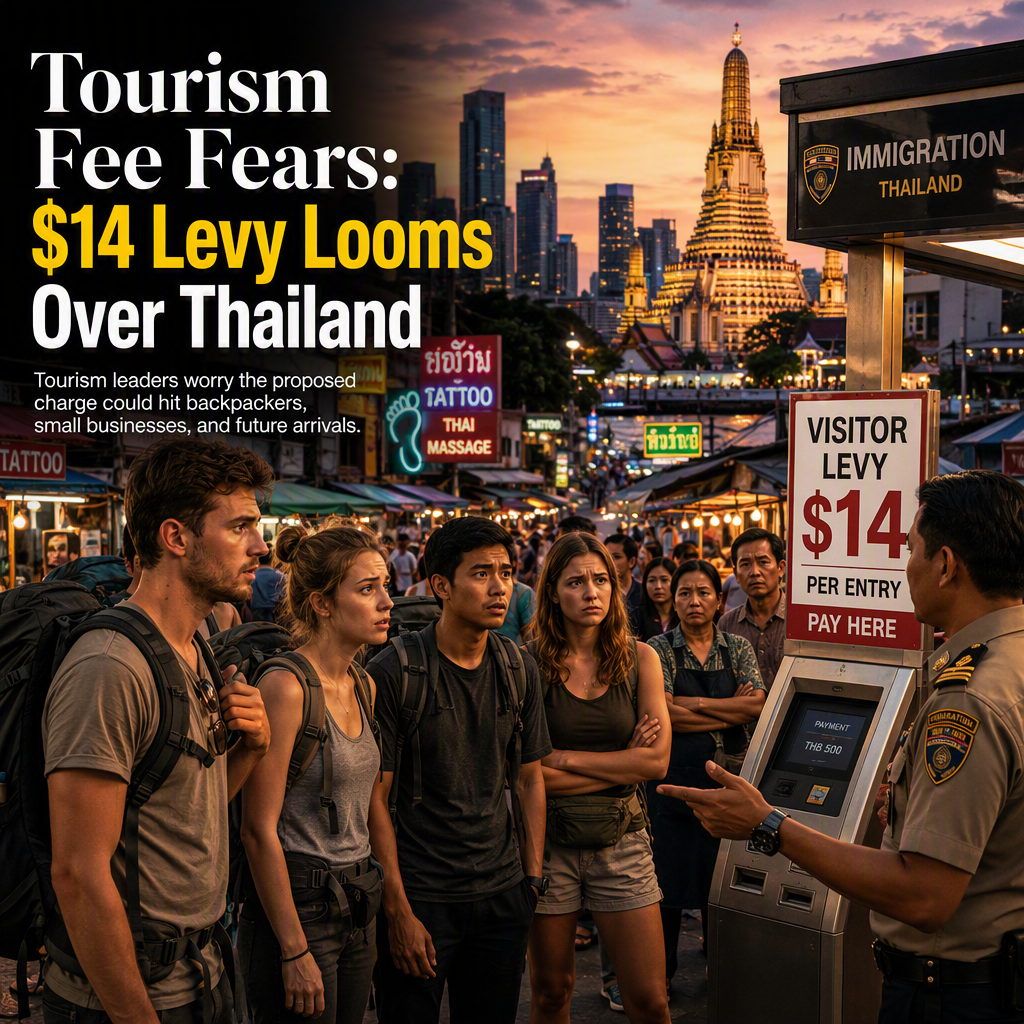
Thailand's government has proposed a new tax scheme that would collect approximately $14 from every inbound tourist, sparking concern among local hotels, restaurants, and other businesses within the hospitality sector [1]. Industry representatives warn that this visitor levy could further reduce tourist numbers, particularly among backpackers and young travelers who are highly sensitive to additional costs [1]. Business leaders have highlighted that budget-conscious travelers have traditionally comprised a significant portion of Thailand's tourism market, and the new fee may deter them from choosing Thailand as a destination, especially when neighboring countries offer fewer entry charges [1].
Recent declines in tourist arrivals have already impacted the hospitality and service sectors, and stakeholders fear the proposed levy could exacerbate this trend [1]. A Bangkok hotelier emphasized that even a $14 fee can be significant for budget travelers, and similar levies in other countries have reportedly led to reductions in low-cost tourism segments [1]. The tourism sector remains a crucial part of Thailand's economy, contributing millions of international arrivals and significant revenue each year, but it has faced challenges such as the lingering effects of the global pandemic and increased competition from other Southeast Asian destinations [1].
The government intends for the visitor levy to boost public revenue and fund tourism infrastructure [1]. However, industry stakeholders caution that the timing of the proposal may be counterproductive, urging policymakers to consider the broader impact on travel sentiment and the potential loss of Thailand's reputation as a friendly and affordable destination for young, international travelers [1].
CONCLUSION
Thailand's proposed $14 visitor levy has raised significant concerns among hospitality industry stakeholders, who fear it could further reduce tourist arrivals, especially among budget travelers. The market takeaway is that while the levy aims to support public revenue and infrastructure, its implementation may risk undermining Thailand's appeal to a key segment of its tourism market.