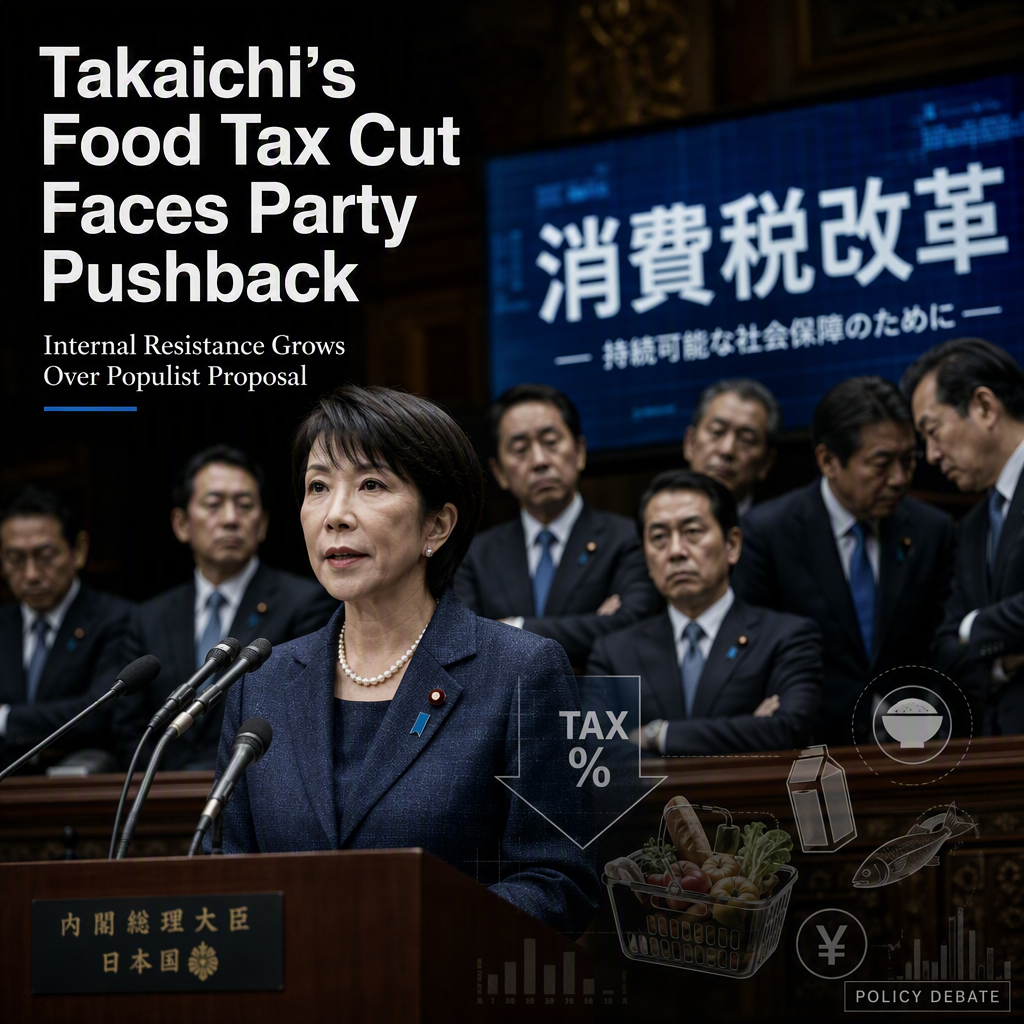
Japanese Prime Minister Sanae Takaichi is encountering increasing resistance from members of her ruling Liberal Democratic Party regarding her proposal to cut the consumption tax on food, a move described as populist by critics within the party [1]. The primary concern cited by opponents is the lack of discussion on how the tax cut will be funded, with party members emphasizing the importance of considering the impact on government finances and the broader economy [1].
The proposal has sparked debate not only within the party but also among economic analysts, who are questioning the fiscal impact and long-term sustainability of the measure [1]. Critics warn that, without a clear plan to offset the lost tax revenue—which is estimated to be substantial—the policy could further widen Japan's fiscal deficit [1]. This comes at a time when there are already concerns about Japan's fiscal position and the need to balance economic stimulus with responsible budgeting [1].
The situation has highlighted a divide within the ruling party between those advocating for bold measures to support households facing rising food prices and those urging caution to maintain fiscal discipline [1]. Prime Minister Takaichi has defended her proposal by referencing her election pledge to reduce the tax burden on essential goods, but the internal pushback signals significant challenges ahead in securing party-wide support and addressing concerns over the country's fiscal health [1].
No specific market reactions, analyst forecasts, or forward-looking statements regarding the economic or market impact were provided in the article [1].
CONCLUSION
Prime Minister Takaichi's proposal to cut the consumption tax on food has ignited internal debate within the ruling party, centering on concerns about fiscal responsibility and the lack of a funding plan. The pushback underscores the challenges she faces in advancing her policy agenda amid Japan's ongoing fiscal concerns.