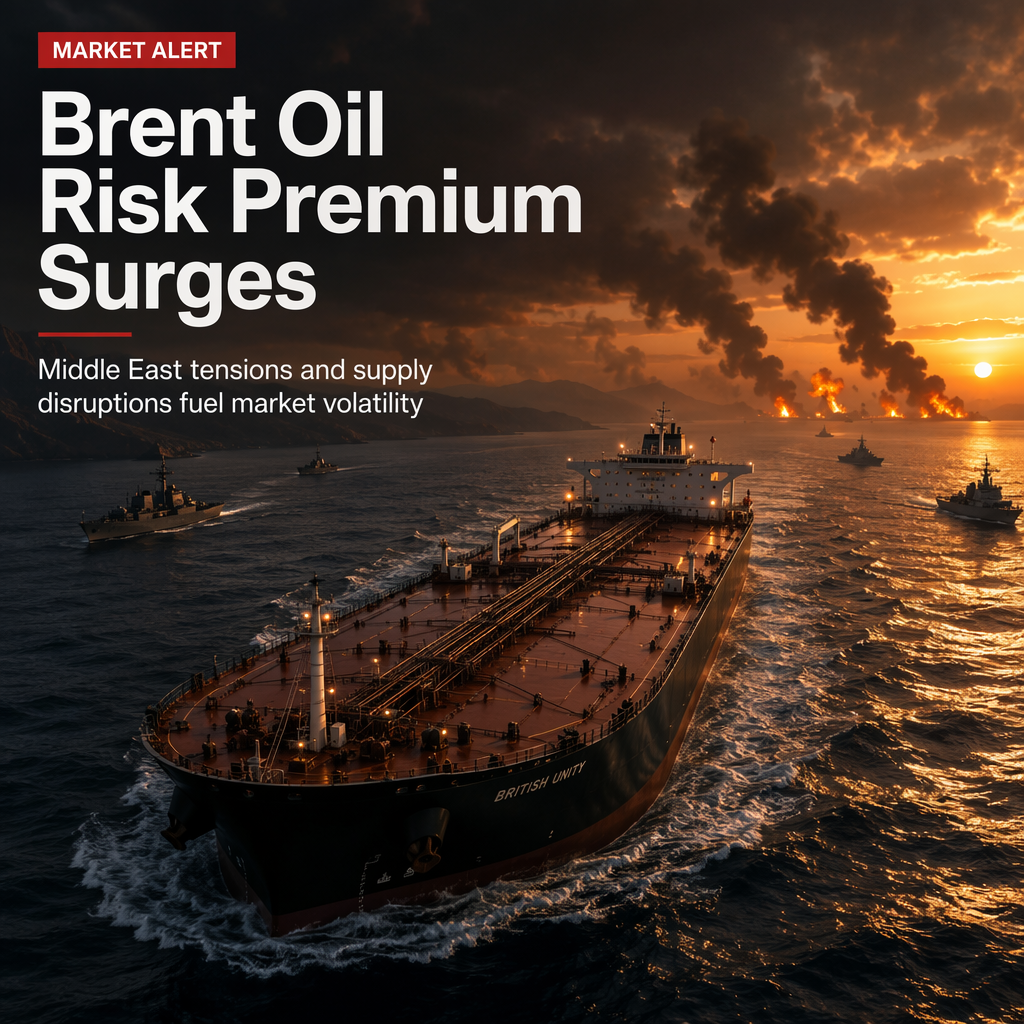
Rabobank strategist Michael Every highlights that the energy risk premium for Brent crude has increased due to escalating conflict around the Strait of Hormuz and the Red Sea, with Brent trading at USD 95.5 and benchmark crack spreads at $68 as of this morning [1]. Every warns that further military escalation in the region could drive Brent prices even higher, but he notes that neither the United States, Israel, Iran, nor the Gulf Cooperation Council (GCC) can sustain a prolonged, all-out war, suggesting that any price spike is unlikely to last long [1].
The path to resolving the current crisis remains highly uncertain, with Every stating, "we may be close to the beginning of the end of this crisis - it’s just unclear if it will prove a bridge too far for the US or Iran" [1]. In addition to Middle East tensions, Kazakhstan has been forced to halt oil exports via the Black Sea due to Ukraine’s drone attacks, further tightening supply [1]. In response, the European Union is launching a mission to board Russian shadow fleet ships in the Indian Ocean, although Russian LNG remains exempt from EU sanctions, which Every characterizes as either realpolitik or a sign of weakness [1].
No specific market reactions or analyst consensus beyond Rabobank's commentary are provided in the article. The overall tone suggests heightened market risk and uncertainty, with the potential for further price increases in the short term if tensions escalate, but also an expectation that such spikes would be temporary due to the unsustainability of prolonged conflict for all parties involved [1].
CONCLUSION
Brent crude prices are facing upward pressure from escalating Middle East tensions and supply disruptions, with the risk premium rising and potential for further increases if conflict intensifies. However, Rabobank expects any price spike to be short-lived, given the inability of key players to sustain a prolonged war. The market remains highly uncertain, with geopolitical developments continuing to drive volatility.