
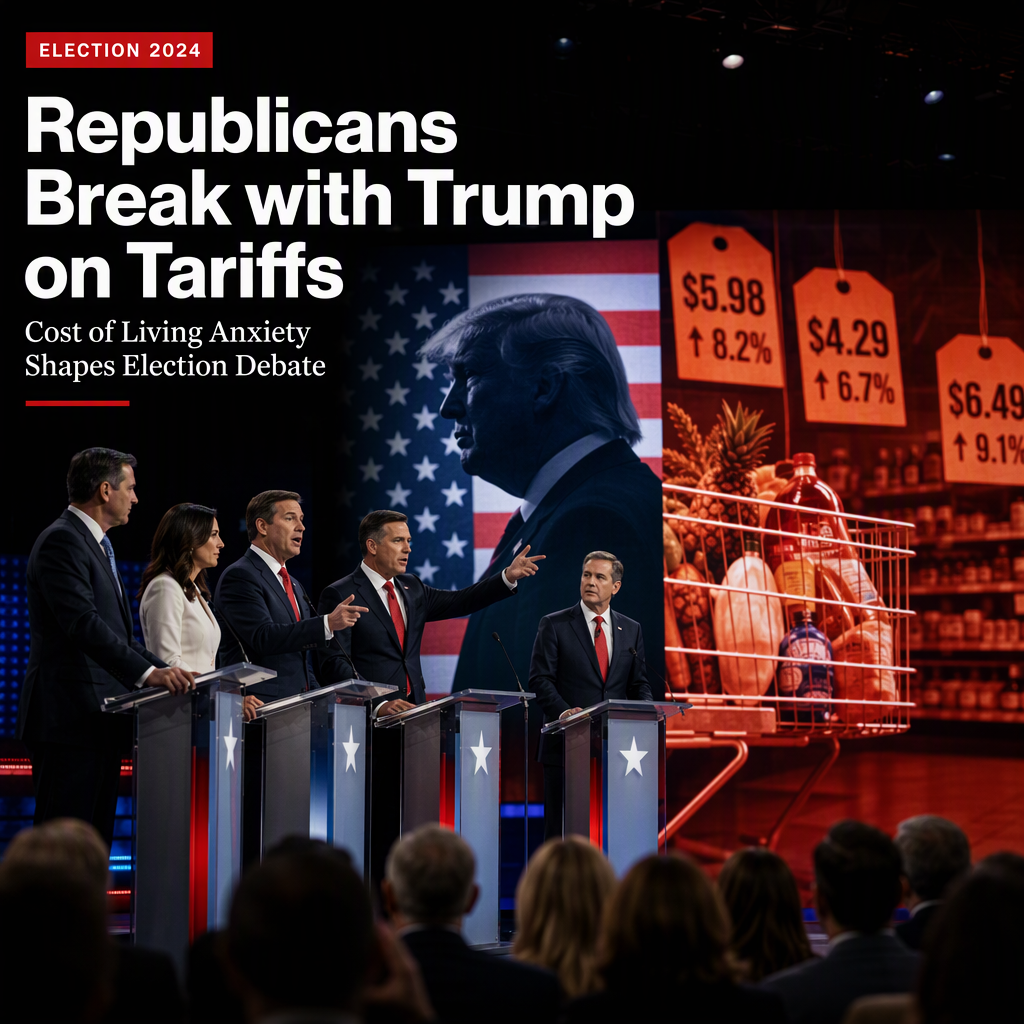
Several Republican candidates in key battleground races are publicly distancing themselves from former President Donald Trump’s tariff policies, citing growing concerns over the cost of living among voters [1]. Notable figures voicing their opposition include Senate candidates Sen. Susan Collins in Maine, former Sen. John Sununu in New Hampshire, and former Rep. Mike Rogers in Michigan. Gubernatorial candidates expressing doubts include Rep. John James in Michigan and Pennsylvania state Treasurer Stacy Garrity [1].
Collins and Rogers have specifically highlighted the ongoing trade war with Canada as a major issue, stating they have engaged with Cabinet officials to push for a deal or exemptions for certain goods from the tariff list [1]. Meanwhile, Democratic opponents have criticized these efforts as insufficient or politically motivated, especially as the election approaches [1].
A recent NBC News polling average indicates that Americans are nearly evenly split on which party is better equipped to handle the economy, with 39% favoring Democrats and 38% favoring Republicans [1]. This division underscores the political sensitivity surrounding economic policies such as tariffs, particularly as cost of living remains a central concern for voters [1].
CONCLUSION
Republican candidates’ public break from Trump’s tariff policies reflects mounting voter anxiety over economic issues, particularly the cost of living. With polling showing a nearly even split in public confidence between the two major parties on economic management, tariff policy is emerging as a key battleground issue in the final weeks of the campaign.