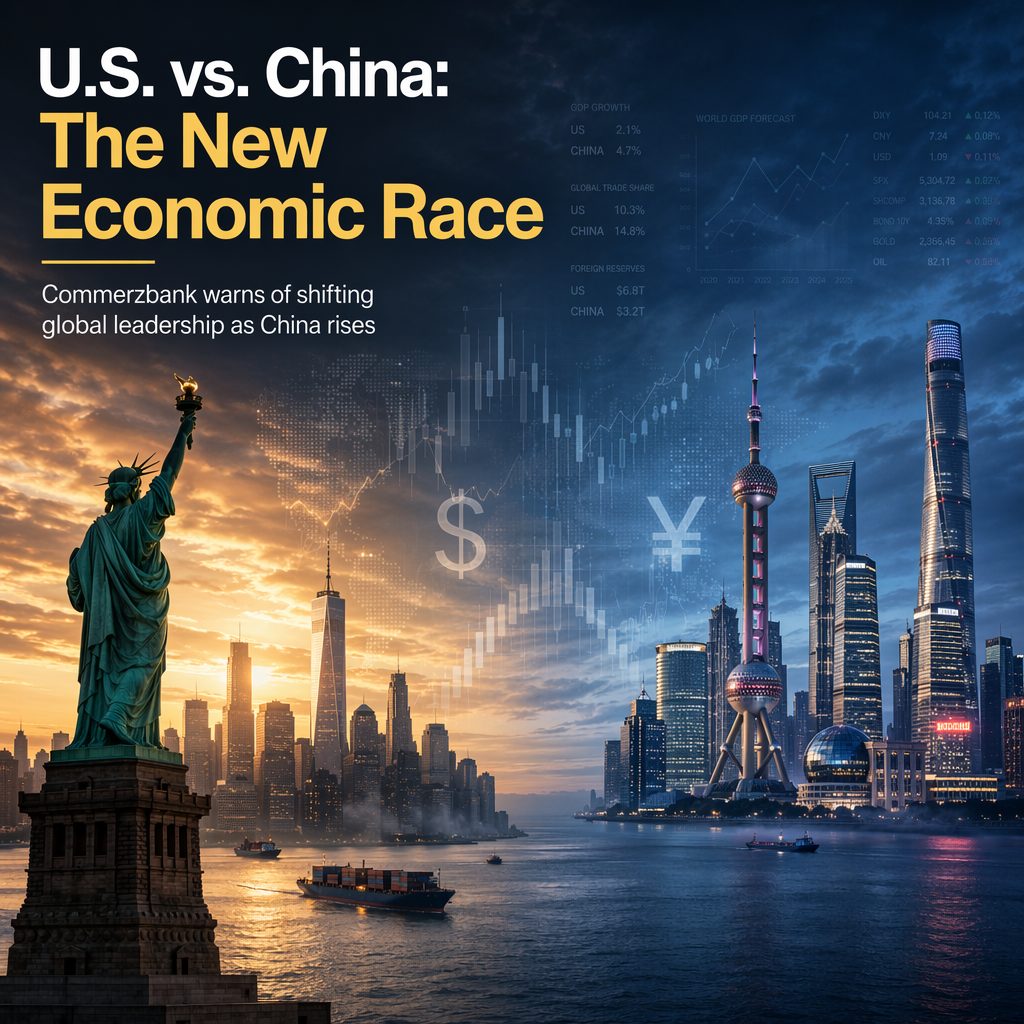
Commerzbank analysts Bernd Weidensteiner and Christoph Balz describe the United States as a long-term growth success, attributing its economic strength to population gains, immigration, and productivity improvements. They highlight that real GDP per capita in the U.S. has grown at a consistent long-term rate of about 1¾% per year over the past 250 years, with the most significant deviation occurring during the Great Depression in the 1930s, after which the economy quickly returned to its previous trend [1].
The analysts note a significant shift in global economic leadership, as China has emerged as a serious challenger to the U.S. In terms of purchasing power parity (PPP), China has been the world's largest economy since 2016, and by 2025, its economy was about one-third larger than that of the U.S. [1]. However, when measured at market exchange rates, the U.S. still maintains its lead. The report points out that the exchange rate for the Chinese renminbi is not freely determined by the market but is influenced by the Chinese government. Additionally, the high nominal growth of the U.S. economy, driven by inflation, has widened the gap between the two countries in recent years [1].
The article emphasizes that while the transformation in global economic leadership has been challenging, it is seen as an inevitable outcome for an economy that has been at the technological frontier for nearly 150 years [1]. No specific market reactions or analyst forecasts are provided regarding the immediate impact of this shift, but the analysis underscores the ongoing competition between the U.S. and China for global economic dominance [1].
CONCLUSION
Commerzbank's analysis underscores the United States' historical economic resilience but highlights the growing challenge posed by China, especially when measured by purchasing power parity. While the U.S. retains its lead at market exchange rates, the evolving dynamic signals a medium-term shift in global economic leadership.