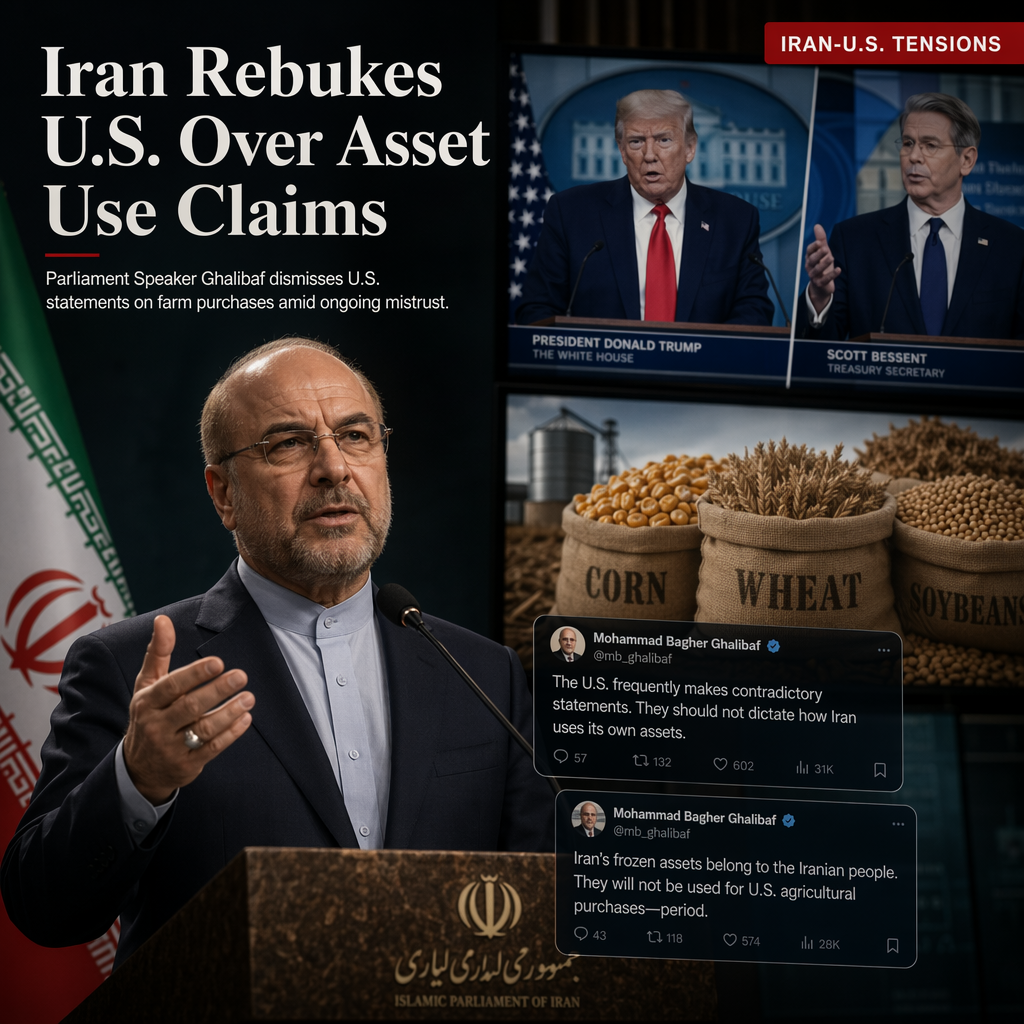
The speaker of Iran's parliament, Mohammad Bagher Ghalibaf, publicly dismissed assertions by President Donald Trump and Treasury Secretary Scott Bessent that Iran's unfrozen assets, as part of a temporary peace deal, would be used to purchase U.S. agricultural products such as corn, wheat, and soybeans. Ghalibaf's comments followed several days of statements from the Trump administration, which claimed that the unfreezing of Iranian assets would benefit U.S. farmers and that the funds would be controlled by the U.S. and used exclusively for food and medical supplies from the United States [1].
In a post on X, Ghalibaf wrote, 'America falsely claims our unfrozen assets will buy their agriculture. Interesting,' and further criticized the U.S. by stating, 'The only crop we're harvesting is what you planted: decades of mistrust. It's organic, abundant, and homegrown. But apparently the US only exports GMO soybeans, broken promises and trash talks.' This retort came amid criticism from some Republican lawmakers regarding President Trump's handling of the war against Iran and the memorandum of understanding that has paused hostilities to allow for peace talks [1].
Treasury Secretary Bessent reiterated in a CNBC interview that the U.S. Treasury would oversee the released Iranian funds and that 'a very large percentage of it will go to buy U.S. foodstuffs and medicines.' However, Iranian officials, including Foreign Ministry spokesman Esmail Baghaei, have repeatedly denied these claims, stating that any agricultural purchases would be based on 'prices and quality,' not on conditions imposed by the U.S. [1].
The ongoing disagreement highlights continued mistrust between the two nations, with Iran rejecting the narrative that the asset release will directly benefit U.S. agricultural exports, despite the Trump administration's assurances to the contrary [1].
CONCLUSION
The dispute over the use of Iran's unfrozen assets underscores persistent tensions and skepticism between the U.S. and Iran. While the Trump administration claims the funds will boost American agricultural exports, Iranian officials have categorically denied any such arrangement. The market impact is medium, as the outcome could influence U.S. agricultural trade and broader geopolitical relations.