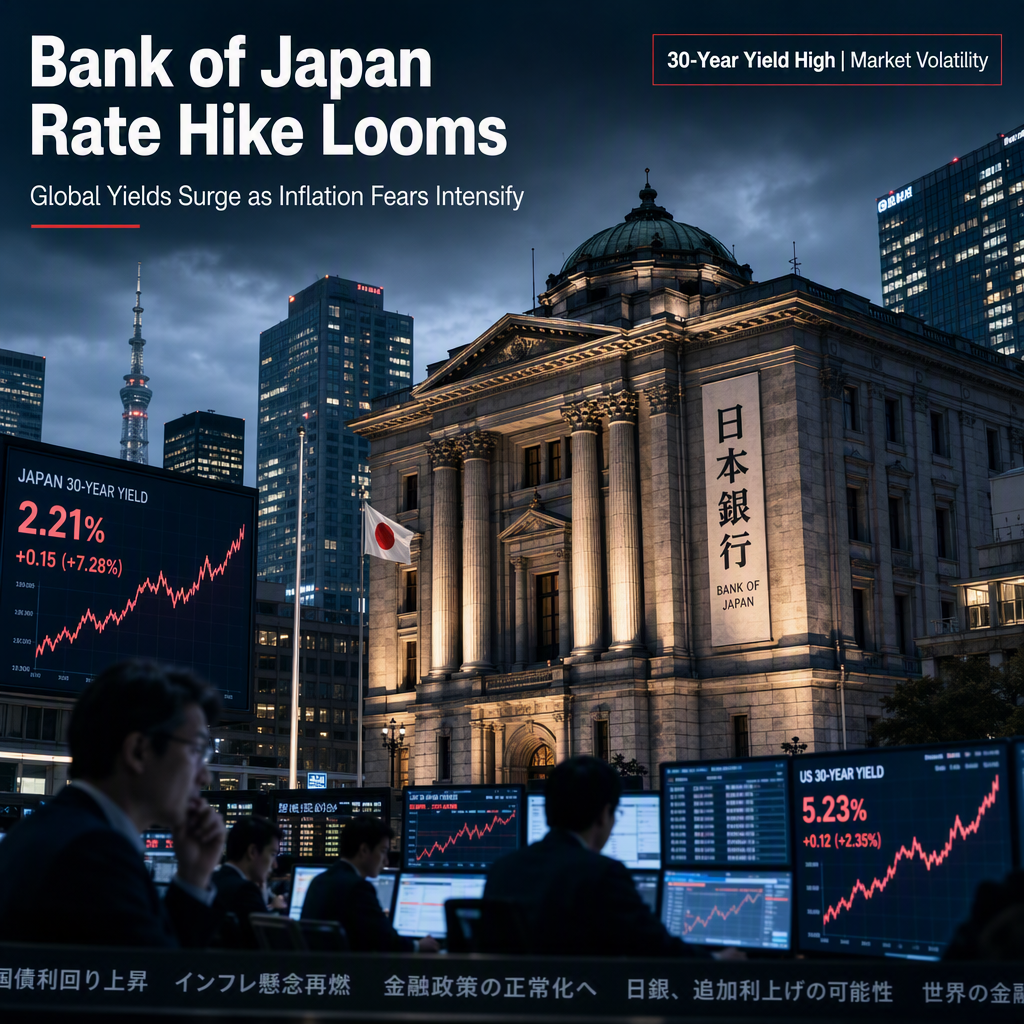
The Bank of Japan (BOJ) is expected to raise its policy rate to 1.25% next week, as central bank officials emphasize the need to control upside inflation risks and market participants brace for a higher terminal rate than previously anticipated [1][2]. This anticipated rate hike comes amid a global surge in long-term interest rates, driven by higher oil prices and increased government spending in major economies [2]. Japanese government bond (JGB) yields have reached a 30-year high of 3%, reflecting both domestic inflation concerns and global market pressures [1][2].
Globally, the 10-year U.S. Treasury yield has climbed to a 19-year high of 5%, with technical analysis indicating strong resistance at this level and support near 4.8% [2]. The rise in yields has contributed to heightened volatility in global equity markets and increased investor unease, particularly as oil prices continue to climb [2]. Market participants are closely monitoring central bank statements and key economic data releases for signs of further tightening [2].
In Japan, the upward trend in long-term rates is supported by global inflation fears and bond sell-offs worldwide. Market advice remains cautious, with traders urged to watch for shifts in BOJ inflation forecasts and be prepared for potential spikes in yields if the central bank accelerates rate hikes further [1]. Technical analysis suggests resistance around the 3% yield mark for JGBs, which is the current high [1].
Analysts and traders expect increased volatility and trading activity in Japanese government bonds as the BOJ's hawkish stance intensifies [1]. The sustainability of Japan's debt market is a concern, with further tightening by the BOJ potentially pushing yields even higher [1].
CONCLUSION
The Bank of Japan's expected rate hike to 1.25% next week, alongside surging global bond yields, signals a period of heightened volatility and cautious sentiment in financial markets. Both Japanese and U.S. yields have reached multi-decade highs, reflecting persistent inflation fears and central bank tightening. Market participants are advised to closely monitor policy statements and economic data for further developments.