
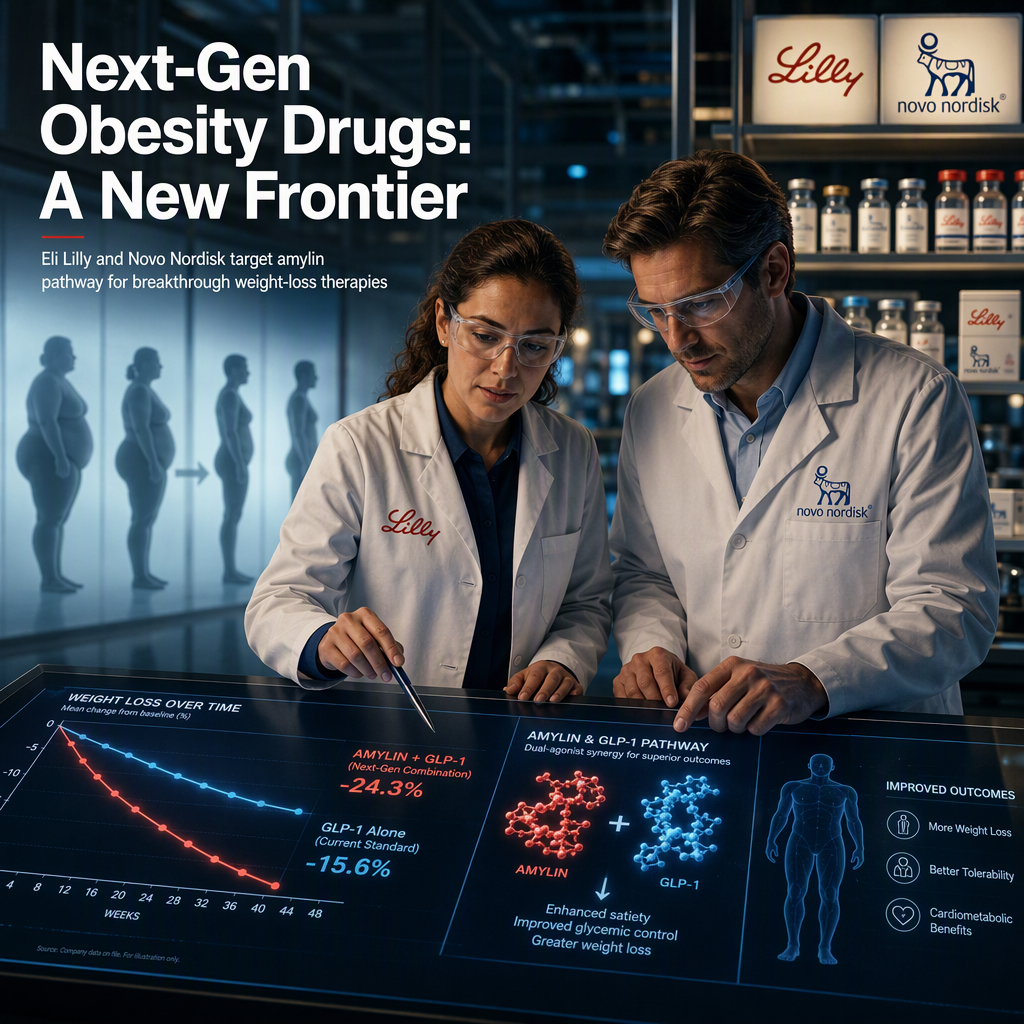
Eli Lilly and Novo Nordisk are developing new amylin-targeting drugs to enhance the effectiveness of existing blockbuster obesity and diabetes treatments, such as GLP-1 medicines. These new therapies, which include injections, pills, and combination regimens, focus on the amylin pathway—a hormone released in the pancreas alongside insulin that helps regulate hunger and fullness. The goal is to complement current obesity drugs, push weight loss further, or provide new options for millions who do not benefit sufficiently from GLP-1s [1].
Lilly recently showcased promising results from a Phase 2 trial of its experimental amylin drug, eloralintide. When combined with tirzepatide—the active ingredient in Lilly's Zepbound and Mounjaro shots—patients with obesity and Type 2 diabetes lost an average of 23.3% of their body weight at 48 weeks on the highest-dose combination, compared to 14.8% for those taking only a high dose of tirzepatide. These results are based on efficacy analysis assuming patients remained on treatment throughout the trial [1].
Benjamin Bikman, a professor at Brigham Young University and expert on metabolic health, described the results as 'encouraging,' noting that adults with Type 2 diabetes typically lose less weight on these therapies than those without diabetes [1]. Lilly is developing eloralintide both as a standalone treatment and as part of a combination therapy, which some analysts believe could become a major future franchise for the company [1].
According to Leerink Partners analyst David Risinger, annual sales for Lilly's eloralintide products could reach $23.2 billion by the end of 2035. Risinger expects the standalone drug to launch in 2029, followed by the combination therapy in 2030. He highlighted that over 10 million people may have tried GLP-1s and failed due to efficacy, tolerability, or genetic issues, suggesting significant market potential for this novel mechanism [1].
CONCLUSION
Eli Lilly and Novo Nordisk's push into amylin-targeting drugs signals a major new wave in obesity and diabetes treatment, with strong clinical results and substantial sales forecasts. The combination of amylin drugs with existing therapies could address unmet needs for millions who do not respond to GLP-1s, positioning both companies for significant market impact.