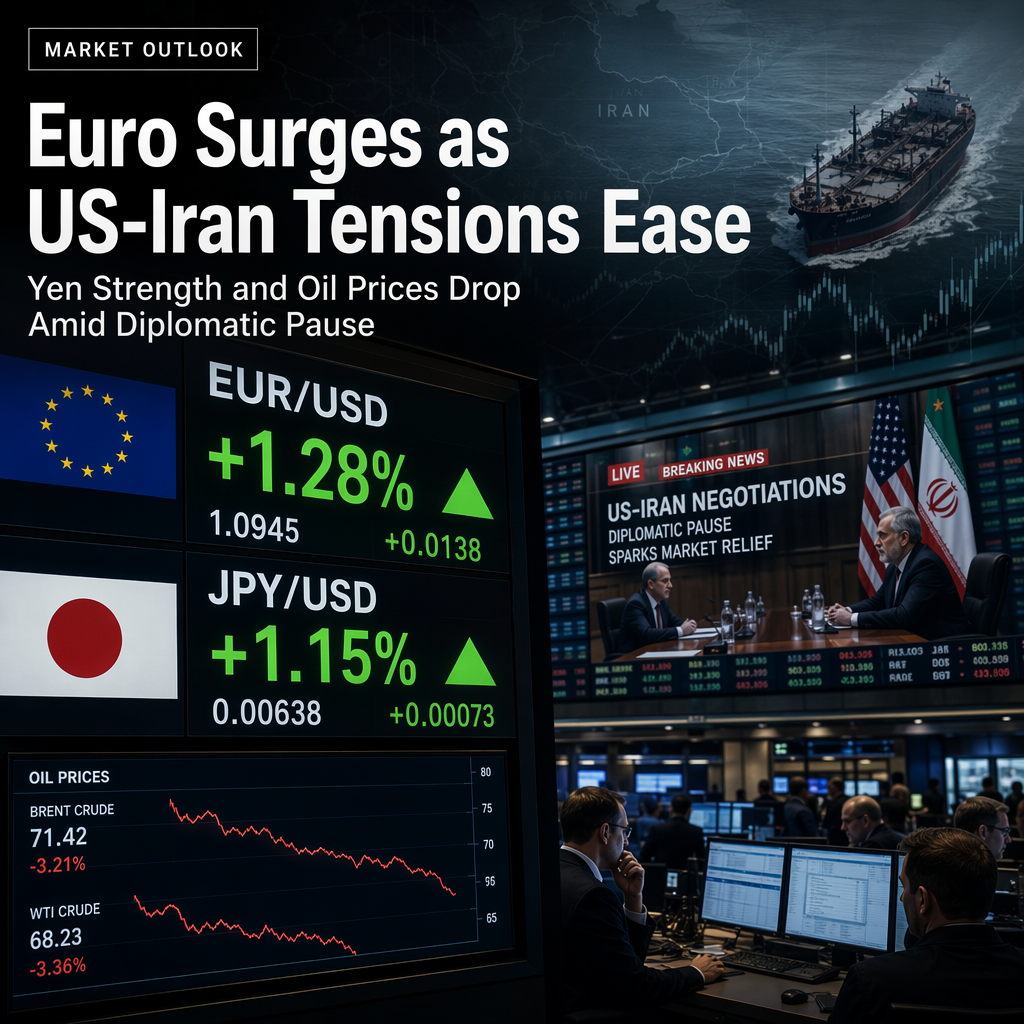
The Euro climbed beyond the 1.1400 mark against the US Dollar during the Asian session on Monday, driven by renewed optimism for a diplomatic resolution to the five-month-old US-Iran conflict. The US paused its bombing campaign after 13 consecutive nights of strikes on Iranian targets late Friday, prompting Tehran to suspend retaliatory attacks against Washington's allies in the Middle East. US ambassador to the UN Mike Waltz stated that President Trump wants to give negotiations a little bit of room, which boosted investor sentiment and undermined the safe-haven appeal of the US Dollar [1].
This easing of hostilities triggered a sharp fall in crude oil prices, which in turn eased inflationary concerns and tempered US Federal Reserve rate hike expectations. The USD Index (DXY) retreated from its monthly high, and the US Dollar weakened against major currencies, including a 0.36% decline against the Euro and a 0.18% decline against the Japanese Yen [1]. The Japanese Yen gained support from lower oil prices, as Japan is heavily dependent on Middle Eastern oil imports, making its economy sensitive to supply disruptions and crude price swings [2].
The USD/JPY pair remained subdued for the second day, trading around 163.60 during Asian hours on Monday, as risk aversion eased following the US-Iran pause. However, market participants remain cautious about potential supply disruptions, with Iran-backed Houthis in Yemen claiming responsibility for attacks on Saudi Arabian facilities along the Red Sea [2]. Reports indicate the US halted strikes due to concerns over depleting interceptor supplies and a shortage of remaining targets within Iran, with General Dan Caine cautioning President Trump about the strain on munitions reserves [2].
Looking ahead, both sources highlight upcoming central bank decisions. The US Federal Reserve is expected to announce its policy decision at the end of a two-day meeting on Wednesday, with TD Securities anticipating rates to remain unchanged, though noting hawkish momentum and possible dissents from Hammack and Logan [1]. Some market participants expect the Fed to resume rate hikes in September, while a minority anticipate a surprise move this week [2]. The Bank of Japan is also expected to hold rates steady on Friday [2].
CONCLUSION
The US-Iran strike pause has led to a weaker US Dollar and falling oil prices, boosting the Euro and Japanese Yen. While central banks are expected to hold rates steady this week, ongoing geopolitical risks and upcoming policy decisions remain key drivers for currency markets. Investors are advised to monitor further developments in the Middle East and central bank guidance for future trading opportunities.