
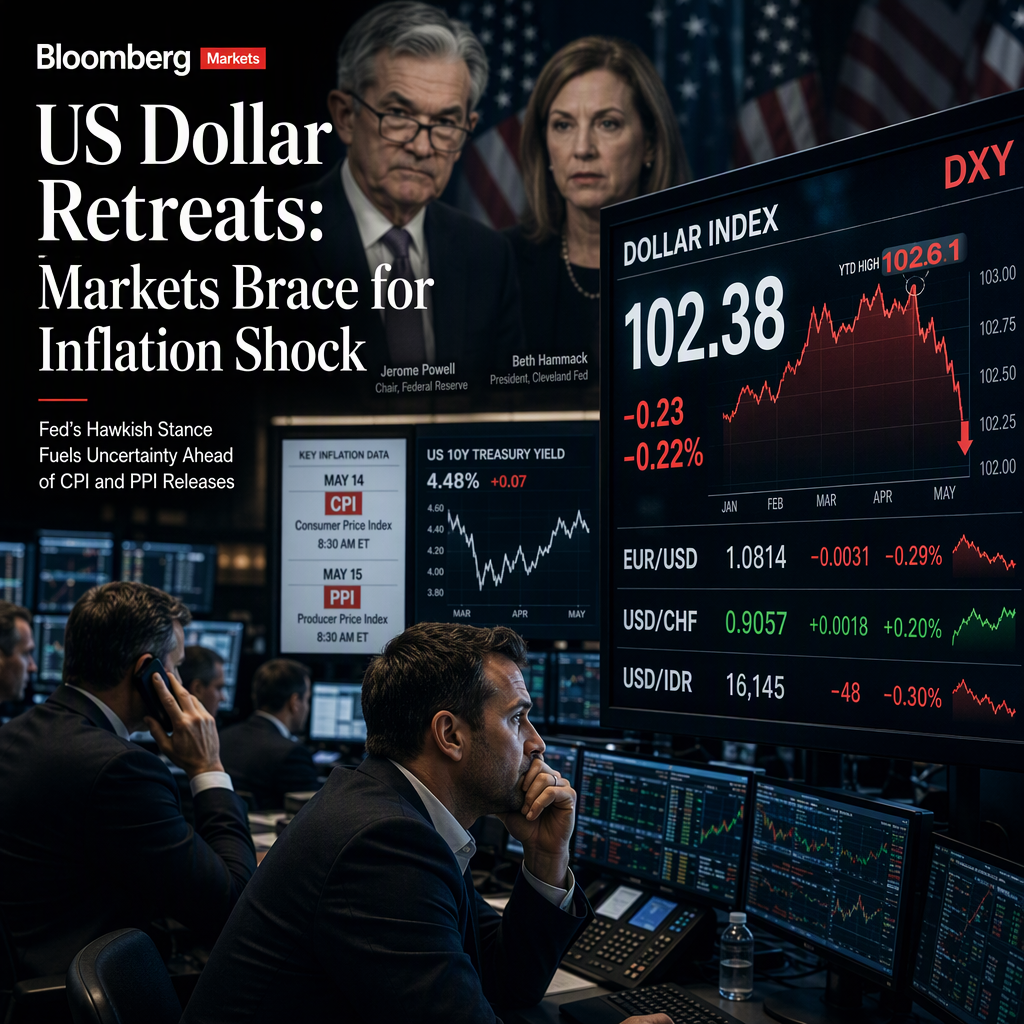
The US Dollar Index (DXY), which measures the Greenback against a basket of six major currencies, declined by 0.17% to near 102.38 in early European trading on Tuesday, after reaching a fresh yearly high of 102.61 on Monday [1][3]. This pullback was attributed to lower US Treasury yields, with 10-year US bond yields trading 0.85% lower at approximately 5.20% following the Columbus Day holiday closure [1]. Despite this retreat, market experts and analysts maintain a strong outlook for the US Dollar, citing robust domestic growth, persistent inflationary pressures, and expectations of further Federal Reserve (Fed) rate hikes [1][2].
Fed officials, including Cleveland Fed President Beth Hammack, have emphasized the need for tighter monetary policy to prevent an entrenched inflationary mindset, with Hammack delivering a notably hawkish tone and an 8.4/10 FXS Speechtracker score, well above the 7.5/10 historical average [1][2]. The CME FedWatch Tool indicates that traders assign an over 80% probability to rates remaining unchanged at the next Fed meeting, but see the likelihood of a rate hike at the December meeting as high as 84.7% or 88%, according to different sources [2][3].
Investors are closely watching upcoming US economic data releases, including the Consumer Price Index (CPI) on Wednesday and the Producer Price Index (PPI) and Retail Sales on Thursday, which are expected to significantly influence Fed policy expectations [1][2][3]. The headline CPI is forecast to rise 3.7% year-over-year in September, up from 3.4% previously, while core CPI is projected at 2.5% versus 2.4% in August [2]. Any signs of hotter-than-expected inflation could reinforce the Fed's restrictive policy stance [2].
In the currency markets, the US Dollar was the weakest against the Swiss Franc, down 0.23%, and also declined against the Euro, British Pound, and Japanese Yen [1]. The EUR/USD pair held gains above 1.1150, trading near 1.1175, but remains technically bearish under the 100-day SMA, with ING analysts highlighting bearish sentiment and the potential for a further dip toward 1.1100/1.1120 barring a major US policy misstep [2]. Meanwhile, the Indonesian Rupiah (IDR) gained against the US Dollar, with USD/IDR trading around 17,950, as Bank Indonesia's new chief reaffirmed the central bank's autonomy over interest rates and highlighted measures to stabilize the currency, including previous rate hikes and expanded local currency settlement agreements [3].
According to [1] and [2], the Fed's hawkish rhetoric and the anticipation of key inflation data are central to current market dynamics, with [3] also noting the US Dollar's pullback from an 18-month high and the global implications for emerging market currencies.
CONCLUSION
The US Dollar has retreated from recent highs amid lower Treasury yields, but the outlook remains underpinned by hawkish Fed expectations and upcoming inflation data. Market participants are bracing for potential volatility as CPI and PPI figures are released, which could further clarify the Fed's policy path. Overall, sentiment remains cautious, with the possibility of renewed US Dollar strength if inflation surprises to the upside.