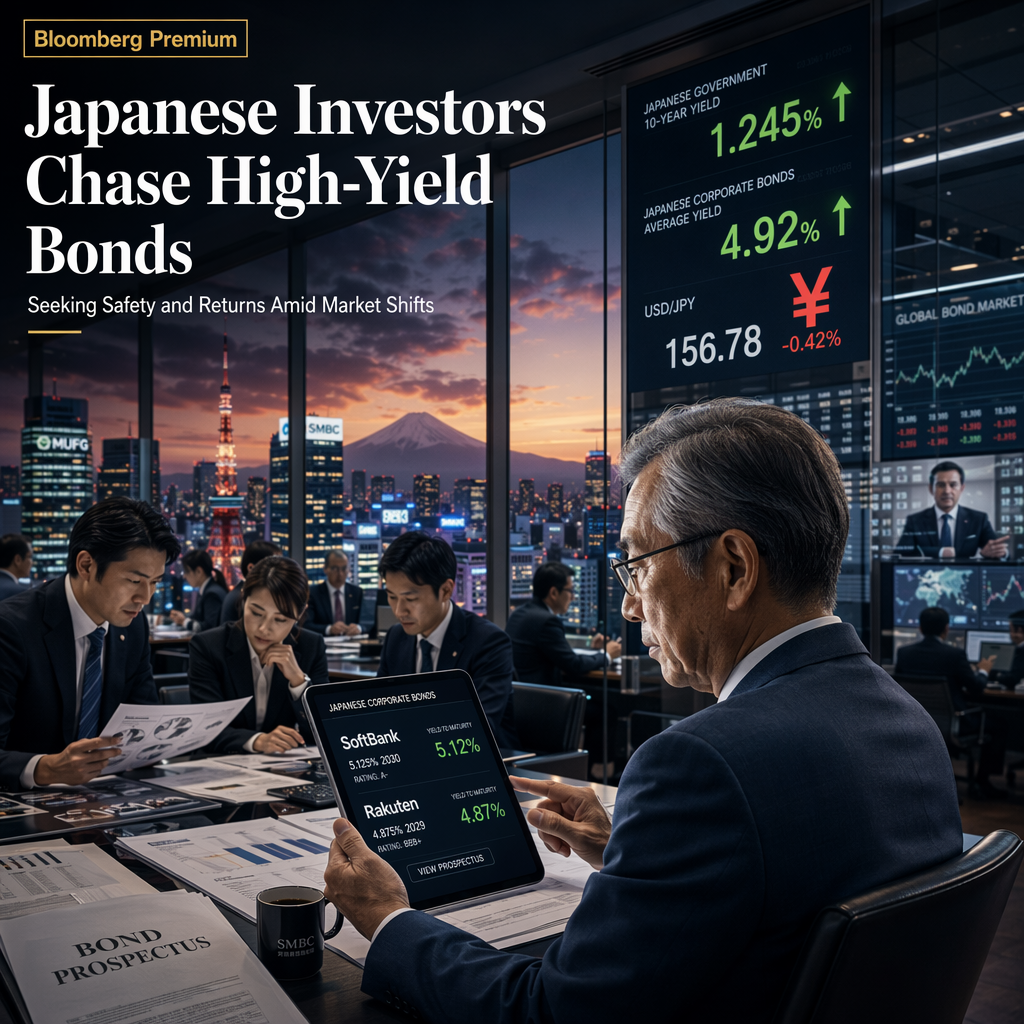
Japanese retail investors are increasingly purchasing corporate bonds from major issuers such as SoftBank Group and Rakuten, attracted by their relatively high yields compared to traditional savings options and government bonds [1]. This shift is driven by the current interest rate environment, which has made fixed-income products more appealing for those seeking steady returns, particularly among asset-rich older households [1]. Brokers report that recent SoftBank and Rakuten bond issuances have been oversubscribed, reflecting strong market appetite, although exact yield figures were not disclosed [1]. Market analysts interpret this trend as a clear move away from riskier equity investments and investment trusts, with retail investors favoring the perceived safety and predictability of well-known corporate bonds [1].
At the same time, Japanese pension funds are purchasing foreign bonds at record levels to stabilize their portfolios in response to soaring global equities, a weakening yen, and rising interest rates abroad [2]. The surge in global stock prices has increased the equity portion of pension fund portfolios, prompting a rebalancing toward foreign bonds to mitigate risks and maintain stability [2]. The weak yen has made foreign assets more attractive, while higher global interest rates have improved yields on foreign bonds relative to domestic options [2]. Financial data from recent quarters confirm record levels of foreign bond purchases by Japanese pension funds, highlighting the scale of this reallocation [2].
Market strategists and analysts from both articles emphasize the importance of balancing risk and return in the current environment. For retail investors, the popularity of SoftBank and Rakuten bonds is expected to persist as long as interest rates and inflationary pressures remain elevated in Japan, though they are advised to consider credit risk when seeking higher yields [1]. For institutional investors, particularly pension funds, the rebalancing toward foreign bonds is seen as a proactive response to global market shifts, with expectations that this trend will continue if the yen stays weak and global yields remain attractive [2].
These developments signal a broader reallocation among Japanese investors—retail and institutional alike—toward fixed-income products, both domestically and internationally, as they seek to optimize returns and manage risk in a changing market landscape [1][2].
CONCLUSION
Japanese retail and institutional investors are reallocating toward high-yield bonds in response to rising interest rates, a weak yen, and global market shifts. This trend is driving strong demand for corporate bonds from issuers like SoftBank and Rakuten, as well as record foreign bond purchases by pension funds. The market takeaway is a clear shift toward fixed-income strategies as investors seek stability and enhanced returns.