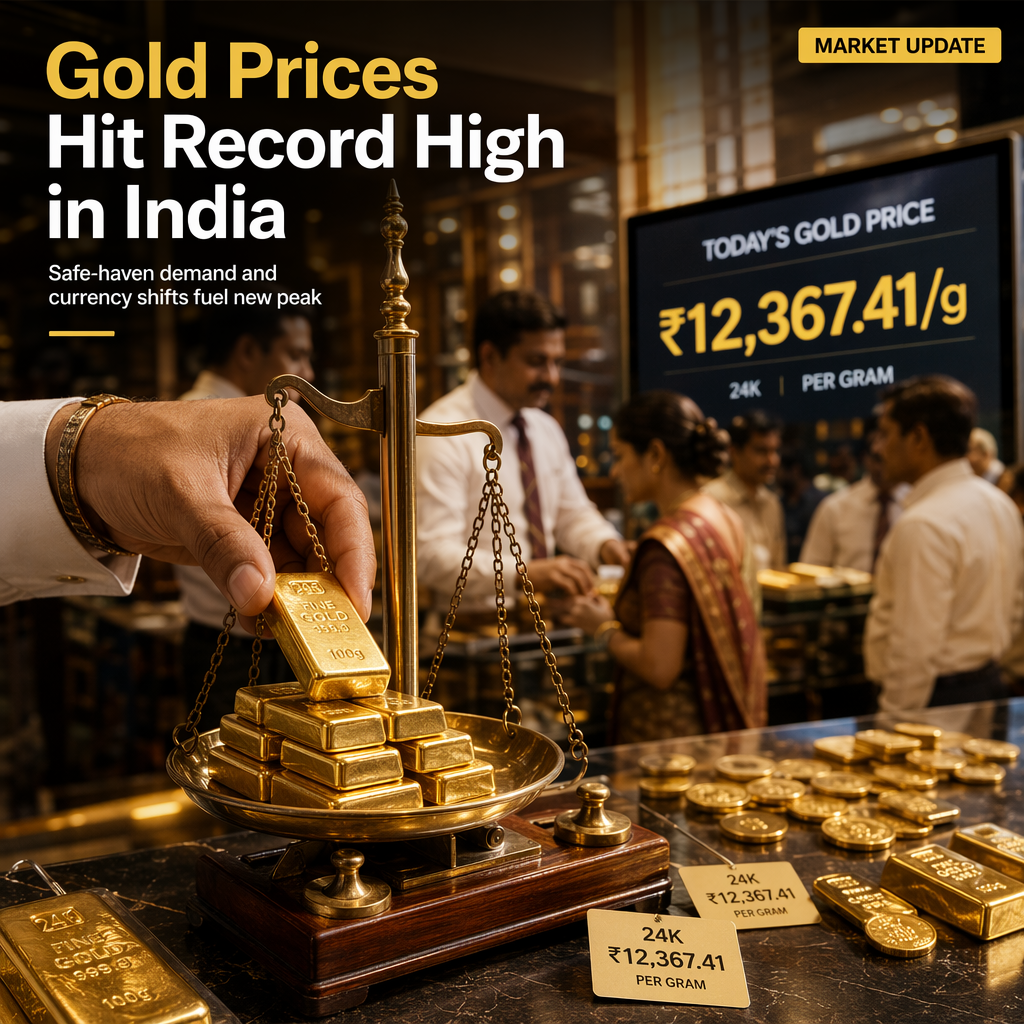
Gold prices in India experienced an uptick on Friday, according to FXStreet data. The price per gram rose to 12,367.41 Indian Rupees (INR), up from 12,311.85 INR the previous day. Similarly, the price per tola increased to 144,249.10 INR from 143,603.00 INR a day earlier, reflecting a consistent upward movement in gold valuations across different measurement units [1]. FXStreet notes that these prices are calculated by adapting international gold prices (USD/INR) to local currency and measurement units, with daily updates based on prevailing market rates. However, it is highlighted that local rates may diverge slightly from these reference prices [1].
The article underscores gold's role as a safe-haven asset, particularly during turbulent times, and its function as a hedge against inflation and depreciating currencies. Central banks, especially those from emerging economies such as China, India, and Turkey, have been increasing their gold reserves, with a record purchase of 1,136 tonnes worth approximately $70 billion in 2022, according to the World Gold Council [1].
Gold's price is influenced by a variety of factors, including geopolitical instability, recession fears, and movements in the US Dollar. The metal is inversely correlated with the US Dollar and US Treasuries, meaning that when the Dollar depreciates, gold prices tend to rise. Additionally, gold prices are negatively correlated with risk assets; rallies in the stock market typically weaken gold prices, while sell-offs in riskier markets tend to favor the precious metal [1].
No specific forward-looking statements or analyst opinions regarding future gold price movements were provided in the article. The focus remains on the current price increase and the broader context of gold's role in financial markets.
CONCLUSION
Gold prices in India have risen, reflecting broader trends in safe-haven demand and central bank accumulation. The market impact is medium, with the increase driven by factors such as currency movements and global economic uncertainty. No explicit analyst forecasts or forward-looking statements were included in the article.