
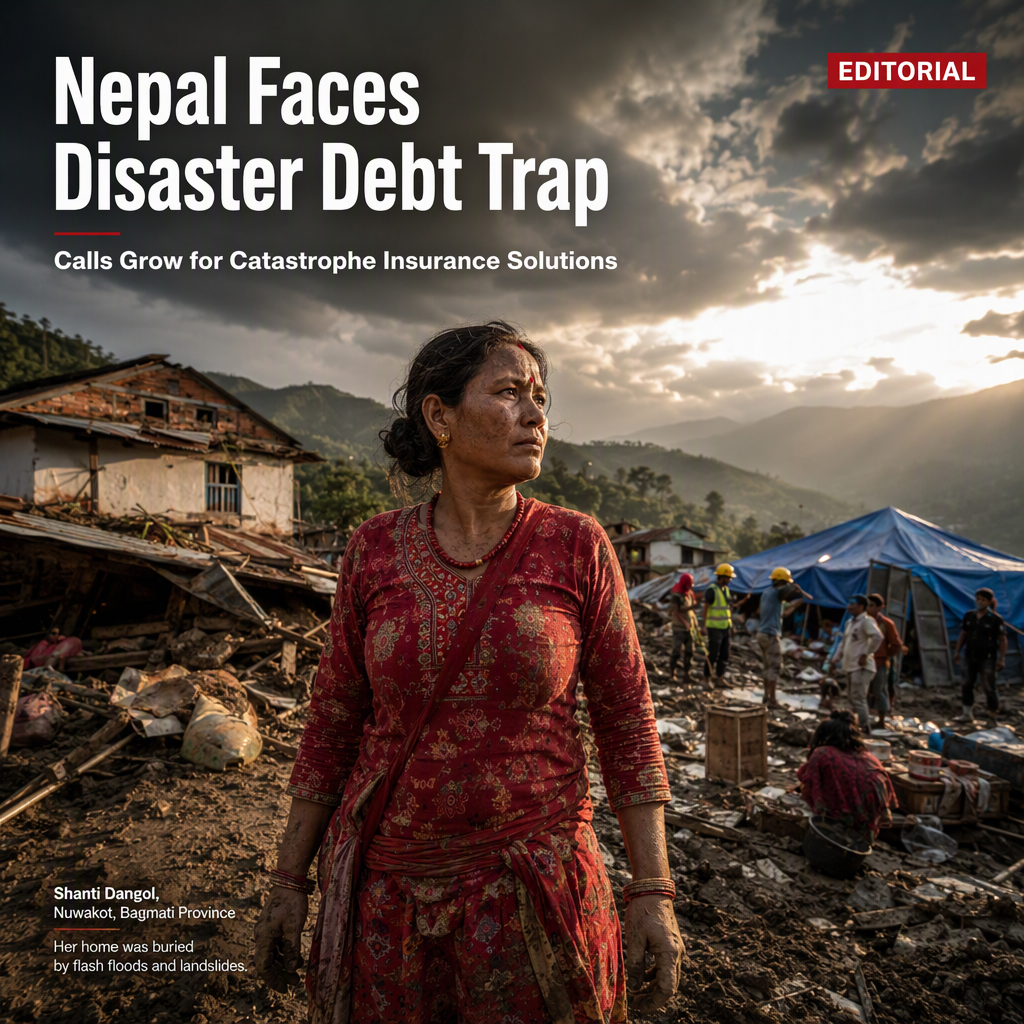
Nepal continues to face a recurring pattern of natural disasters, including devastating earthquakes, flash floods, and mudslides, which have resulted in significant displacement and destruction. For example, Shanti Dangol was displaced by recent flash floods and mudslides that buried her home in Betrawati, Nuwakot district, Nepal, on September 9 [1]. The government has repeatedly relied on donor-backed rebuilding efforts, leading to years of debt servicing and straining the country's limited fiscal resources [1].
Despite the frequency and severity of these disasters, Nepal lacks a robust insurance framework to price and transfer catastrophe risk. This absence leaves both the government and citizens exposed to financial shocks, hindering long-term recovery and development [1]. The recent floods have imposed immense costs for rebuilding homes, infrastructure, and livelihoods. Without pre-existing insurance or risk-transfer instruments, the government has been forced to divert funds from development projects or take on additional loans from international donors and financial institutions, perpetuating a cycle of debt and underinvestment in critical sectors [1].
The article advocates for the introduction of a well-structured catastrophe insurance scheme in Nepal. Such a scheme could help manage disaster risk more effectively by pooling risk and providing immediate liquidity following a disaster, thereby reducing reliance on unpredictable donor aid. Insurance premiums would also establish a market-based price for disaster risk, encouraging investment in mitigation and resilience [1].
The piece highlights that countries in the Caribbean, which are also vulnerable to natural disasters, have successfully implemented parametric insurance products that provide rapid payouts after specific triggers, such as storms or earthquakes. Nepal could adapt these models by collaborating with regional partners and international reinsurers to develop tailored products that address its unique risk profile [1]. The growing impact of climate change, which is increasing the frequency and intensity of extreme weather events, further underscores the need for disaster risk insurance in Nepal [1].
The article concludes by emphasizing the importance of collaboration among policymakers, donors, and the insurance industry to introduce and scale up disaster risk insurance in Nepal, which would protect the country's fragile economy and support more resilient and sustainable development [1].
CONCLUSION
Nepal's lack of catastrophe insurance leaves it financially vulnerable to recurring natural disasters, forcing reliance on donor aid and increasing debt. Implementing disaster risk insurance could provide immediate liquidity, reduce fiscal shocks, and support sustainable development. The article calls for urgent collaboration among stakeholders to establish such mechanisms.