
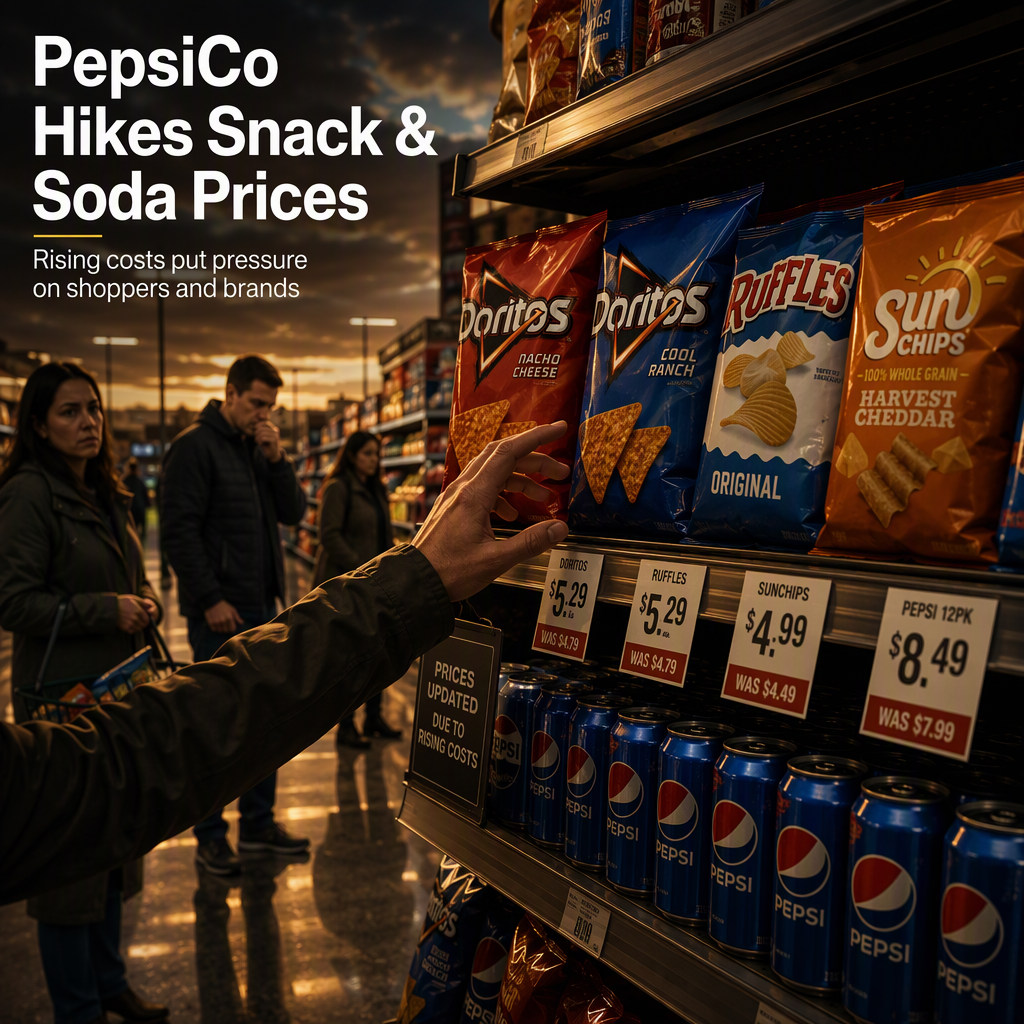
PepsiCo has announced it will raise prices on some of its popular snack and beverage brands, including Doritos, Ruffles, SunChips, and certain sodas, just months after implementing price cuts aimed at attracting inflation-weary shoppers [1]. The company stated that the new price increases will be in the single-digit percentage range and are a response to higher costs for fuel, aluminum, and agricultural supplies, as well as factors related to the conflict involving Iran and tariffs [1]. Despite these increases, PepsiCo emphasized that prices will remain lower than they were at the start of the year [1].
Earlier in February, PepsiCo had reduced prices by up to 15% on select products such as Lay's and Doritos, following customer backlash from previous price hikes [1]. The latest move marks a strategic shift as the company contends with ongoing cost pressures and weaker-than-expected third-quarter results in its North American division [1]. CEO Ramon Laguarta noted that while the price cuts did help bring back some customers, Frito-Lay snack volumes remained flat year-over-year, and beverage volumes declined by 2% [1]. Laguarta acknowledged that the company's sodas, including the flagship Pepsi brand, have struggled against competitors, stating, "We don’t feel good about the beverage business" [1].
In response to sluggish demand, PepsiCo plans to cut costs and reinvest the savings into beverage brands such as Poppi, Mountain Dew, and Pepsi [1]. The company is focusing on improving its performance in the soft drinks segment, with Laguarta emphasizing the urgency and focus being placed on this area [1].
No specific analyst opinions or forward-looking financial projections were provided in the article [1].
CONCLUSION
PepsiCo's decision to raise prices on select snacks and beverages reflects ongoing cost pressures and challenges in its North American beverage business. While the company aims to offset higher input costs and reinvest in key brands, flat snack volumes and declining beverage sales highlight the competitive and inflationary environment. The market is likely to view these developments as a cautious response to persistent headwinds.