
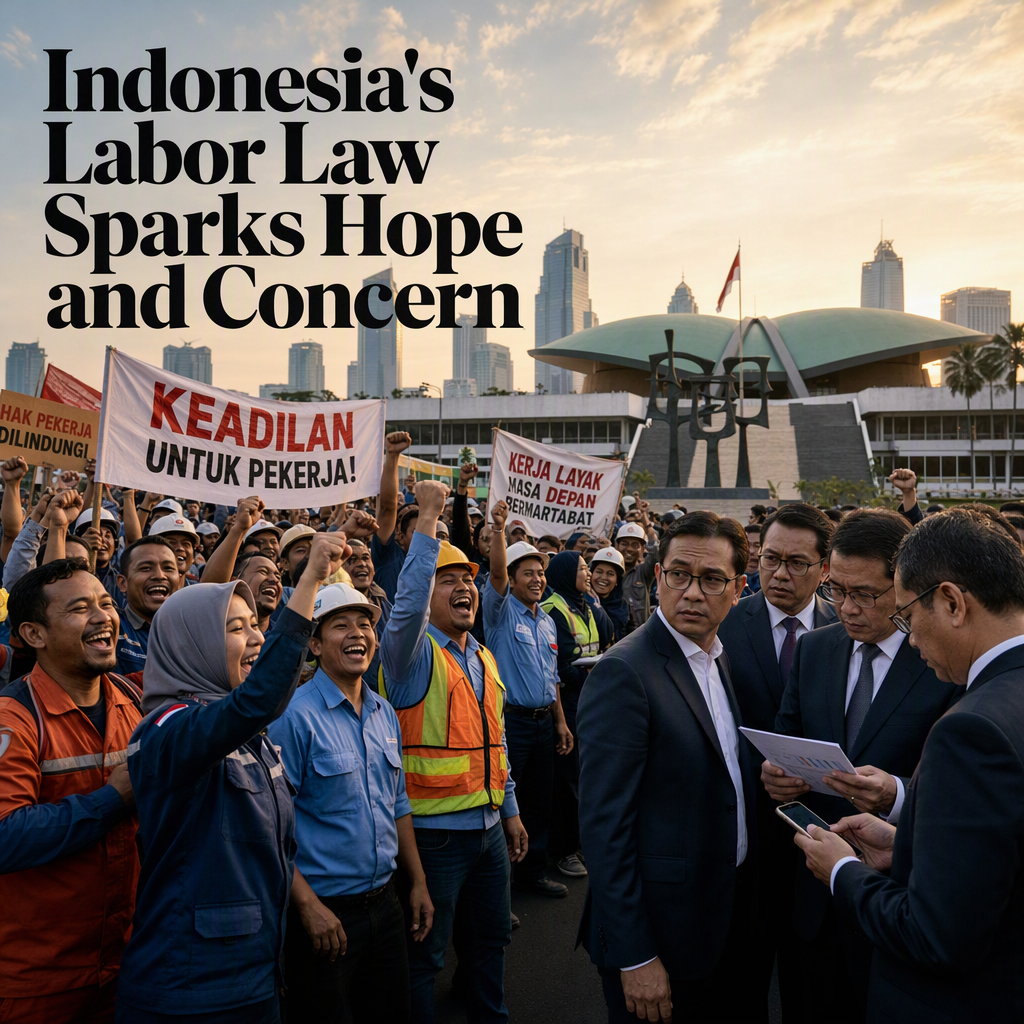
Indonesia's legislature passed a new labor law on October 6, 2026, marking a significant development for labor rights in the country [1]. The law has been met with strong approval from Indonesian labor groups, who have described it as a 'victory' for workers' rights in Southeast Asia's largest economy [1]. Unions have specifically celebrated key provisions of the law, viewing it as a major step forward for worker protections [1].
However, the business community has expressed anxiety regarding the new regulations. Investors and business lobby groups have flagged concerns about 'confusion' and 'rising risks' stemming from regulatory uncertainty introduced by the law [1]. There are particular worries about the potential for increased hiring costs, which could negatively impact Indonesia's investment climate and economic growth prospects [1].
The article notes that while worker sentiment is strongly positive, investor and business sentiment is cautious due to fears of higher labor costs and unclear regulatory guidance [1]. No specific financial data, such as price levels or technical indicators, are provided, but the overall analysis suggests that the law could influence Indonesia's business environment and investment outlook [1].
CONCLUSION
Indonesia's new labor law has been celebrated by workers' groups as a major win for labor rights, but it has raised concerns among businesses about higher costs and regulatory uncertainty. The mixed sentiment highlights potential challenges for Indonesia's investment climate, with the law likely to have a medium market impact as stakeholders adjust to the new regulations.