
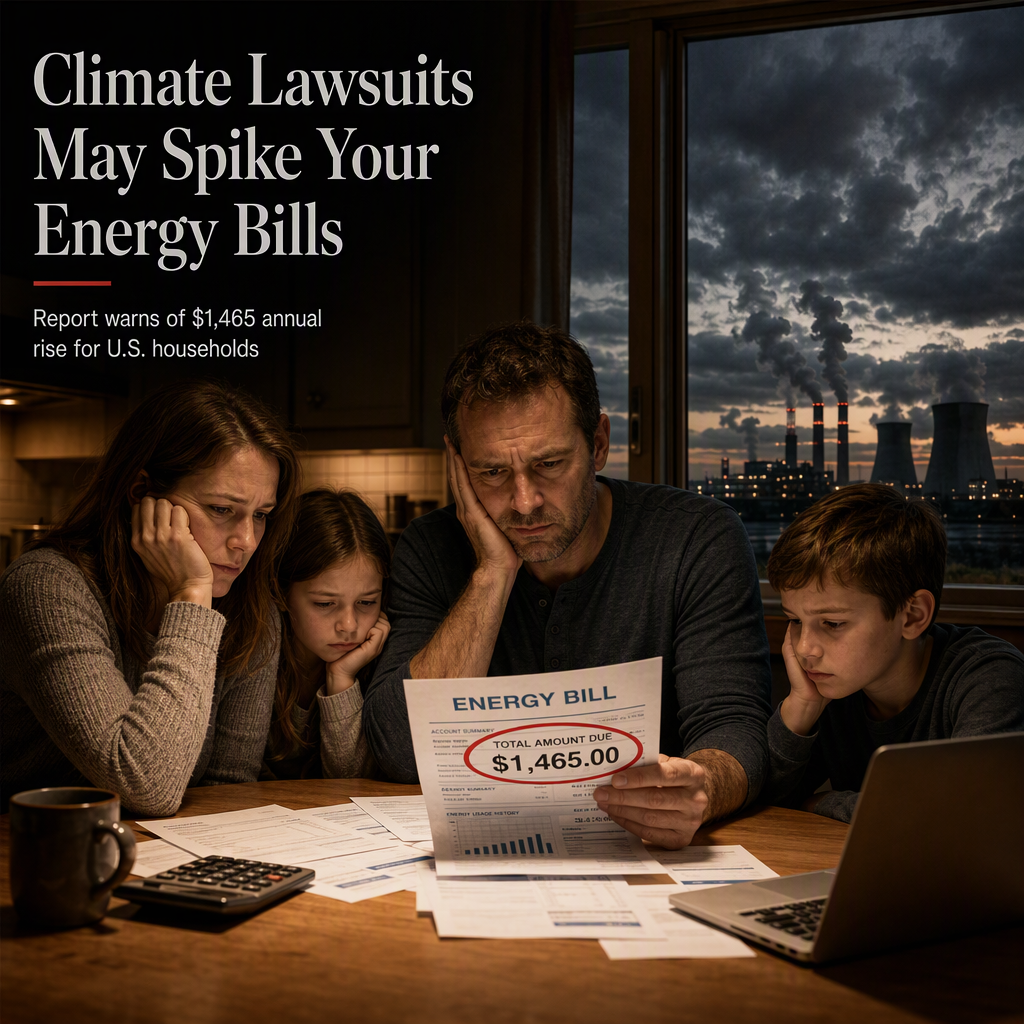
A new report highlighted in an opinion piece warns that ongoing climate lawsuits and related legislative efforts could significantly increase costs for American households, estimating an average rise of $1,465 per year in energy bills if these initiatives succeed [1]. The analysis, provided by Heritage Foundation Chief Economist EJ Antoni and Power The Future founder Daniel Turner, projects that this could amount to nearly $15,000 in additional expenses over a decade for the average family [1].
The article details a nationwide campaign involving over 30 lawsuits filed by 11 states, the District of Columbia, and numerous cities, demanding that energy companies pay for alleged impacts on global climate change [1]. New York and Vermont have enacted 'climate superfund' laws, with New York capping liabilities at $75 billion and Vermont leaving liabilities uncapped [1]. Additionally, a dozen other states and members of Congress have proposed similar measures, including the Polluters Pay Climate Fund Act, which aims to collect $1 trillion over 10 years [1].
The authors argue that, despite claims from supporters that these costs will not affect families and will instead be borne by shareholders, the financial burden will ultimately be passed on to consumers through higher energy prices [1]. They further contend that increased risk and potential retroactive penalties could deter investment in energy infrastructure, leading to even higher costs or stalled projects [1]. The article also notes that many shareholders are middle-class Americans with retirement accounts invested in energy stocks, suggesting that the financial impact could extend beyond direct energy costs [1].
No specific market reactions or analyst opinions are provided in the article, but the overall tone suggests significant concern about the potential economic impact of these climate-related legal and legislative actions [1].
CONCLUSION
The report warns that climate lawsuits and related legislation could substantially increase energy costs for U.S. households, with the financial burden likely to be passed on to consumers and investors. The potential for higher prices and reduced investment in energy infrastructure signals a high market impact if these measures advance.