
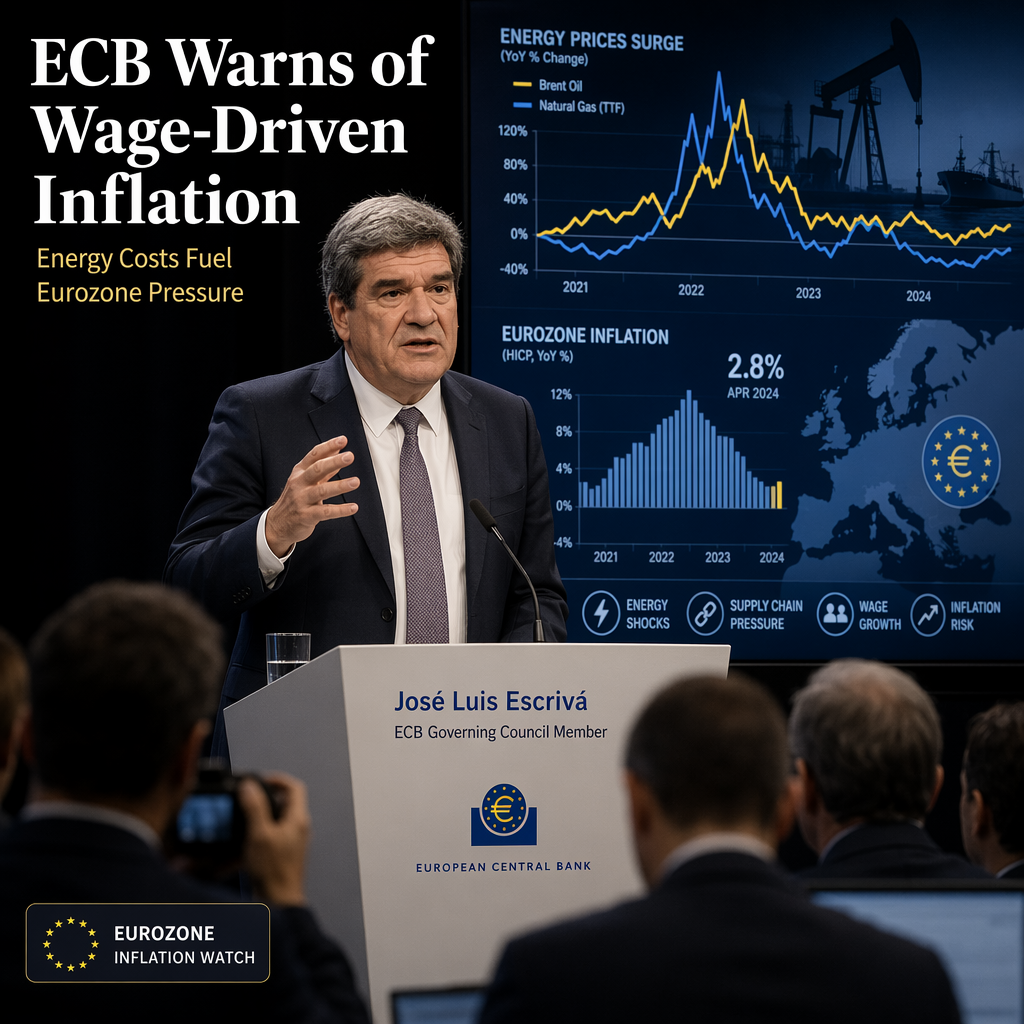
European Central Bank (ECB) policymaker and Governor of the Bank of Spain, José Luis Escrivá, emphasized the need for the central bank to closely monitor potential second-round effects on wages during the European trading session on Monday [1]. Escrivá highlighted that inflationary pressures in the Eurozone have accelerated in recent months, attributing this trend to higher energy prices resulting from ongoing Middle East conflicts [1].
Escrivá reiterated his concerns from a speech delivered in Barcelona the previous week, noting that energy costs are beginning to spread into the services and transport sectors, which could further fuel inflation if not contained [1]. Despite these warnings, there was no immediate market reaction to Escrivá's remarks. The Euro (EUR) remained under pressure, with EUR/USD trading 0.23% lower at around 1.1445, primarily due to the US Dollar's (USD) outperformance rather than direct impact from the ECB official's comments [1].
No forward-looking statements or analyst opinions were provided in the article regarding potential ECB policy responses or future market movements [1].
CONCLUSION
ECB’s Escrivá’s comments underscore ongoing concerns about inflationary pressures in the Eurozone, particularly the risk of wage-driven second-round effects. However, the market response was muted, with the Euro's decline attributed to broader USD strength rather than Escrivá's remarks.