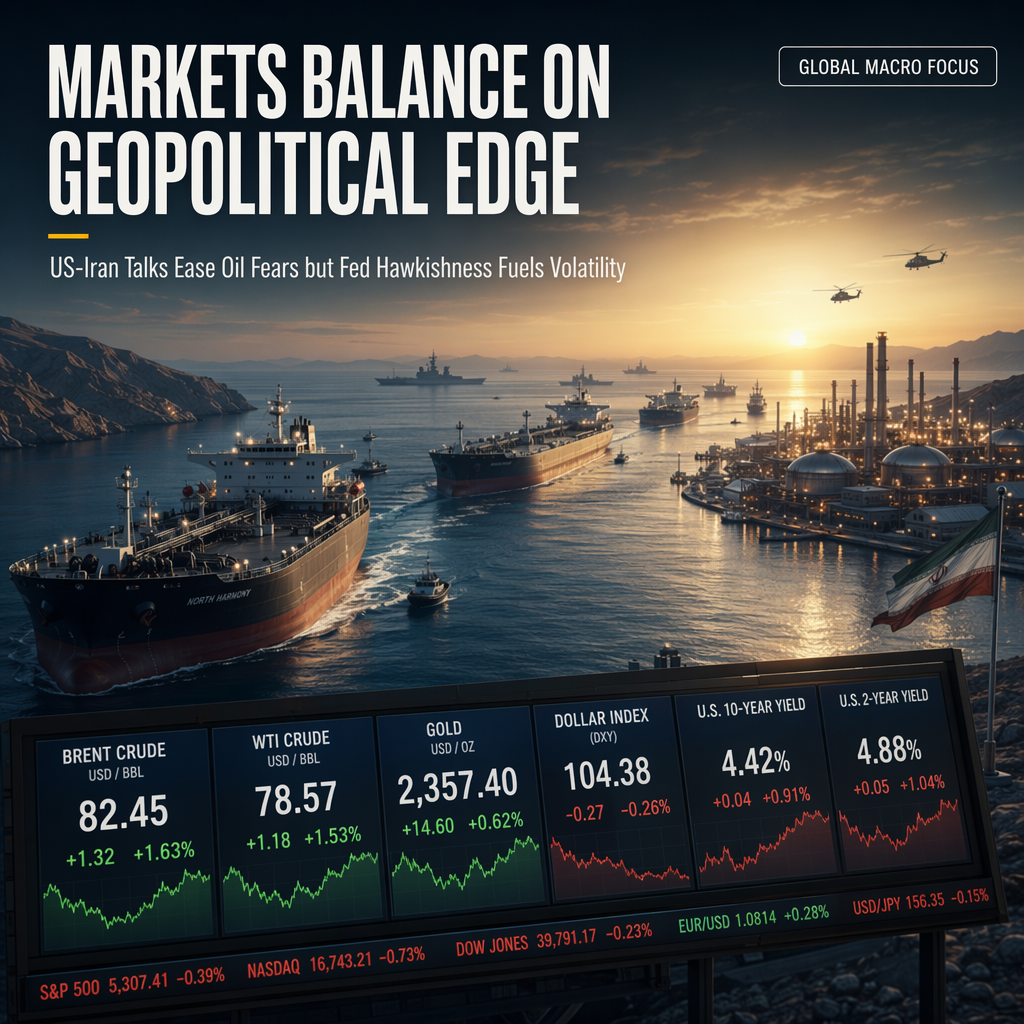
Recent progress in US–Iran negotiations, mediated by Qatar and Pakistan in Switzerland, has led both sides to agree on a roadmap toward a potential deal within 60 days, including the establishment of technical working groups, a de-conflict mechanism for Lebanon, and a direct communication line to keep the Strait of Hormuz open [1]. This development has eased fears of energy supply disruptions, with Brent crude reversing earlier gains and trading at $79.27 per barrel, down 1.61% [1]. Last week, oil prices fell sharply as markets reacted to news of an interim US-Iran deal, which also contributed to a decline in inflation swaps and reduced concerns about a stagflationary shock to the global economy [1]. The resumption of oil and LNG flows through the Strait of Hormuz further alleviated supply fears [2].
However, the path to a durable resolution in the Middle East remains fragile. According to one report, Iran accused the US and Israel of violating the ceasefire and announced the closure of the Strait of Hormuz again, citing continued Israeli strikes in Lebanon. Additionally, US President Donald Trump threatened military action against Iran if Hezbollah continued attacks on Israel, underscoring ongoing geopolitical risks [4]. These developments have kept the risk premium in play and tempered investor appetite for riskier assets, driving safe-haven flows toward the US Dollar [4].
The US Dollar has remained firm, supported by a hawkish repricing of Federal Reserve rate hike expectations and a rebound in US yields [3]. Markets now see roughly even odds of a near-term Fed hike, with positive US economic data and hawkish Fed communication encouraging expectations for a rate increase as soon as next month [3]. The NZD/USD pair dropped to its lowest level since April 8, trading around 0.5725-0.5720, as the bullish USD and geopolitical uncertainties outweighed the Reserve Bank of New Zealand's hawkish stance [4].
Gold prices have fallen for a third consecutive session and week, losing over 2% as investors reassessed US-Iran negotiations and US monetary policy. Easing energy supply fears and hawkish comments from Federal Reserve Chair Kevin Warsh have reduced gold's appeal, although ongoing Middle East risks continue to offer some underlying support [2]. Treasury yields have also risen, with the 10-year note at 4.483%, the 2-year at 4.213%, and the 30-year at 4.919%, as investors await key inflation data and focus on the Fed's more hawkish tone following last week's meeting, where the federal funds rate was kept at 3.5%-3.75% [5].
Looking ahead, markets are closely watching the Thursday release of the personal consumption expenditures price index, the Fed's preferred inflation gauge, which could influence the timing of future rate hikes [5]. While progress in US-Iran talks has eased some supply risks, ongoing geopolitical tensions and the Fed's hawkish stance continue to drive volatility across asset classes.
CONCLUSION
Progress in US-Iran negotiations has temporarily eased oil supply fears and reduced stagflation risks, but persistent geopolitical tensions and a hawkish Federal Reserve are keeping markets volatile. The US Dollar and Treasury yields remain strong, while gold and risk-sensitive currencies like NZD are under pressure. Investors are now focused on upcoming inflation data for further signals on Fed policy direction.