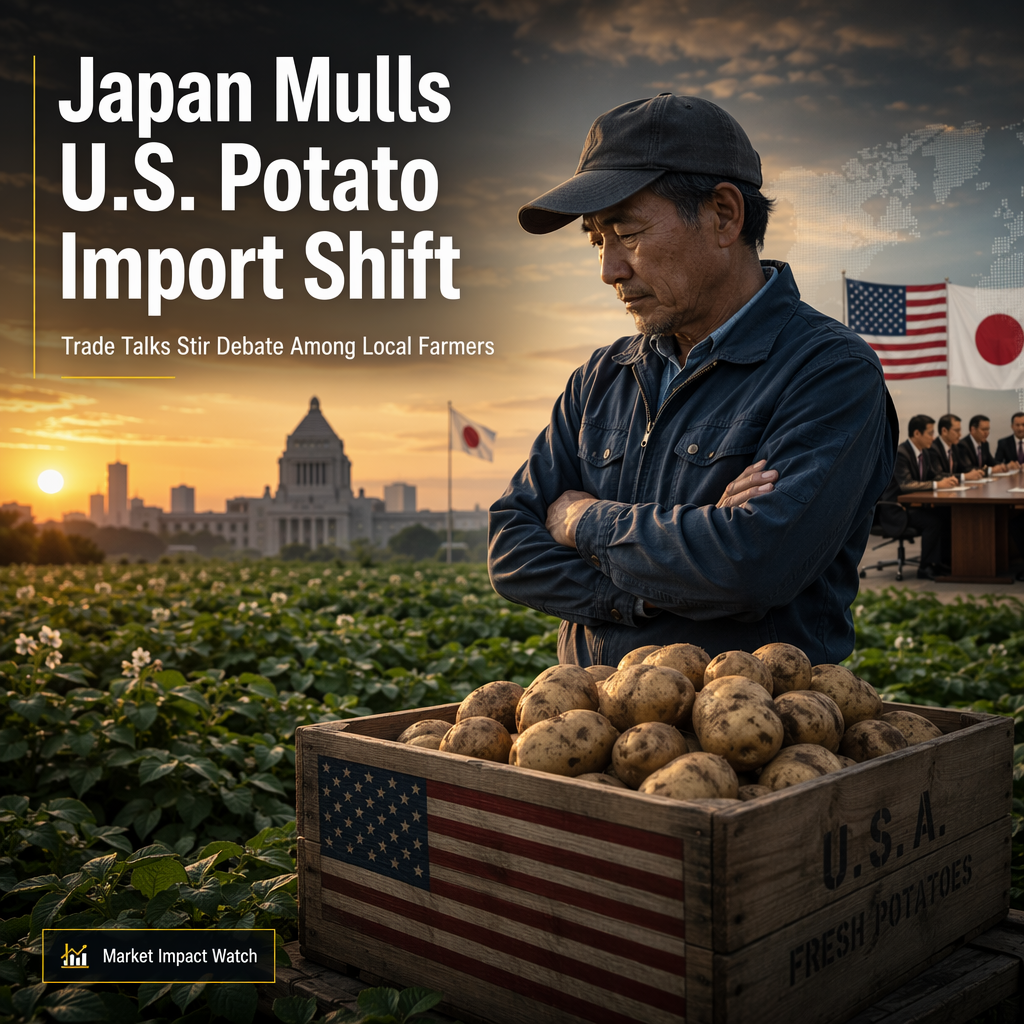
Japan's ruling party is currently debating whether to lift the longstanding ban on importing American potatoes for fresh consumption, a measure that has been maintained due to concerns over diseases and pests [1]. This potential policy shift is being considered as a strategic bargaining chip in ongoing trade negotiations with the United States, particularly as President Donald Trump continues to press for greater access for American agricultural products in the Japanese market [1].
Allowing U.S. potato imports would provide Japanese consumers with more choices but could heighten competition for domestic farmers, a point of contention among farmer-backed lawmakers who have voiced strong concerns about the potential impact on local producers [1]. Proponents of lifting the ban argue that the Japanese market would benefit from increased supply and consumer options, and suggest that strict quarantine protocols could address the risks associated with disease and pest introduction [1].
No official decision has been made, and discussions are ongoing within the ruling party [1]. Market observers indicate that lifting the ban could significantly affect the Japanese potato market by increasing imports and influencing domestic prices [1]. The outcome of these deliberations is being closely monitored by Japanese farmers, U.S. exporters, and trade negotiators from both countries [1].
CONCLUSION
Japan's consideration of lifting the ban on U.S. fresh potato imports is a key development in bilateral trade talks, with potential implications for domestic farmers and market dynamics. The decision remains pending, and stakeholders are watching closely for its impact on both trade negotiations and the Japanese agricultural sector.