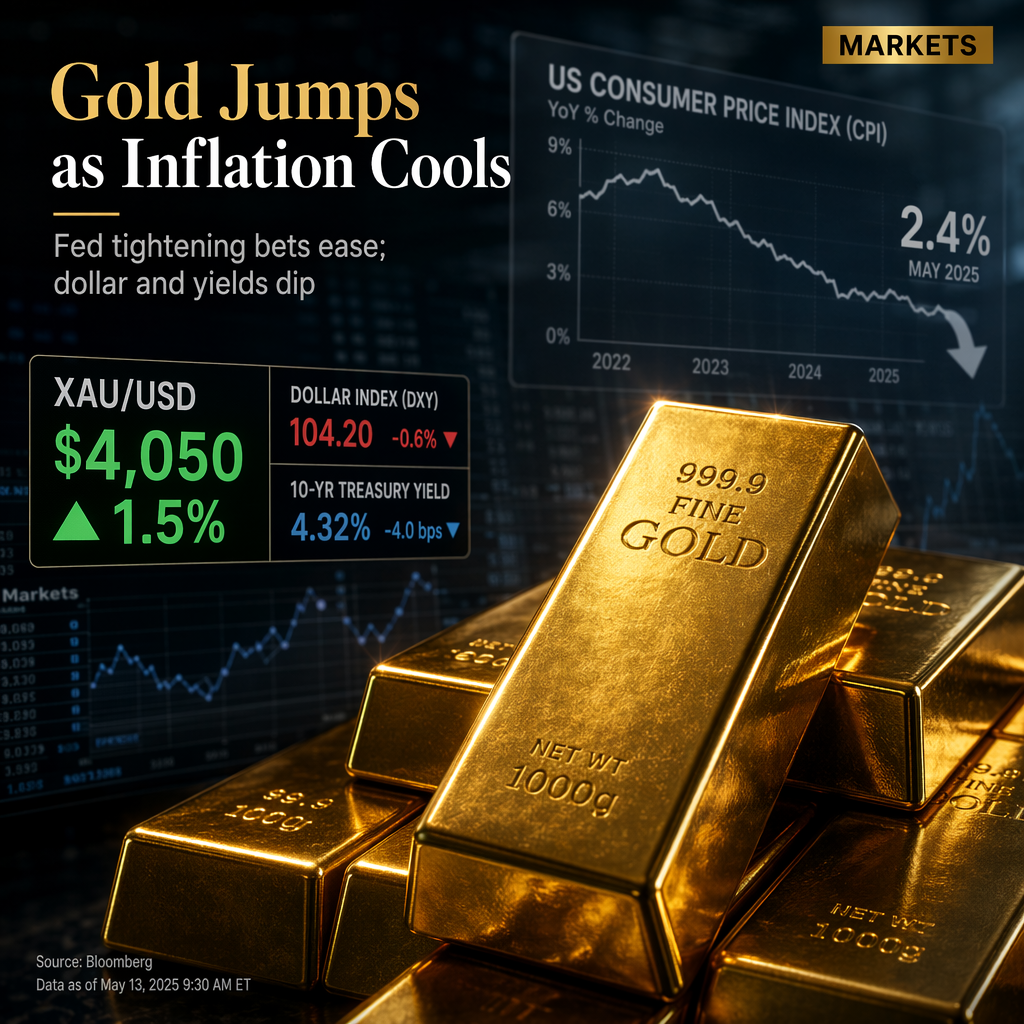
Gold prices jumped by approximately 1.50% on Tuesday, with XAU/USD trading at $4,050 after rebounding from daily lows of $3,983. This surge followed the release of US consumer inflation data for June, which came in below expectations. The Consumer Price Index (CPI) dropped from 4.2% to 3.5% year-over-year, undercutting estimates for a 3.8% slowdown. Core inflation also eased from 2.9% to 2.6%, below the forecasted 2.8% rate. This marks the lowest monthly CPI reading since 2020, signaling that aggressive Federal Reserve rate hikes may not be necessary at this time [1].
The softer inflation data prompted investors to scale back expectations for further Fed tightening. On Monday, money markets priced in over 35 basis points of tightening by year-end, but this fell to just 18 basis points after the CPI release, reflecting a 72% probability of a rate hike in 2026 according to Prime Terminal data [1]. The US Dollar Index (DXY) declined 0.35% to 100.92, while the US 10-year Treasury yield dropped nearly 4.5 basis points to 4.581%. Both moves provided additional support for gold, as a weaker dollar and lower yields make bullion more attractive to investors [1].
Federal Reserve Chair Kevin Warsh addressed Congress, emphasizing that the central bank remains committed to its 2% inflation target and will not tolerate persistently elevated inflation. He cautioned against overreacting to a single month of data. Chicago Fed President Austan Goolsbee echoed this sentiment, describing June’s CPI as 'surprisingly benign' but stressing the need for several months of similar readings before adjusting monetary policy [1].
Despite the positive inflation news, geopolitical tensions in the Middle East have pushed oil prices higher, with West Texas Intermediate (WTI) up 1% on the day and 10.27% in July. The article notes that the recent dip in inflation could be short-lived if energy prices continue to rise due to ongoing hostilities between the US and Iran [1].
CONCLUSION
Gold rallied sharply as softer-than-expected US inflation data reduced expectations for further Federal Reserve tightening, weakening the dollar and Treasury yields. However, Fed officials remain cautious, emphasizing the need for sustained progress toward the 2% inflation target. Rising oil prices and geopolitical risks could limit the duration of this inflation relief.