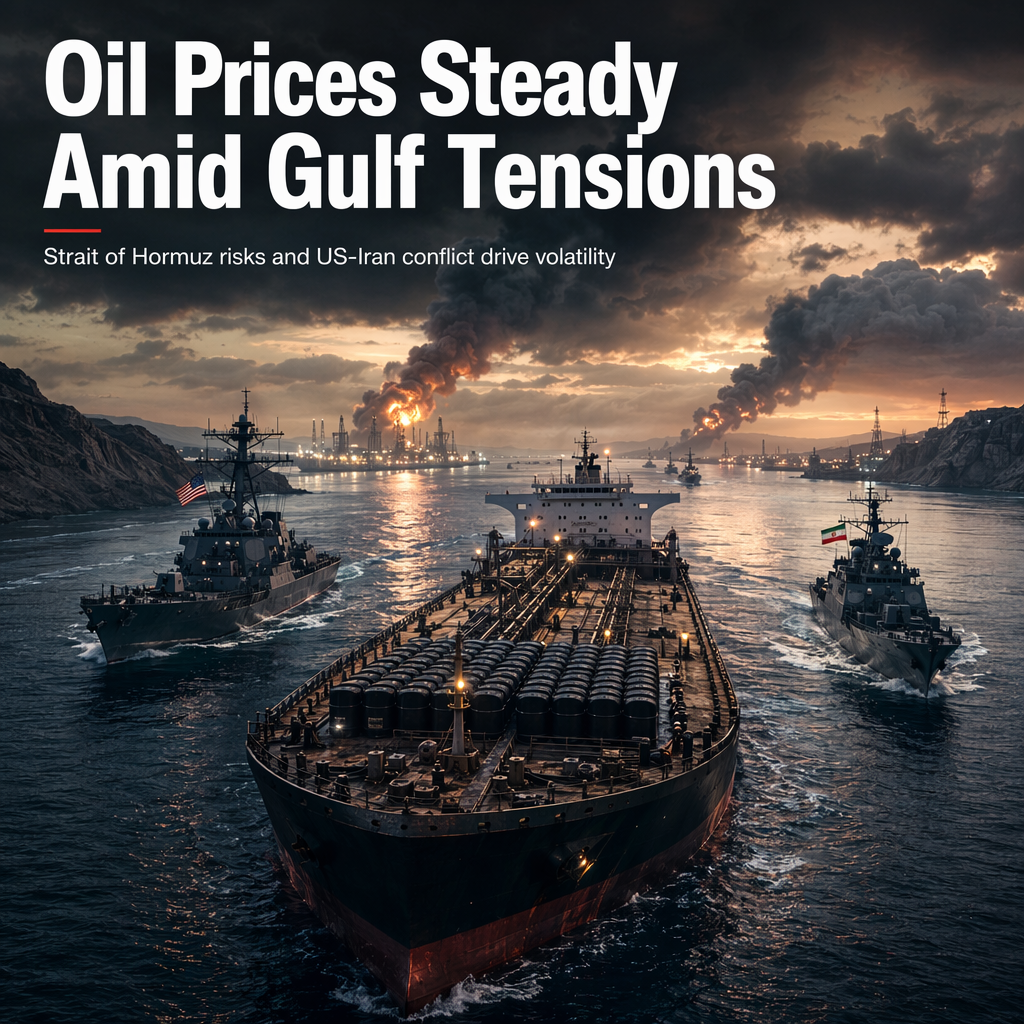
West Texas Intermediate (WTI), the benchmark US crude oil price, traded above $74.00 during the Asian session on Thursday, marking a slight decline of 0.30% for the day but remaining close to the two-week high of $75.75 reached the previous day [1]. The downside for WTI appears limited as escalating tensions between the US and Iran have introduced fresh geopolitical risks. The US military launched a new wave of strikes against Iran in retaliation for Tehran’s attacks on commercial ships in the Strait of Hormuz, a critical oil transit route. Iran responded by targeting approximately 85 US military installations and assets in Bahrain and Kuwait [1]. US President Donald Trump announced on Wednesday that the memorandum of understanding with Iran, intended to end Middle East conflict, is now over [1]. These developments prompted traders to price in a geopolitical risk premium, resulting in a sharp two-day rally in crude oil prices [1].
Further intensifying supply concerns, the US withdrew a key concession that previously allowed Iran to sell oil on international markets. An informed security source told Iran's Press TV that Tehran is preparing to close the Strait of Hormuz again in response to the latest US strikes, and has vowed to attack two targets for every one hit by America against its territory [1]. These threats of supply disruption have offset the OPEC+ decision to increase production targets, providing additional support to crude oil prices [1].
On the inventory front, the US Energy Information Administration (EIA) reported a larger-than-expected build in crude oil inventories for the week ending July 3, with commercial stocks rising by 2.998 million barrels, significantly exceeding analyst forecasts [1]. Despite this, the market reaction was muted as attention remained focused on the unfolding Middle East conflict and the strategic importance of the Strait of Hormuz [1].
CONCLUSION
WTI oil prices remain elevated above $74, supported by heightened US-Iran tensions and potential supply disruptions in the Strait of Hormuz. Although US crude inventories saw a significant build, market participants are prioritizing geopolitical risks over fundamental data. The ongoing conflict and threats to oil transit routes are likely to keep crude prices volatile in the near term.