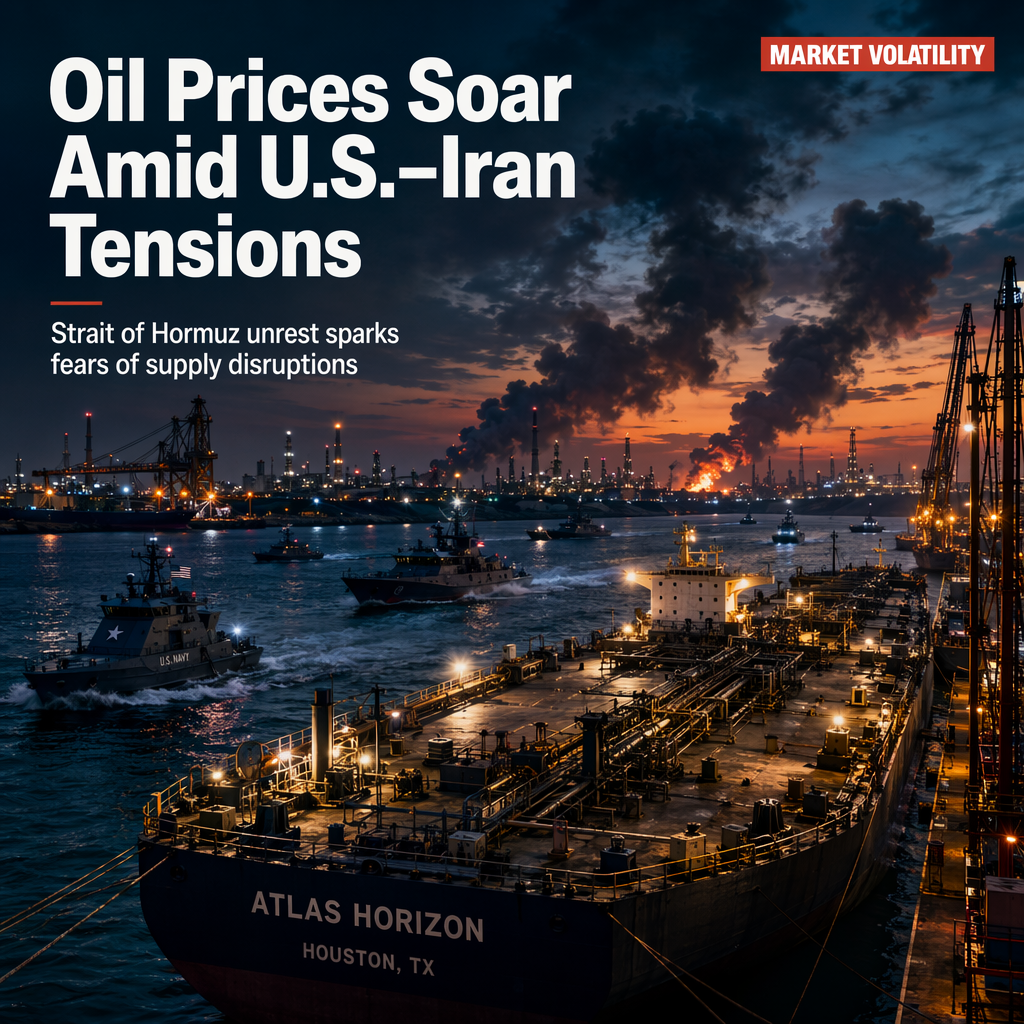
Oil prices climbed sharply on Thursday following new U.S. military strikes on Iran, intensifying concerns about potential supply disruptions in the Middle East [1]. Brent crude futures for September delivery rose 1.03% to $78.82 per barrel, while U.S. West Texas Intermediate (WTI) futures for August increased 1.06% to $74.29 per barrel. Notably, prices had already surged more than 4% on Wednesday [1].
The U.S. Central Command confirmed that the latest strikes were in response to Tehran's attacks on commercial shipping in and around the Strait of Hormuz, a critical global energy chokepoint [1]. U.S. President Donald Trump indicated earlier in the day that he was no longer interested in negotiating a deal with Iran and declared the ceasefire between the two countries "over" after another wave of attacks in the region [1].
Saxo Bank analysts noted that the market is being forced to reassess the risk that renewed attacks on shipping or a broader breakdown in U.S.-Iran relations could impede the normalization of oil flows through the Strait of Hormuz [1]. They emphasized that even limited disruptions in this vital shipping route can have a significant impact on prompt oil pricing, freight costs, and overall market sentiment [1].
The recent escalation and ongoing uncertainty regarding the security of the Strait of Hormuz have contributed to heightened volatility in oil prices, with traders closely monitoring the situation for further indications of supply risk [1].
CONCLUSION
The escalation of U.S.-Iran tensions and the threat to the Strait of Hormuz have driven oil prices higher and increased market volatility. Traders are expected to remain vigilant as further developments could significantly impact global oil supply and pricing.