DBS economist Radhika Rao anticipates that the Reserve Bank of India's Monetary Policy Committee (MPC) will keep the benchmark rate unchanged at 5.25% this week, maintaining a neutral stance and current economic projections [1]. The policy statement is expected to be cautious, emphasizing the need for continued vigilance on the inflation outlook, with a particular focus on core inflation as a more reliable indicator of underlying price pressures compared to headline inflation, which has been affected by both domestic and global supply-side factors [1].
The RBI is likely to push back against market expectations for a more aggressive tightening path, as reflected in implied rates. Markets are expected to closely monitor developments in West Asia and any changes in the US Federal Reserve's policy outlook in the second half of 2026, as these factors could significantly impact the rupee, capital flows, and interest rate differentials [1].
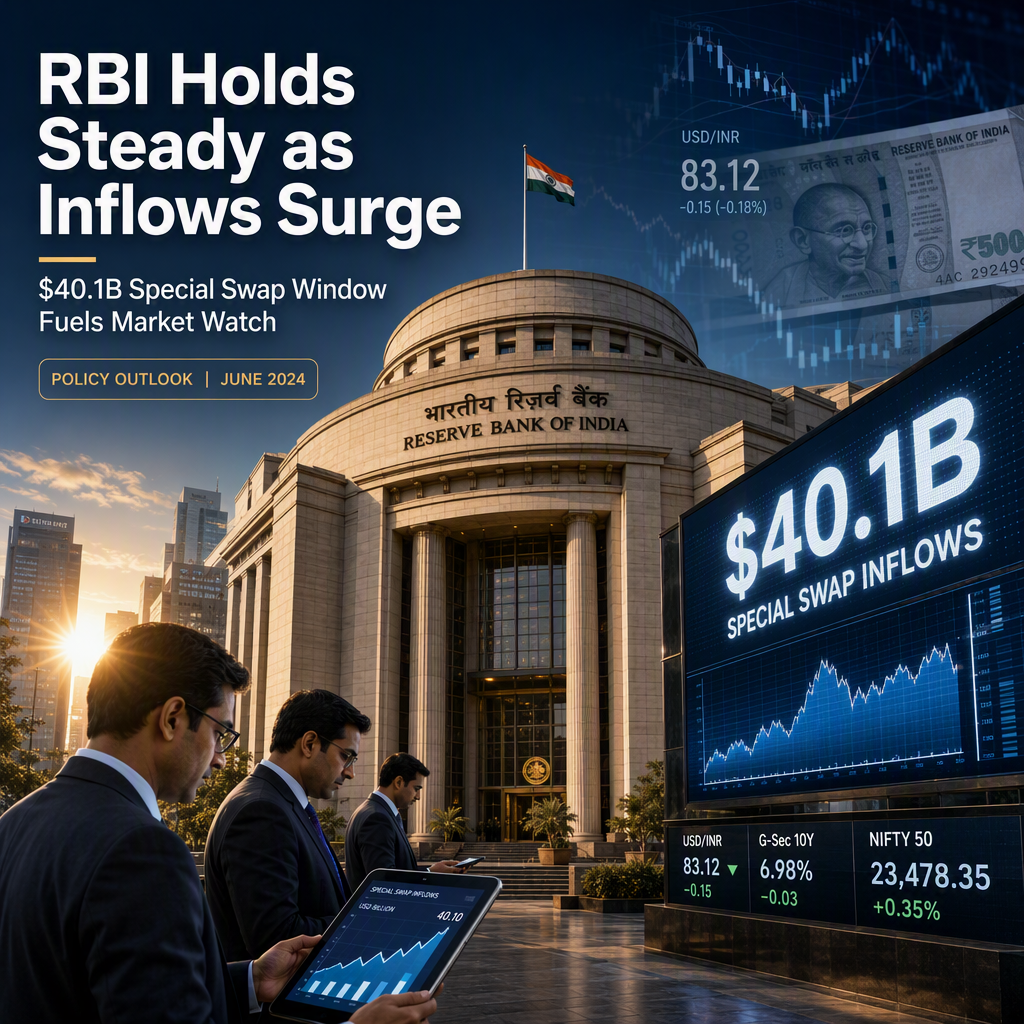
In its latest update, the RBI announced that a cumulative $40.1 billion has been raised under the special swap windows by July 31, up from $20 billion by mid-July [1]. DBS estimates that the total scale of inflows could reach approximately $65-70 billion as compliance and tax issues are resolved in certain jurisdictions for leveraged deposits [1]. Banks are expected to benefit from these inflows, as the landed cost of these deposits is likely to be cheaper than the prevailing cost of domestic deposits [1].
Despite the significant inflows, the impact has not yet been fully reflected in foreign exchange reserves or the currency, which have not responded in proportion to the scale of the flows so far [1].
CONCLUSION
The RBI is expected to maintain its current policy rate and neutral stance, with a cautious outlook on inflation. Substantial inflows from special swap windows are anticipated to benefit banks, though their effects on reserves and the rupee have yet to materialize. Market participants remain attentive to global developments and future policy signals.