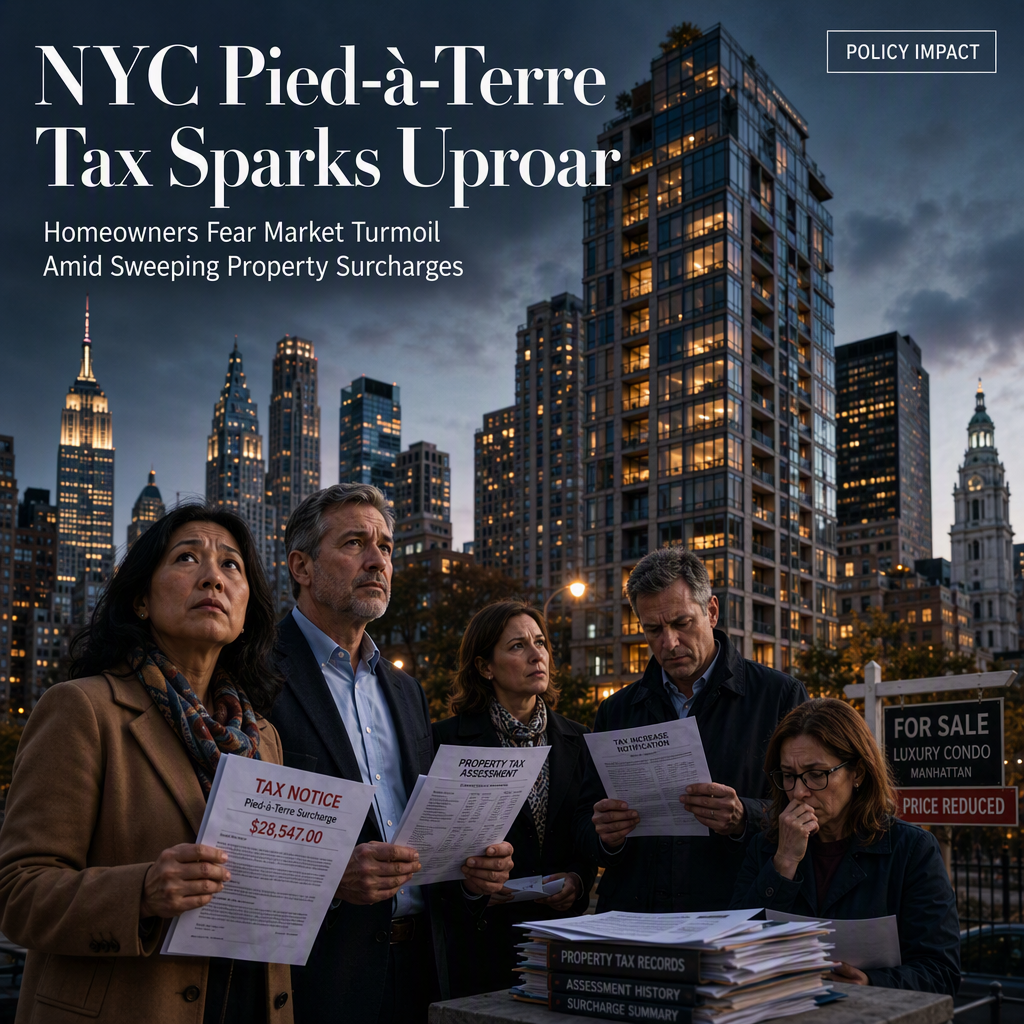
A new 'pied-à-terre' tax proposal in New York City, championed by Mayor Zohran Mamdani, is drawing criticism for its potential to destabilize the local housing market and impact middle-class homeowners, according to Mark J. Penn [1]. The tax, initially marketed as a levy on wealthy nonresident property owners—estimated at no more than 31,000 individuals—has, in practice, affected a much broader group. The New York City Department of Finance sent notices to 960,000 property entries, requiring primary residents to prove their exemption status, often by submitting federal tax returns [1].
A key provision in the statute subjects co-ops and condos with assessed values over $1 million to the tax, regardless of residency status, resulting in hundreds of thousands of homeowners being caught up in the initial mailing [1]. The surcharge on non-primary residences can reach up to 5% or more of market value annually, potentially adding $50,000 per year in costs to a million-dollar non-primary condo [1]. This could prompt affected owners to sell their properties, which may chill the broader housing market, reduce demand from out-of-town buyers, and ultimately lower property values across the board [1].
The article argues that the policy unfairly targets nonresident property owners who do not have a vote in local elections, shifting municipal tax burdens onto individuals without a direct voice at the ballot box [1]. The funds raised are intended to address general budget deficits and fund municipal initiatives, but critics warn that the unintended consequences could harm local homeowners through diminished equity and increased bureaucratic hurdles [1].
Additionally, the article notes that out-of-town property holders already pay taxes while using few city services, and suggests that the tax could be challenged in court as discriminatory [1].
CONCLUSION
The proposed 'pied-à-terre' tax in New York City, while intended to target wealthy nonresident property owners, has triggered widespread concern over its broader impact on homeowners and the housing market. With steep surcharges and administrative burdens affecting hundreds of thousands, the policy could lead to reduced property values and increased market volatility.