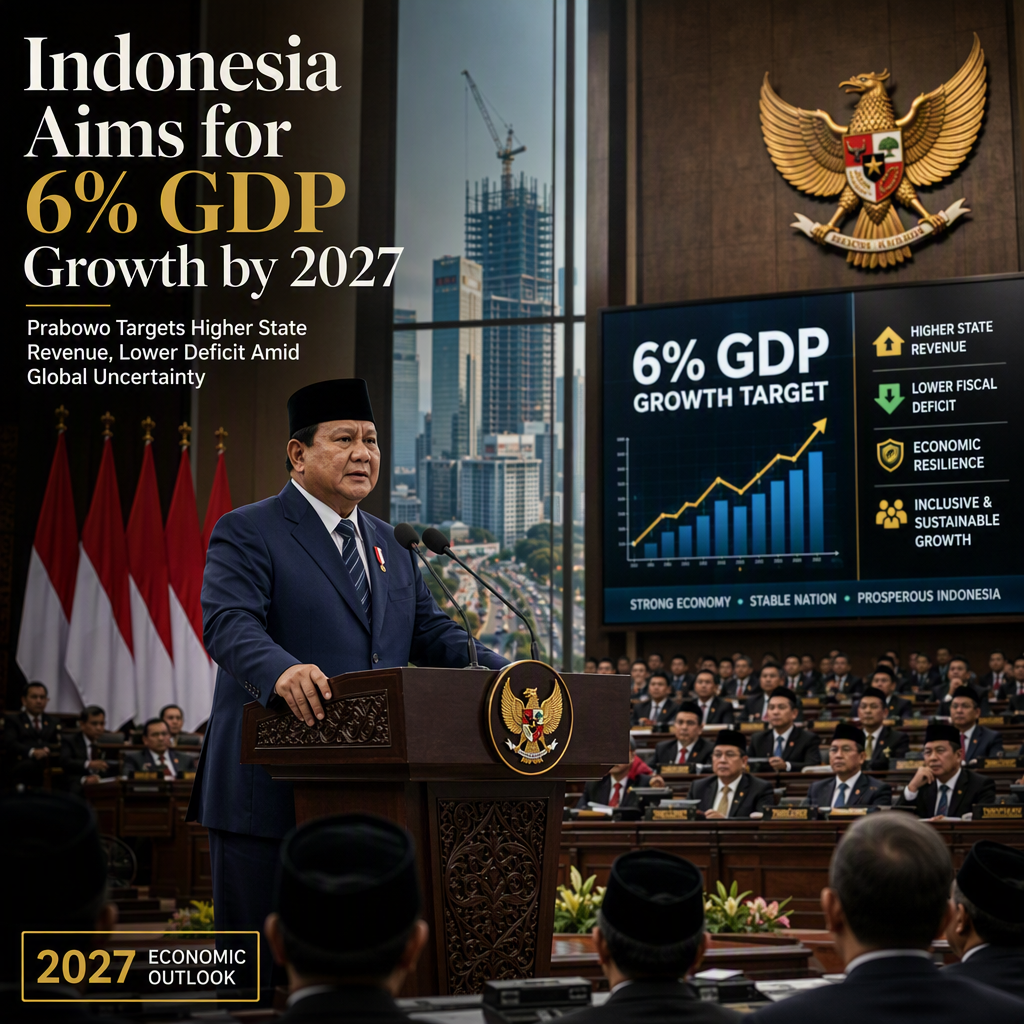
Indonesian President Prabowo Subianto has announced ambitious economic targets for 2027, aiming to boost state revenue by nearly 7% to 3,426 trillion rupiah ($192 billion) and achieve a 6% GDP growth rate, while also reducing the budget deficit as a percentage of GDP [1]. In his annual state of the nation address delivered before parliament in Jakarta on August 14, 2026, President Prabowo outlined a range of strategic initiatives, including the establishment of commodity exchanges and facilitating purchases of foreign companies, as part of his broader economic strategy [1].
The administration's focus is on balancing robust economic growth with fiscal responsibility, signaling a commitment to strengthening Indonesia's economic base through strategic investments and reforms [1]. These plans come amid challenging economic conditions, such as slower GDP growth in the second quarter and ongoing debates among economists regarding the sustainability of Indonesia's current economic fundamentals [1].
President Prabowo also emphasized efforts to enhance the country's capital markets, attract foreign investment, and implement reforms to support sustainable economic development [1]. The proposed increase in state revenue and the drive for a lower budget deficit are set against a backdrop of global economic uncertainty, highlighting the government's intention to keep Indonesia competitive in the region [1].
CONCLUSION
President Prabowo's administration is targeting significant economic expansion and fiscal discipline for 2027, with concrete goals for revenue growth, GDP, and deficit reduction. While the plans are ambitious and signal a positive outlook, they are set amid challenging economic conditions and debates about sustainability. The market is likely to view these targets as a medium-impact development, reflecting both optimism and caution.