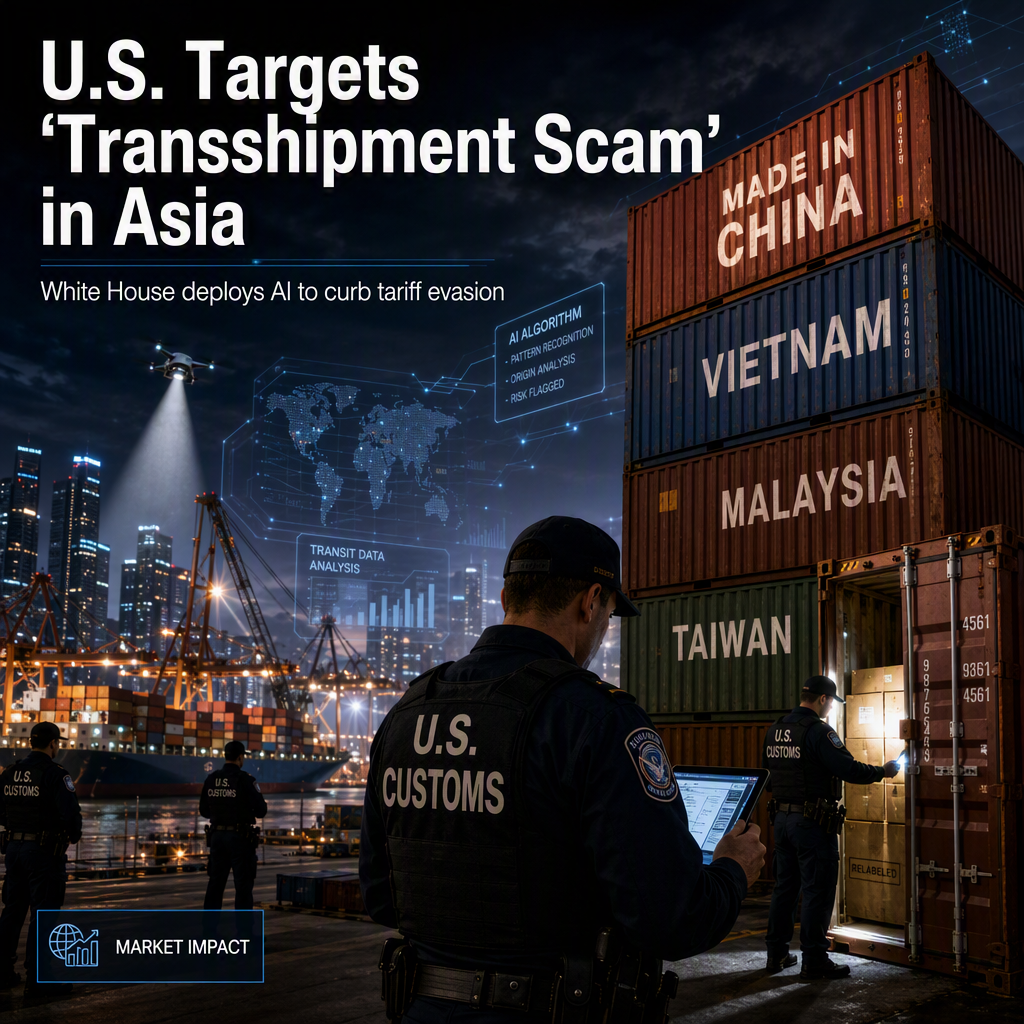
A White House report has accused China and several Southeast and Northeast Asian trade partners of orchestrating what it calls the 'Great Transshipment Scam,' a scheme in which Chinese goods are rerouted through countries such as Vietnam, Malaysia, and Taiwan to evade U.S. tariffs and quotas [1]. According to the report, these illegal transshipment activities have resulted in the U.S. government losing tens of billions of dollars in tariff revenue annually and have led to the loss of hundreds of thousands of jobs in manufacturing and related industries [1].
The report highlights a significant spike in exports from Southeast Asia to the U.S. following the imposition of Trump-era tariffs on Chinese imports, suggesting that sophisticated logistics networks and shell companies are being used to conceal the true origin of goods [1]. The White House has stated that advanced artificial intelligence tools are now being deployed to track suspicious shipping patterns and identify fraudulent transshipment routes, with U.S. Customs and Border Protection (CBP) increasing audits and inspections at ports of entry, particularly in industries such as steel, aluminum, electronics, and textiles where suspicious surges in import volumes have been detected [1].
A senior administration official described the use of AI and data analytics as a 'game-changer' in detecting anomalies in shipping manifests and supply chain records, which manual inspections alone could not catch [1]. The White House emphasized its commitment to closing these loopholes and ensuring that trading partners abide by U.S. trade rules [1].
Market reaction has been mixed. Some analysts warn that increased enforcement could lead to supply chain disruptions and higher costs for manufacturers sourcing intermediate goods from Asia, while others speculate that stricter enforcement may result in new tariffs or trade barriers, potentially impacting the price of consumer goods and industrial components [1].
CONCLUSION
The White House's allegations of widespread illegal transshipment involving China and Southeast Asian countries signal a potential escalation in U.S. trade enforcement. With the deployment of AI tools and increased inspections, the market faces heightened uncertainty, particularly for manufacturers reliant on Asian supply chains. The report suggests significant economic and employment impacts, and further trade actions may follow.