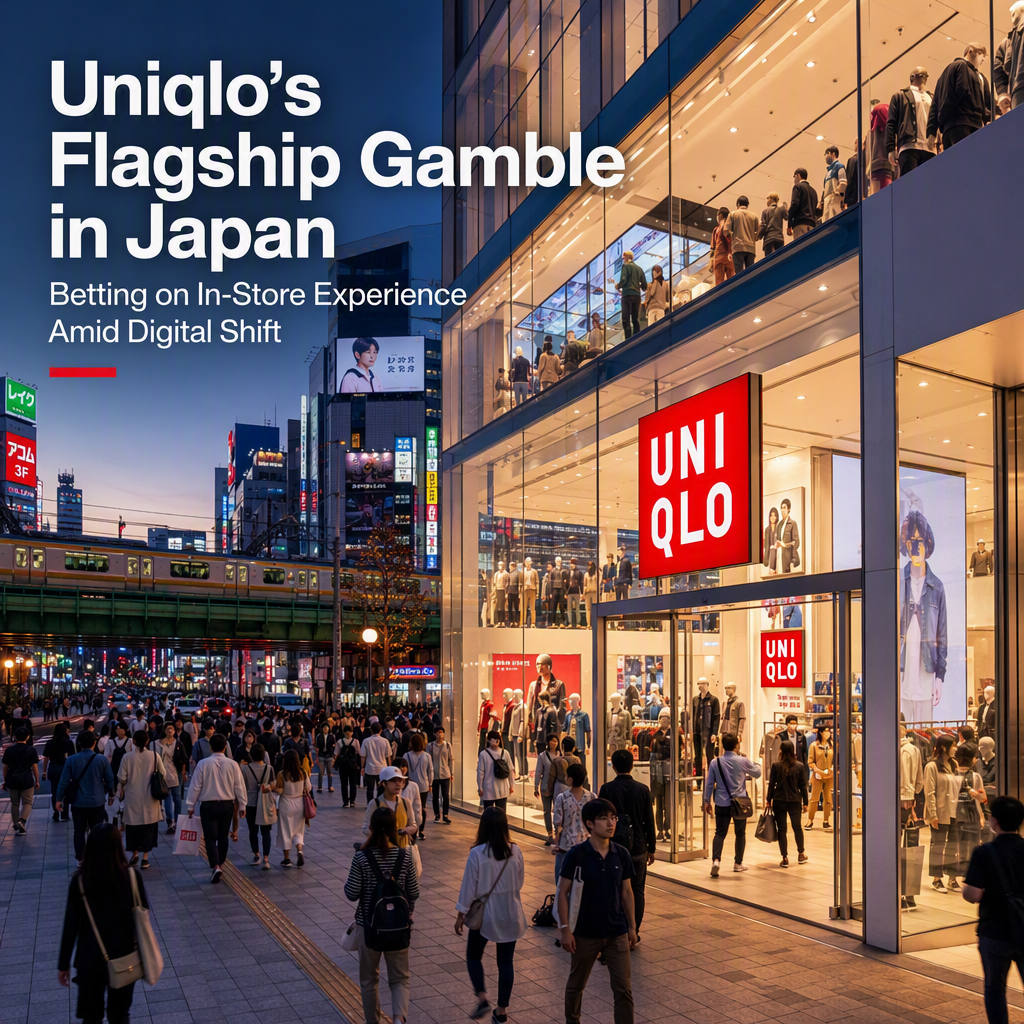
Uniqlo, the casual clothing chain owned by Fast Retailing, is undertaking a strategic shift in its domestic retail approach by planning to double its flagship stores in Japan [1]. This move is aimed at rebuilding the brand's image and strengthening its presence in the Japanese market, as the company faces increasing competition and evolving consumer behaviors driven by digitalization [1]. Tadashi Yanai, chairman and CEO of Fast Retailing, emphasized the irreplaceable value of physical retail, stating that holding and feeling products in-store offers a unique experience that cannot be replicated online [1].
The decision to expand flagship stores comes amid the rise of the AI era and the prevalence of online shopping, with Uniqlo seeking to differentiate itself from competitors by providing a more immersive and tangible shopping experience [1]. The company believes that focusing on flagship locations will help reinforce its brand identity and set it apart in Japan's rapidly changing retail landscape [1].
No specific financial data, market analysis, or analyst opinions are provided in the article. The strategic direction, however, underscores Uniqlo's commitment to adapting its business model in response to broader industry trends [1].
CONCLUSION
Uniqlo's pivot toward expanding flagship stores signals a renewed focus on physical retail and brand differentiation in Japan. While no financial or market reaction data is available, the move is positioned as a proactive response to digitalization and changing consumer habits. The market takeaway is that Uniqlo is prioritizing experiential retail to strengthen its domestic presence.