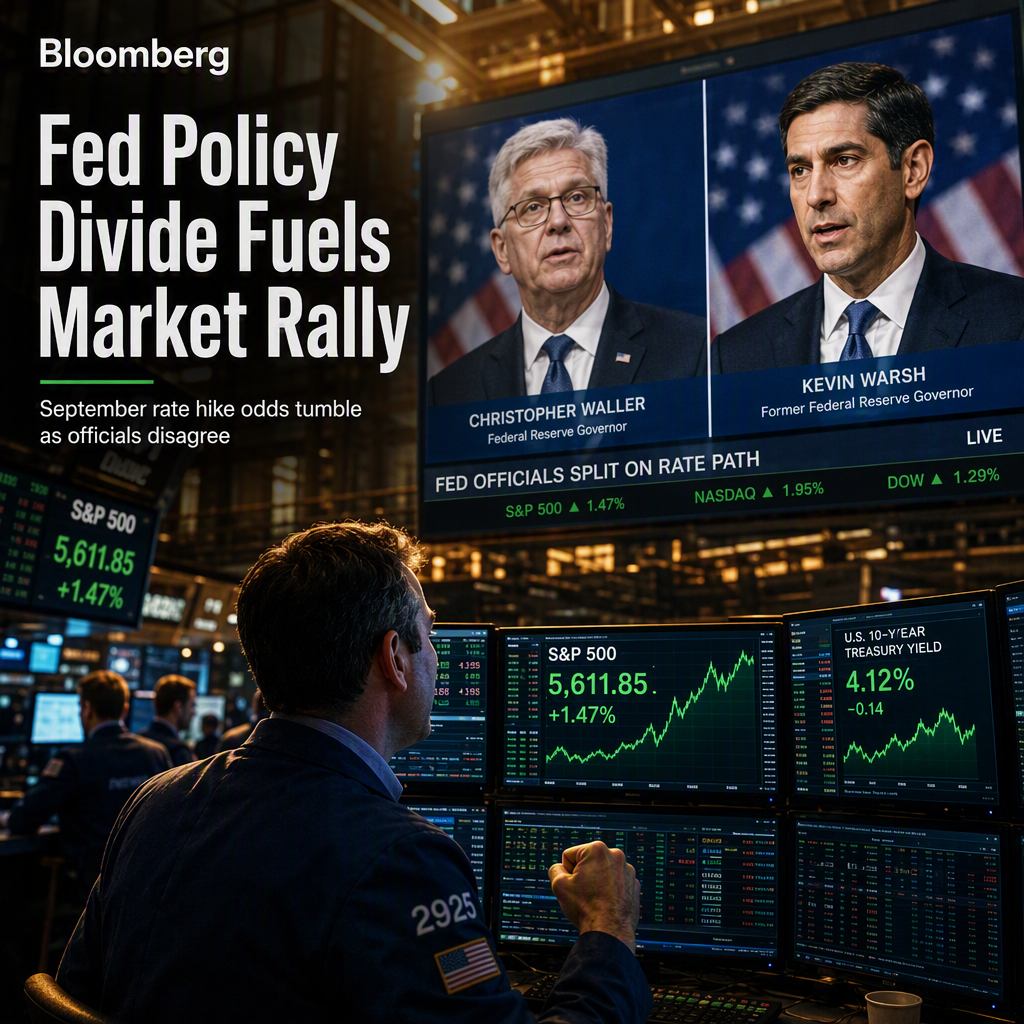
U.S. markets rallied on Thursday after Federal Reserve Governor Christopher Waller indicated he would support holding interest rates steady if inflation data continues to meet expectations. The S&P 500 posted consecutive gains, and the benchmark 10-year Treasury note yield dropped to 4.77%, after reaching its highest level since November 2023 on Wednesday [1]. The probability of a rate hike at the Fed's September meeting fell sharply to 50.2%, down from 63.2% the previous day, according to the CME FedWatch tool [1].
Waller expressed confidence in current inflation trends, stating that tariffs and higher energy prices have not significantly impacted the economy. He acknowledged that inflation remains "meaningfully above" the Fed's 2% target but noted recent signs of disinflation [1]. Meanwhile, Vice President JD Vance called for the Fed to lower rates to make homes more affordable, echoing President Donald Trump's stance. Vance described rate cuts as the "proper and responsible" response to recent inflation data [1].
In contrast, Fed Chair Kevin Warsh signaled at the Jackson Hole symposium last week that he would favor raising rates to address persistently high inflation, highlighting a division among policymakers [1]. This split in opinion has contributed to market volatility and uncertainty regarding the Fed's next move.
No forward-looking analyst opinions were provided in the article, but the sharp drop in rate hike probability and the rally in equities suggest that investors are responding positively to dovish signals from some Fed officials [1].
CONCLUSION
The division among Federal Reserve officials over interest rate policy has led to a notable rally in U.S. markets and a decrease in the probability of a September rate hike. Investors appear to favor the prospect of steady or lower rates, as indicated by recent market movements. The ongoing debate within the Fed will likely continue to influence market sentiment and expectations in the near term.