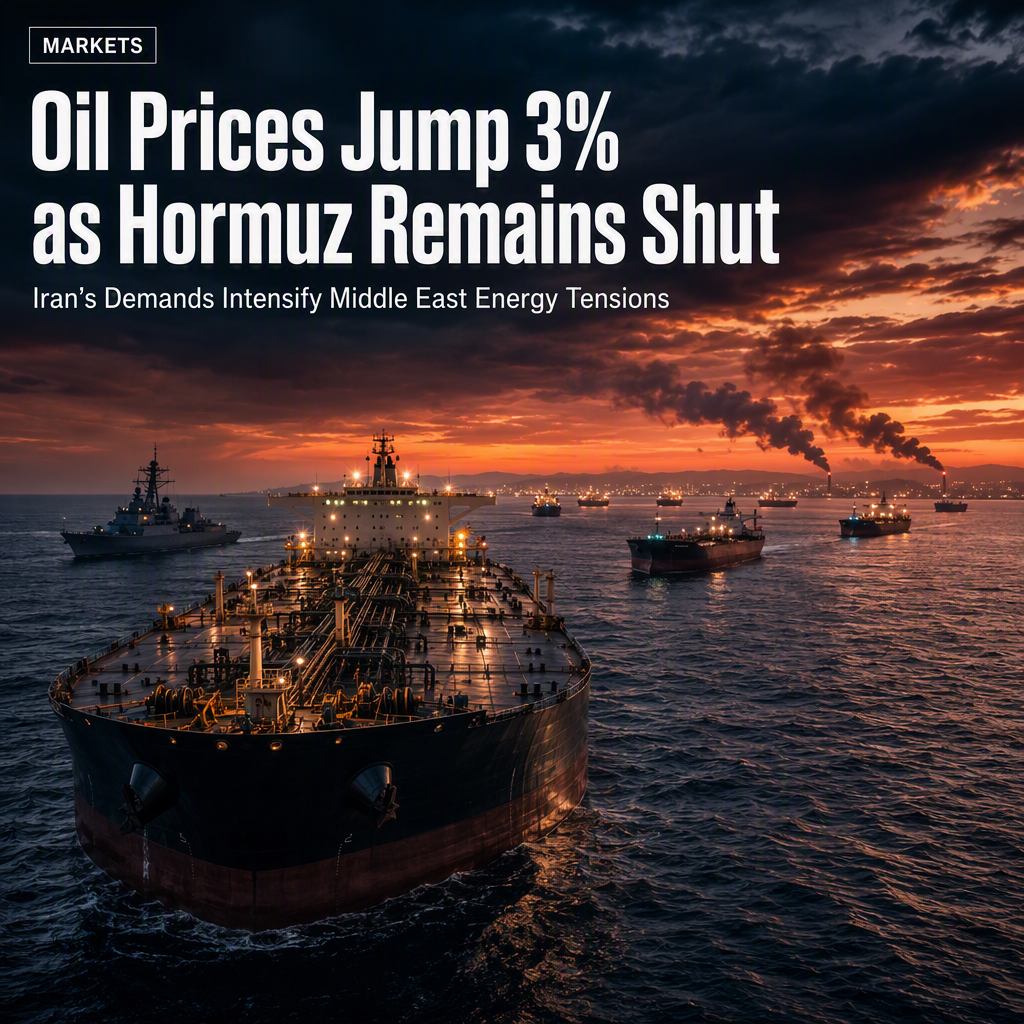
West Texas Intermediate (WTI) crude oil prices jumped 3.20% on Monday, trading around $78.80, driven by heightened uncertainty over the reopening of the Strait of Hormuz and ongoing tensions in the Middle East [1]. The Strait of Hormuz, a critical chokepoint for global energy supplies through which approximately 20% of the world's oil passes, remains closed, with Iran reiterating several conditions for its full reopening. Mohammad Bagher Zolghadr, Secretary of Iran’s Supreme National Security Council, demanded an end to the US naval blockade, withdrawal of US forces from the region, compensation for conflict-related damages, lifting of sanctions, and the unconditional release of frozen Iranian assets. These demands have reduced the likelihood of a rapid normalization of shipping, maintaining a risk premium in WTI prices [1].
Negotiations with Oman to establish a safe shipping route through the Strait are ongoing, but the lack of a comprehensive agreement has kept investors cautious about the potential for prolonged disruptions to oil flows [1]. The situation is further complicated by regional instability, as Yemen’s Iran-backed Houthis claimed responsibility for a drone attack on a Saudi Aramco refinery in Jazan, Saudi Arabia. This attack on major energy infrastructure has intensified concerns about the security of oil supplies in the region [1].
Market participants are closely monitoring developments in the Strait of Hormuz negotiations, as any signs of an agreement could reduce the geopolitical risk premium currently embedded in oil prices. Conversely, a prolonged stalemate or further escalation in regional tensions could continue to support elevated crude oil prices [1]. According to TD Securities, trend-following accounts (CTAs) have shifted to the buy side, with increased buying activity in crude oil and heating oil as a Hormuz deal remains elusive. The bank notes that ongoing Houthi strikes, critically choked flows via Hormuz and Bab el-Mandeb, and subdued Russian exports due to Ukrainian attacks are all underpinning prices and CTA length [1]. ING also highlights persistent geopolitical risk as a key factor supporting oil prices [1].
CONCLUSION
WTI oil prices have surged on the back of unresolved geopolitical tensions and uncertainty over the reopening of the Strait of Hormuz. With Iran's conditions for reopening unmet and regional attacks on energy infrastructure ongoing, the market remains highly sensitive to further developments. Any progress in negotiations could ease prices, but continued instability is likely to sustain the current risk premium.