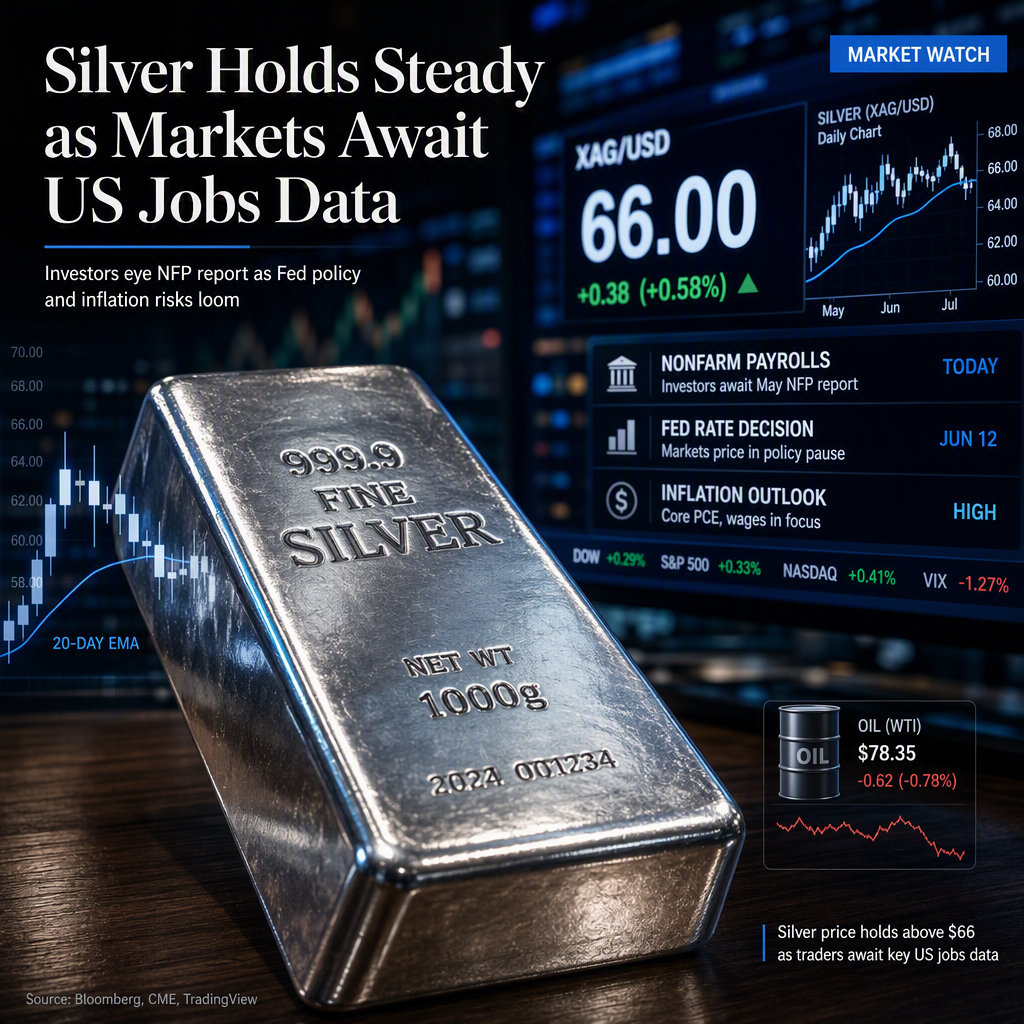
Silver (XAG/USD) is struggling to extend its recovery above $66.25 during Thursday's European trading session, following a strong move on Wednesday. The price currently trades at $66.00, maintaining a constructive near-term bias as it holds above the 20-day Exponential Moving Average (EMA) at $65.51. Technical indicators show the Relative Strength Index (14) at 53.04, suggesting buyers have the upper hand without the market being overstretched. Immediate support is seen at the 20-day EMA, while resistance remains at the August high near $71 [1].
Investors are awaiting the United States Nonfarm Payrolls (NFP) data for August, set to be released on Friday. TD Securities forecasts a rebound to 95,000 jobs after July's decline of 23,000, with the unemployment rate expected to remain steady at 4.1%. The firm notes hawkish risks and does not rule out a positive surprise in the data. Analysts at TD Securities believe a modestly hawkish employment report will keep the Federal Reserve focused on inflation, but it is unlikely to prompt immediate rate hikes. According to the CME FedWatch tool, traders see a two-in-three chance of a rate increase at the Fed's September meeting [1].
Higher oil prices, driven by restricted shipments through the Strait of Hormuz, are also influencing market sentiment. Elevated oil prices raise global inflation expectations, which could increase fears of central bank rate hikes and negatively impact non-yielding assets like silver [1].
Overall, silver's price action remains sensitive to upcoming US labor data and broader inflationary pressures, with technical support and resistance levels guiding near-term trading [1].
CONCLUSION
Silver prices are holding steady above key technical support as investors await the US Nonfarm Payrolls report, which could influence Federal Reserve policy expectations. While higher oil prices and inflation concerns pose risks, analysts expect the Fed to keep rates on hold unless employment data surprises significantly. The market remains cautiously constructive, with technical levels and macroeconomic data driving sentiment.