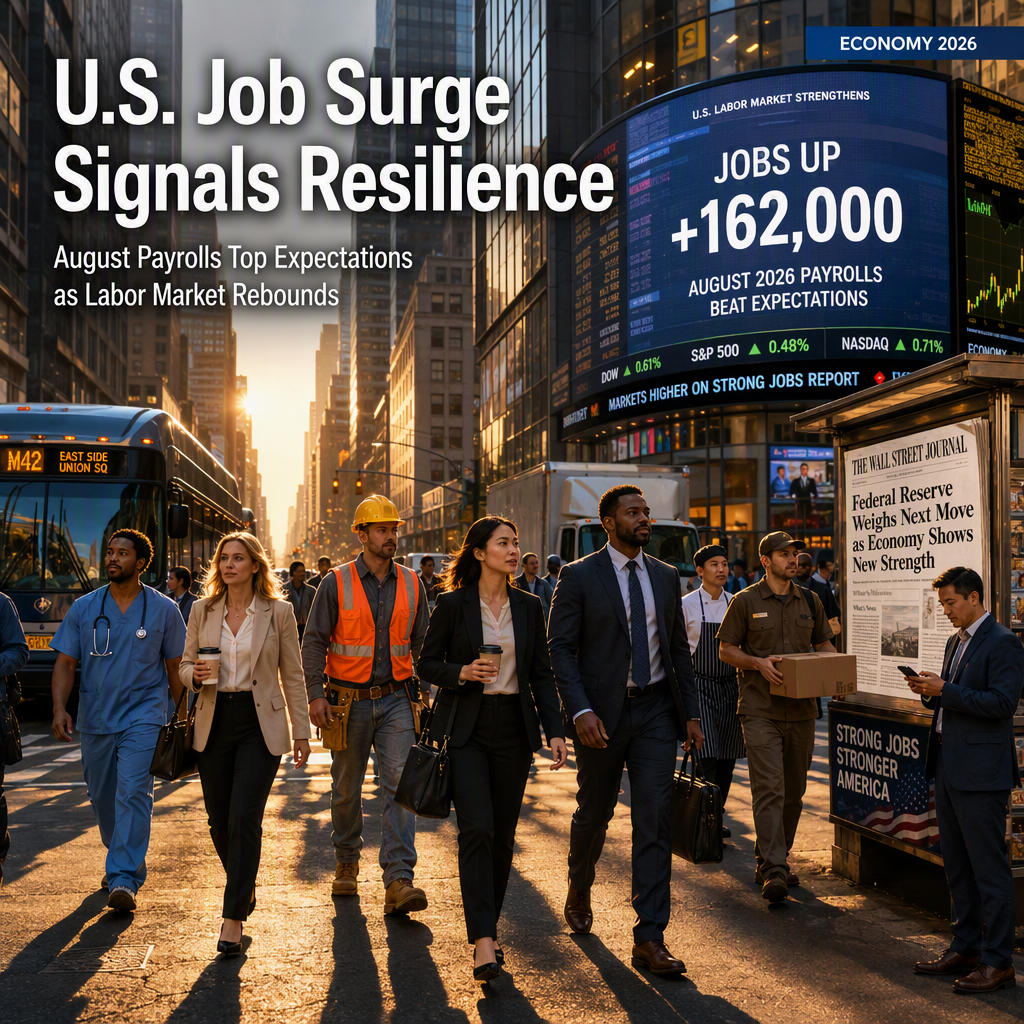
The U.S. economy delivered a strong performance in August 2026, adding 162,000 jobs according to the Bureau of Labor Statistics, significantly surpassing economist expectations from both LSEG (56,000) and Dow Jones (53,000) surveys [1][2]. This marked the largest monthly gain since March and reversed a slowdown seen earlier in the summer [2]. The unemployment rate held steady at 4.1%, matching consensus forecasts and reflecting ongoing labor market stability [1][2].
Upward revisions to previous months further underscored the labor market's resilience. June payrolls were revised up by 11,000 to a gain of 31,000, while July's figures swung from a reported loss of 23,000 to a gain of 21,000, resulting in a net upward revision of 55,000 jobs for June and July combined [1][2]. The household survey showed an employment increase of 569,000 and a surge of 683,000 into the labor force, with the labor force participation rate rising by 0.2 percentage points [2]. An alternative measure of unemployment, which includes discouraged and involuntary part-time workers, fell to 7.7%, its lowest since June 2025 [2].
Sector-wise, private payrolls added 127,000 jobs, well above the LSEG estimate of 45,000, while government payrolls increased by 35,000 [1]. Local governments contributed 50,000 jobs, including 42,000 in education, offsetting declines at the federal and state levels [1][2]. The manufacturing sector added 16,000 jobs, exceeding estimates, and food services and drinking places led with 59,000 new jobs, far above the previous 12-month average [1][2]. Health care, typically a strong contributor, saw a more modest gain of 13,000 jobs compared to its 12-month average of 32,000 [2]. Information-related industries reported a loss of 23,000 jobs, with a 12-month average decline of 8,000, which was attributed in part to the impact of artificial intelligence [2].
Market reactions were mixed: stock market futures moved mostly lower following the report, while Treasury yields, especially at the short end, rose sharply [2]. Analysts noted that the robust jobs data, combined with positive revisions, highlight the labor market's resilience despite economic uncertainty [1][2]. The Federal Reserve is expected to closely monitor upcoming inflation data as it prepares for its next interest rate decision in less than two weeks [2]. Technical analysis and trading sentiment are likely to focus on the strong job gains and positive revisions, with attention to potential Fed commentary in the aftermath [1].
CONCLUSION
August's jobs report showcased a robust rebound in U.S. employment, with gains far exceeding expectations and broad-based sector growth. While the labor market's strength may influence Federal Reserve policy, markets responded cautiously, awaiting further signals from upcoming inflation data. The report underscores continued economic resilience but leaves investors attentive to future developments.