
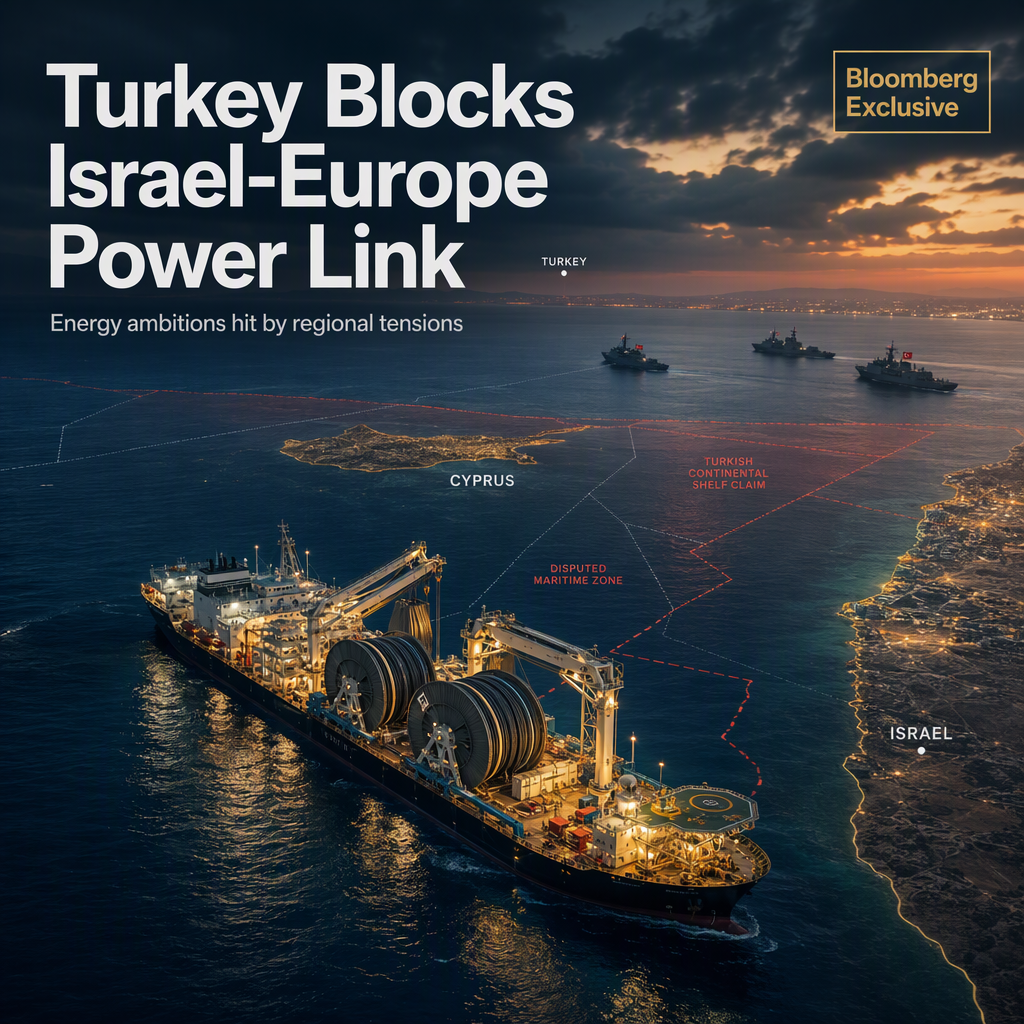
A major energy infrastructure project, the Great Sea Interconnector, which aims to link Israel, Cyprus, and Europe via a subsea electricity cable, has encountered significant obstacles due to escalating regional disputes. Cyprus Foreign Minister Constantinos Kombos accused Turkish President Recep Tayyip Erdoğan of 'hypocritical and provocative' rhetoric regarding Gaza and warned that Ankara is actively seeking to obstruct the project. Kombos stated that 'Turkey has been making threats and has been acting on threats against Cyprus, especially in the exclusive economic zone,' directly impacting the project's progress [1].
The Great Sea Interconnector is a planned €1.9 billion subsea cable designed to carry up to 1,000 megawatts across more than 1,200 kilometers, with the EU committing €657 million to the Cyprus-Crete section. This initiative is intended to end Cyprus’ isolation from the European electricity system and eventually connect Israel more directly to the European market [1]. However, the project has faced financial delays and is now further complicated by geopolitical tensions, particularly due to competing Greek and Turkish maritime claims in the Eastern Mediterranean. Kombos emphasized that Turkey's 'illegal claims' regarding the delimitation of the exclusive economic zone have blocked the main project connecting Greece, Cyprus, and Israel [1].
The tensions were further highlighted during the U.N. General Assembly, where Erdoğan delivered a strong condemnation of Israel, accusing it of maintaining an 'occupation' and describing Gaza as 'the most inhumane and shameful concentration camp of our time.' Cyprus officials, including Kombos and President Nikos Christodoulides, criticized Erdoğan's statements as 'hypocritical and provocative,' pointing to what they view as a disconnect between Turkey's rhetoric and its actions in Cyprus [1].
The ongoing dispute over Cyprus, which has been divided since 1974, continues to frame the broader regional context, with the internationally recognized Republic of Cyprus controlling the south and the northern third administered by Turkish Cypriots [1]. The unresolved status of the island and the associated maritime claims are central to the current impasse affecting the energy project.
CONCLUSION
The Great Sea Interconnector, a critical energy link between Israel and Europe, faces significant delays due to Turkish opposition and ongoing regional disputes. These developments underscore the impact of geopolitical tensions on major infrastructure projects and highlight the challenges of advancing energy integration in the Eastern Mediterranean.