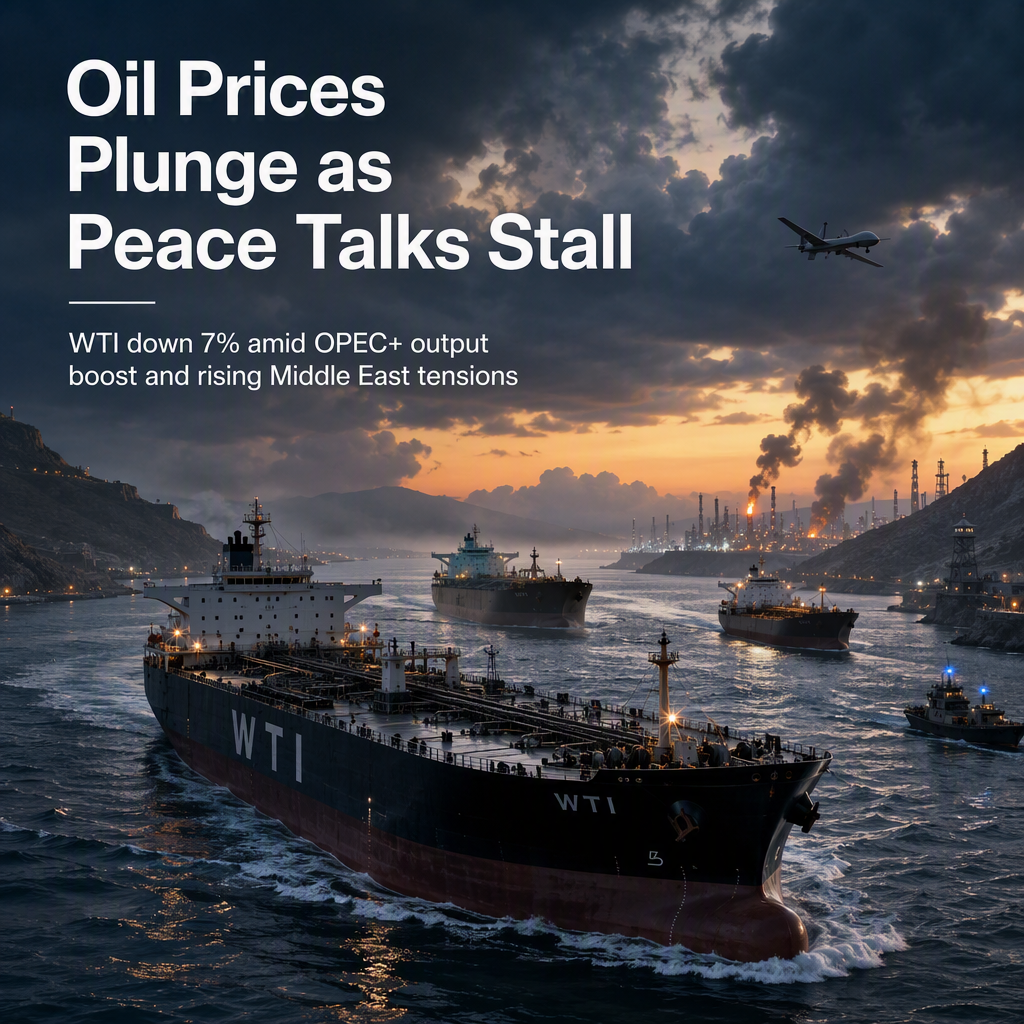
West Texas Intermediate (WTI) crude oil prices experienced a sharp decline, opening with a bearish gap and remaining nearly 7% down to trade around $79.30 per barrel during Asian hours on Monday [1]. This significant drop followed a late Saturday post by US President Donald Trump on Truth Social, in which he stated that Iran and other Middle Eastern nations had requested additional time to finalize an agreement. The proposed deal, according to Trump, would result in the immediate, complete, and total reopening of a vital strait and effectively eliminate Iran's nuclear threat [1].
Shipping data on Monday revealed mixed developments in the region: two tankers carrying Saudi oil successfully navigated the Bab el-Mandeb Strait out of the Red Sea over the weekend, while traffic through the Strait of Hormuz slowed significantly due to reported vessel strikes. The United Kingdom Maritime Trade Operations confirmed three additional tanker attacks since Saturday, underscoring persistent security risks [1].
On the supply side, major OPEC+ producers approved a modest increase in production quotas, completing the restoration of supply cuts originally introduced in 2023. This decision also establishes room for further output expansion once the Middle East conflict is resolved [1].
Strategists at BNY highlighted on Friday that the geopolitical backdrop has deteriorated, noting resumed missile exchanges between the US and Iran, which have dashed hopes for a quick end to the five-month conflict. The confrontation is increasingly regional, with Jordan intercepting Iranian missiles for a second straight day and Kuwait reporting a deadly strike in the north. BNY also flagged the growing spillover into key trade routes, as drone attacks set fires on ships at Egypt’s Damietta port, raising risks to Gulf shipping lanes and energy flows [1].
CONCLUSION
WTI crude oil prices have fallen sharply amid ongoing Middle East peace talks and an OPEC+ decision to modestly increase output. Persistent regional security risks and deteriorating geopolitical conditions continue to weigh on market sentiment. The combination of supply expansion and unresolved conflict suggests heightened volatility and uncertainty for oil markets in the near term.