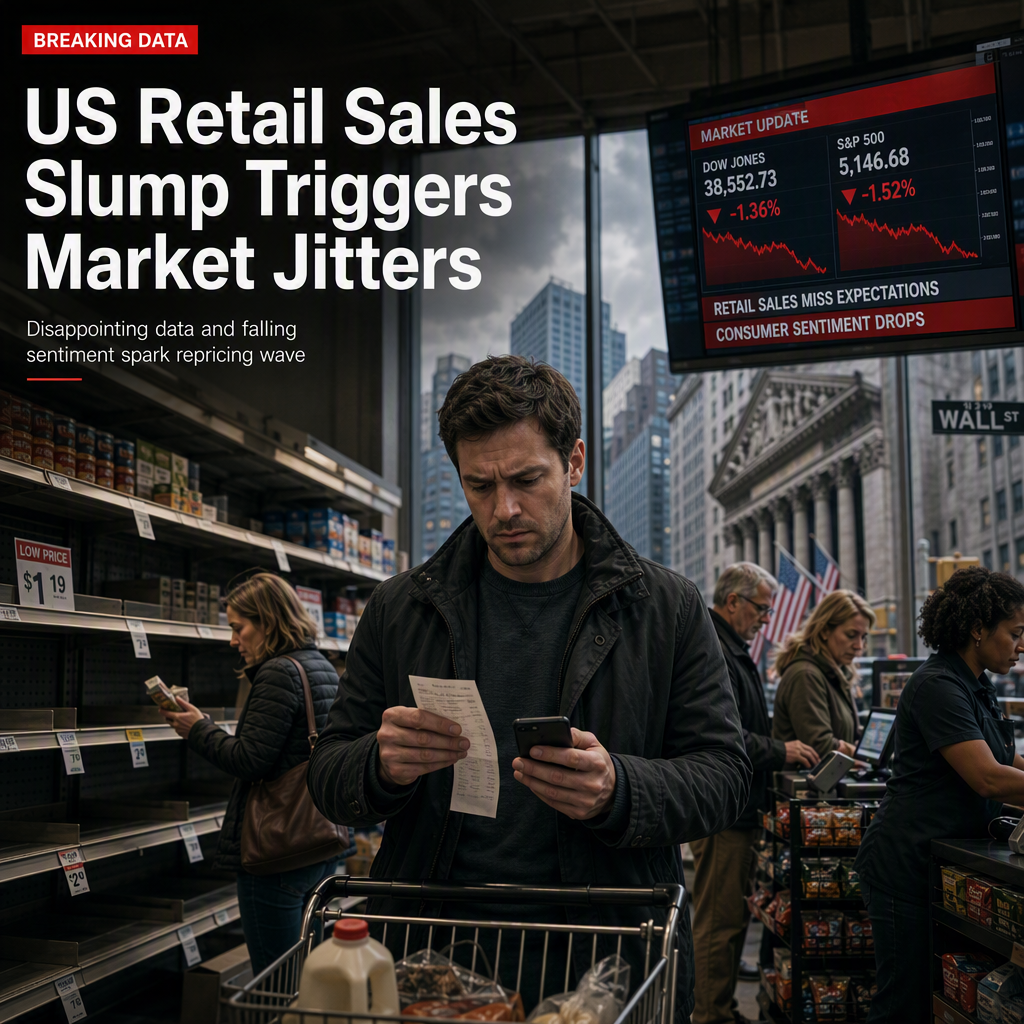
US markets reacted sharply to disappointing economic data released on Friday. July retail sales contracted by 0.6%, missing expectations for a 0.1% gain, with the decline described as broad-based rather than isolated to a single category. Sales excluding autos fell 0.3% against a 0.2% consensus, and the control group that feeds into GDP estimates dropped 0.4% after a 0.4% rise the previous month. This 0.7 percentage point miss on the headline figure was significant and not considered statistical noise for the quarter [1].
Ninety minutes after the retail sales data, preliminary August consumer sentiment was reported at 51, well below the 54.5 consensus and down from 55.2 in July, representing an 8% monthly decline and reversing two months of improvement. The expectations component also fell to 50.6 from 55.4. Notably, one-year inflation expectations rose to 4.3% from 4.2%, indicating that despite weaker spending and confidence, inflation expectations increased rather than declined [1].
Market reactions were immediate. The Dow Jones Industrial Average opened at its session high near 53,900 but did not revisit that level. In the bond market, the two-year Treasury yield briefly dipped below 4.10%, its lowest since June 30, as the likelihood of a September rate hike diminished. In contrast, ten- and thirty-year yields were marginally higher, indicating that the repricing was concentrated at the front end of the curve rather than signaling a broad-based growth scare [1].
Analysts noted that the current bullish case for equities is contingent on several specific factors: stable earnings growth, the Federal Reserve remaining on hold, and crude oil prices staying above $80 per barrel with the Strait of Hormuz remaining closed. The International Energy Agency (IEA) warned that reopening the Strait is becoming urgent as global oil stockpiles are being drawn down [1].
CONCLUSION
Disappointing US retail sales and consumer sentiment data triggered a repricing in short-term rates and raised questions about the sustainability of the equity rally. The market's bullish outlook now hinges on a narrow set of conditions, including stable earnings, Fed policy, and ongoing geopolitical tensions affecting oil supply.