
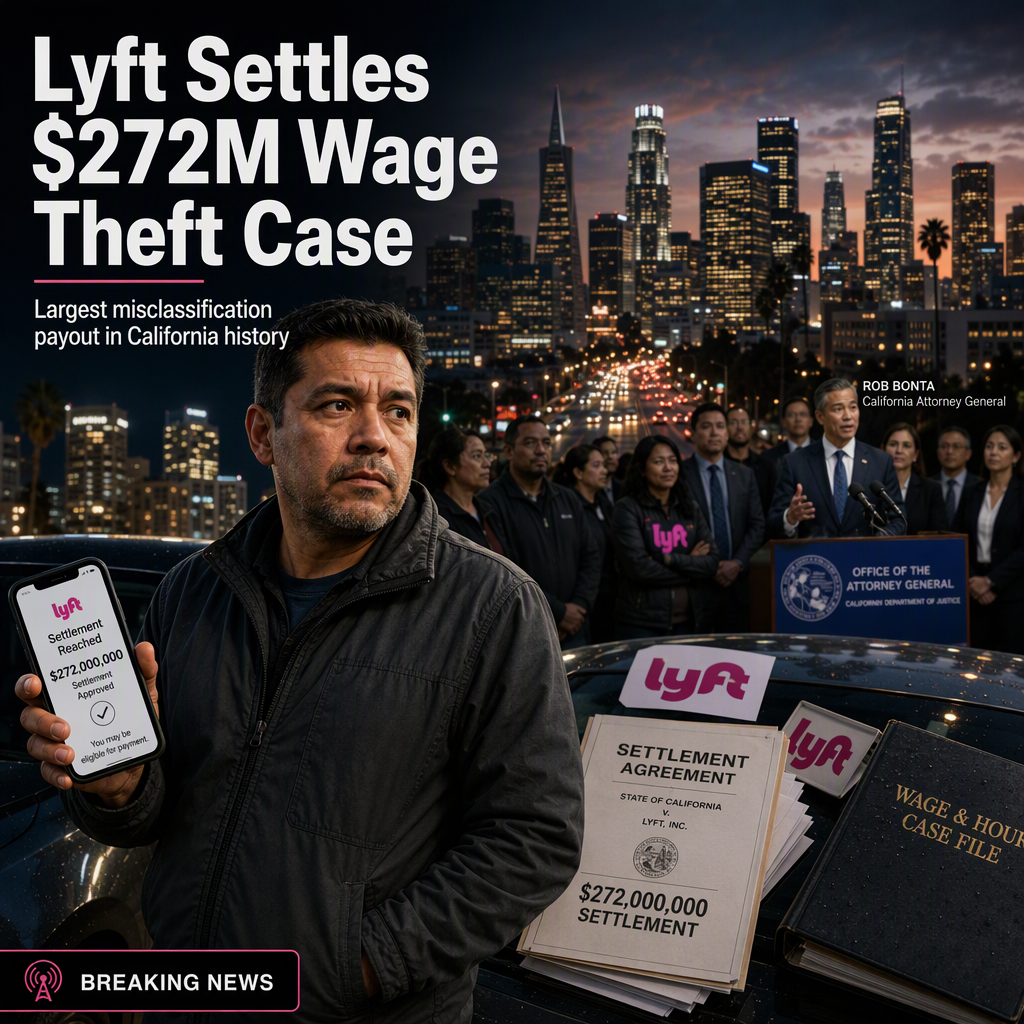
Lyft has agreed to pay $272.5 million to settle a lawsuit brought by California Attorney General Rob Bonta and the city attorneys of Los Angeles, San Diego, and San Francisco, which accused the company of wage theft and misclassifying drivers as independent contractors between 2016 and 2020 [1]. The lawsuit, filed in 2020, alleged that Lyft's classification practices resulted in drivers being paid below minimum wage and denied workplace protections required under California law [1].
Of the total settlement, approximately $237 million will be placed in a third-party fund to be distributed to eligible drivers based on their hours and miles driven between April 2016 and December 2020 [1]. This marks the largest misclassification settlement in California’s history, according to Attorney General Bonta, who emphasized the importance of fair compensation for workers and the state's commitment to enforcing labor laws [1]. Los Angeles City Attorney Hydee Feldstein Soto echoed these sentiments, stating that the settlement sends a clear message for companies to comply with legal responsibilities [1].
The settlement is subject to court approval. Once approved and payments begin, eligible drivers will be notified by a third-party administrator regarding the process for claiming restitution [1]. Despite agreeing to the settlement, Lyft maintains that it did not engage in any wrongdoing [1].
Between 2016 and 2020, Lyft reported a total revenue of $9.5 billion. According to data from ShiftTracker, most Lyft drivers earn between $11 and $18 per hour after expenses [1]. Following the announcement, Lyft's stock price rose by 3.40% to $16.13, indicating a positive market reaction to the resolution of the lawsuit [1].
CONCLUSION
Lyft's $272.5 million settlement represents a significant legal and financial development, resolving longstanding wage theft allegations in California. The market responded positively, with Lyft shares rising over 3%, as the settlement removes a major legal overhang. The case underscores the ongoing scrutiny of gig economy labor practices and the importance of compliance with state labor laws.