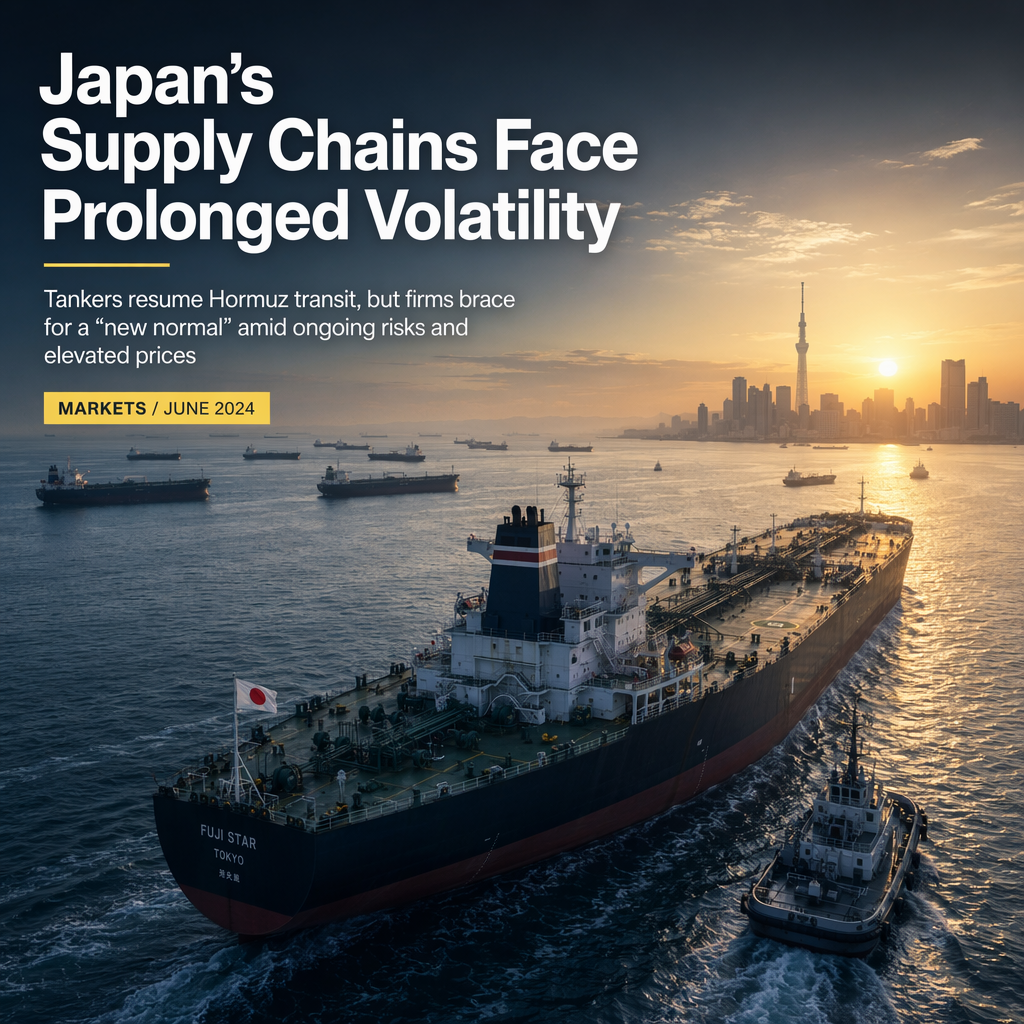
Following the signing of a memorandum of understanding between the U.S. and Iran to halt the war, at least six oil tankers were confirmed to have resumed transit through the Strait of Hormuz, marking a partial reopening of a critical shipping artery for global energy supplies [2]. Crude oil prices responded by falling below $74 per barrel for the first time since early March, reflecting an initial easing of tensions in the region [2]. However, many ships remained near the Strait as of June 18, indicating that full normalization of traffic has not yet occurred [2].
Despite the peace deal and the resumption of tanker traffic, Japanese corporations and industry analysts warn that supply chain disruptions are unlikely to ease quickly and may never fully return to pre-conflict norms [1]. Mitsui OSK Lines, the world's largest tanker operator, stated that navigation through the Strait of Hormuz would only resume when safety is fully assured, underscoring ongoing risks and volatility for oil and naphtha shipments [1]. Japanese firms are preparing for a "new normal" characterized by persistently elevated commodity and energy prices, ongoing supply chain disruptions—especially for food, beverage, and daily goods—and adaptation strategies such as stripped-down packaging and simplified product lines [1].
Energy market responses include Malaysia's pledge to supply Japan with maximum possible LNG and naphtha volumes, as Japanese buyers seek to mitigate disruptions [1]. Japan's naphtha imports have recovered to 80% of pre-Iran war levels, but full recovery remains elusive [1]. Commodities analysts warn that recent price hikes may persist for months or longer, with companies passing increased costs to consumers and several food and daily goods makers considering further price hikes [1].
Market sentiment is cautiously optimistic, with technical analysis indicating continued resistance at pre-war price levels for key commodities such as naphtha and LNG [1]. Crude oil technical charts show prices breaking below key support at $74, with resistance forming at $76; traders are watching for a potential retest of the $74 mark to determine if the downtrend will persist or reverse [2]. Analysts expect continued volatility, and traders advise maintaining tight stop-loss orders and monitoring geopolitical developments closely, especially as other regional conflicts, such as fighting in Lebanon, could threaten stability [2].
CONCLUSION
While the US-Iran peace deal has enabled the partial resumption of oil tanker traffic and triggered a drop in crude prices, Japanese corporations and analysts remain wary of a swift return to supply chain stability. Elevated commodity prices and ongoing disruptions are expected to persist, prompting strategic shifts and cautious market sentiment. The situation remains fluid, with technical and geopolitical risks continuing to influence energy markets.