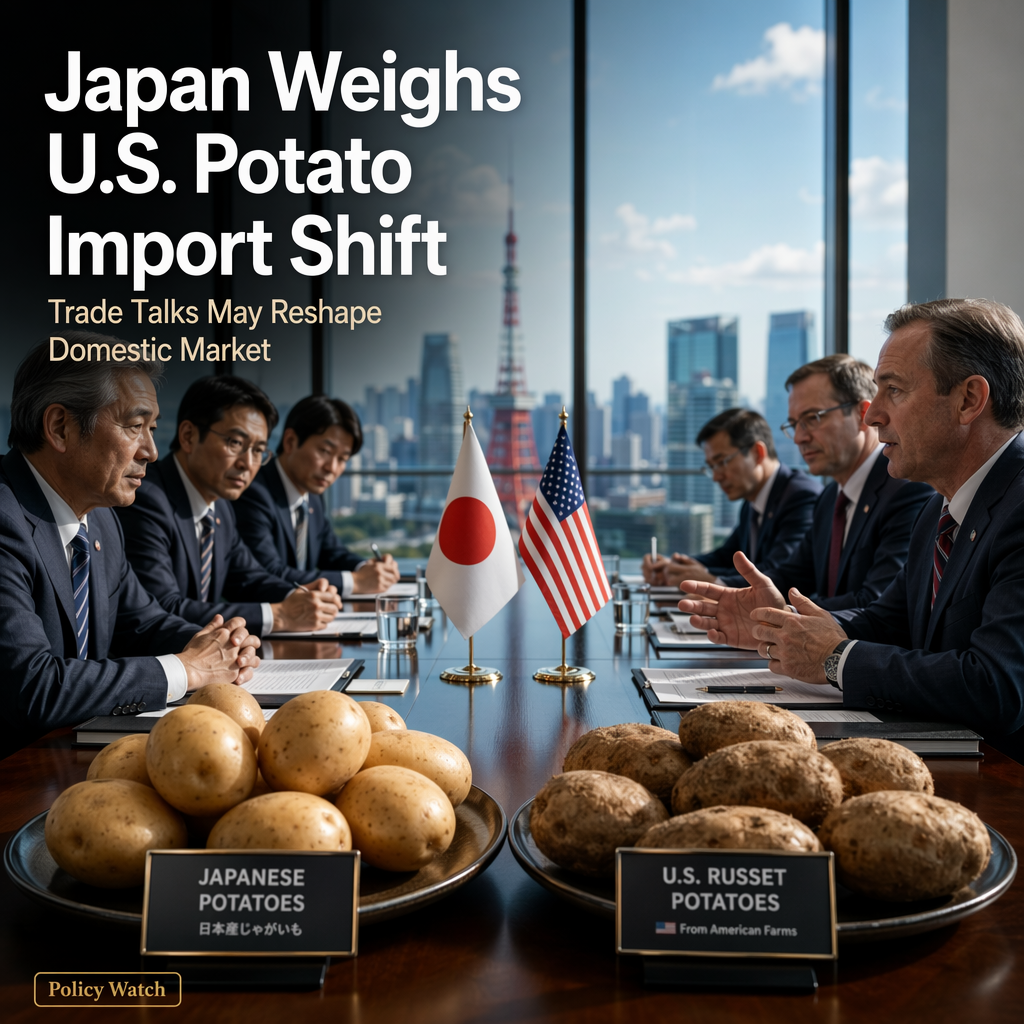
Japan's ruling party is considering lifting the longstanding ban on importing American potatoes for fresh consumption, a policy shift that comes as Tokyo faces increasing trade pressure from U.S. President Donald Trump [1]. The ban has historically been justified by concerns over the introduction of foreign pests and diseases that could threaten Japan's domestic agriculture sector [1]. However, as trade negotiations with the United States intensify, the possibility of allowing U.S. potato imports is being weighed as a potential bargaining chip [1].
If implemented, the policy change would provide Japanese consumers with more choices and could lead to lower prices, but it would also heighten competition for domestic farmers who have so far been shielded from foreign competition in this market [1]. Market participants suggest that this increased competition may force Japanese producers to innovate or consolidate in order to remain competitive [1].
No final decision has been made regarding the import policy, but the shift in stance among ruling party members is viewed as a significant development in Japan's trade policy, reflecting the government's efforts to balance domestic agricultural interests with the need to address external trade demands from the U.S. administration [1].
CONCLUSION
Japan's consideration of lifting the ban on U.S. potato imports marks a notable shift in trade policy, driven by ongoing negotiations with the United States. While the move could benefit consumers, it poses challenges for domestic farmers and signals Japan's willingness to use agricultural policy as leverage in trade talks.