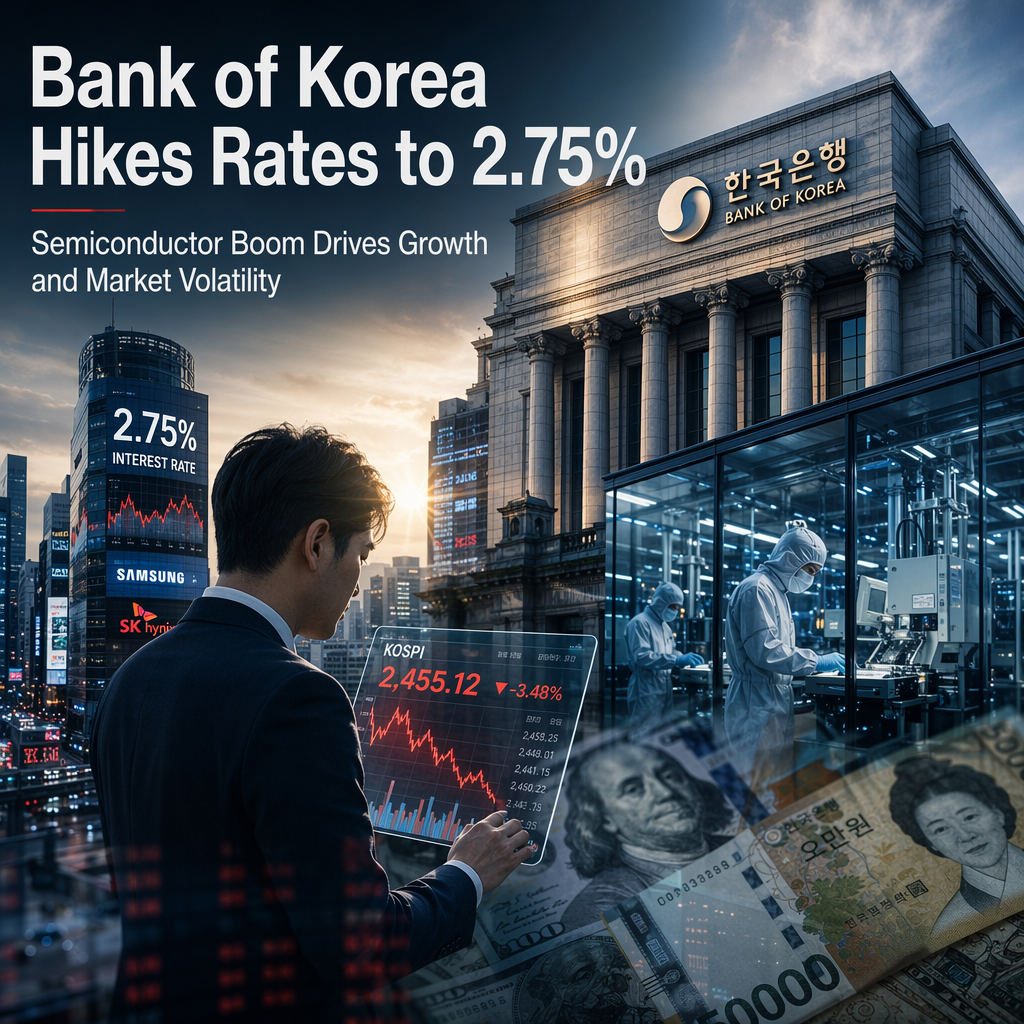
South Korea's central bank raised its key interest rate for the first time in over three years on Thursday, signaling a shift in monetary policy as the country faces mounting inflationary pressures and robust economic growth, particularly in the semiconductor sector [1][2]. The Bank of Korea increased its benchmark policy rate by 25 basis points to 2.75%, aligning with median economist estimates [2]. This move follows a period of accommodative rates since January 2023 and comes as headline inflation in June reached a three-year high of 3.2% [2].
The economic upswing has been largely concentrated among chipmakers, with sectors such as semiconductors driving rapid expansion [1]. The Bank of Korea noted that large performance bonuses in the IT sector could potentially lead to broader wage increases, further fueling inflation [2]. South Korea's economy grew by 3.8% in the first quarter, marking its strongest performance since the fourth quarter of 2021 [2].
Currency fluctuations have also played a role in the central bank's decision. The South Korean won had depreciated to a 17-year low of 1,561.5 against the U.S. dollar on June 5, before strengthening to 1,484.86 recently [2]. Bank of Korea Governor Shin Hyun Song stated there is "ample room for the won to strengthen going forward" and highlighted the country's large current account surplus [2]. Higher interest rates are expected to support the currency by attracting foreign inflows [2].
The rate hike has had a significant impact on South Korea's financial markets. The benchmark Kospi index plunged over 6%, with major chipmakers Samsung Electronics (005930) and SK Hynix (000660) experiencing sharp declines, mirroring losses in U.S. chip stocks [2]. The central bank is expected to closely monitor the effects of this rate increase on inflation and on sectors outside the booming semiconductor industry, which have not experienced the same level of growth [1].
CONCLUSION
The Bank of Korea's rate hike to 2.75% reflects concerns over rising inflation and concentrated economic growth in the semiconductor sector. The move triggered significant volatility in South Korean markets, particularly among major chipmakers. Policymakers are expected to watch closely how the rate increase affects inflation and the broader economy in the coming months.