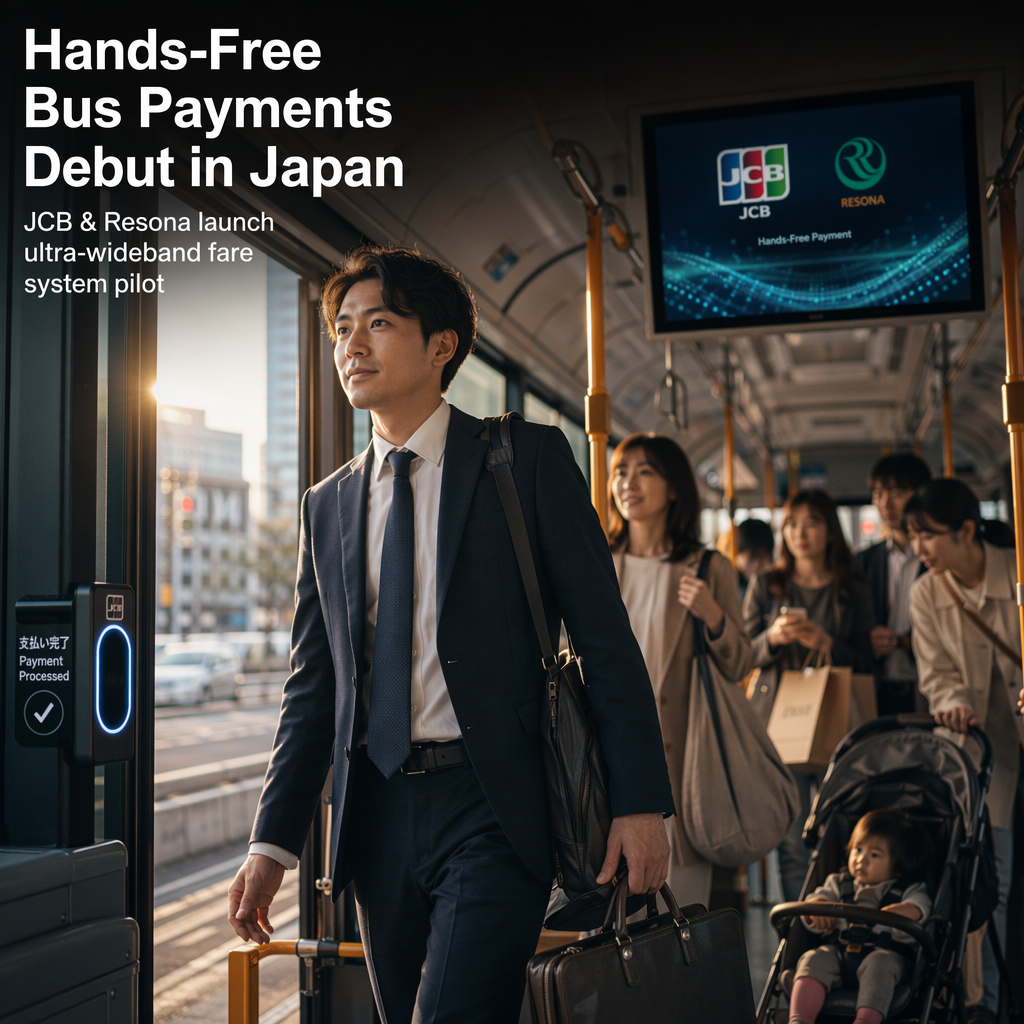
JCB and Resona Holdings are collaborating to develop a hands-free payment system for buses in Japan, with plans to begin testing the technology as early as this fall [1]. The system will utilize ultra-wideband technology, enabling passengers to board and exit buses without the need to tap their phones or cards, thereby streamlining the fare payment process [1]. This innovation is particularly aimed at enhancing convenience for riders carrying baggage and is expected to improve the overall public transportation experience [1].
The initiative comes amid intensifying competition among financial and transportation companies to introduce advanced payment solutions in Japan [1]. By leveraging hands-free technology, JCB and Resona seek to establish themselves as leaders in next-generation payments and potentially reshape commuter interactions with public transport [1]. The move is anticipated to reduce friction in fare payments and encourage broader adoption of cashless payment methods [1].
While the article does not provide specific financial figures, market reactions, or analyst opinions, it highlights the strategic intent of JCB and Resona to gain a dominant position in the evolving payments landscape [1].
CONCLUSION
JCB and Resona Holdings are set to pilot a hands-free bus fare payment system using ultra-wideband technology, aiming to enhance convenience and drive cashless adoption in Japan. The initiative positions both companies at the forefront of next-generation payment solutions, with potential implications for the broader transportation and financial sectors.