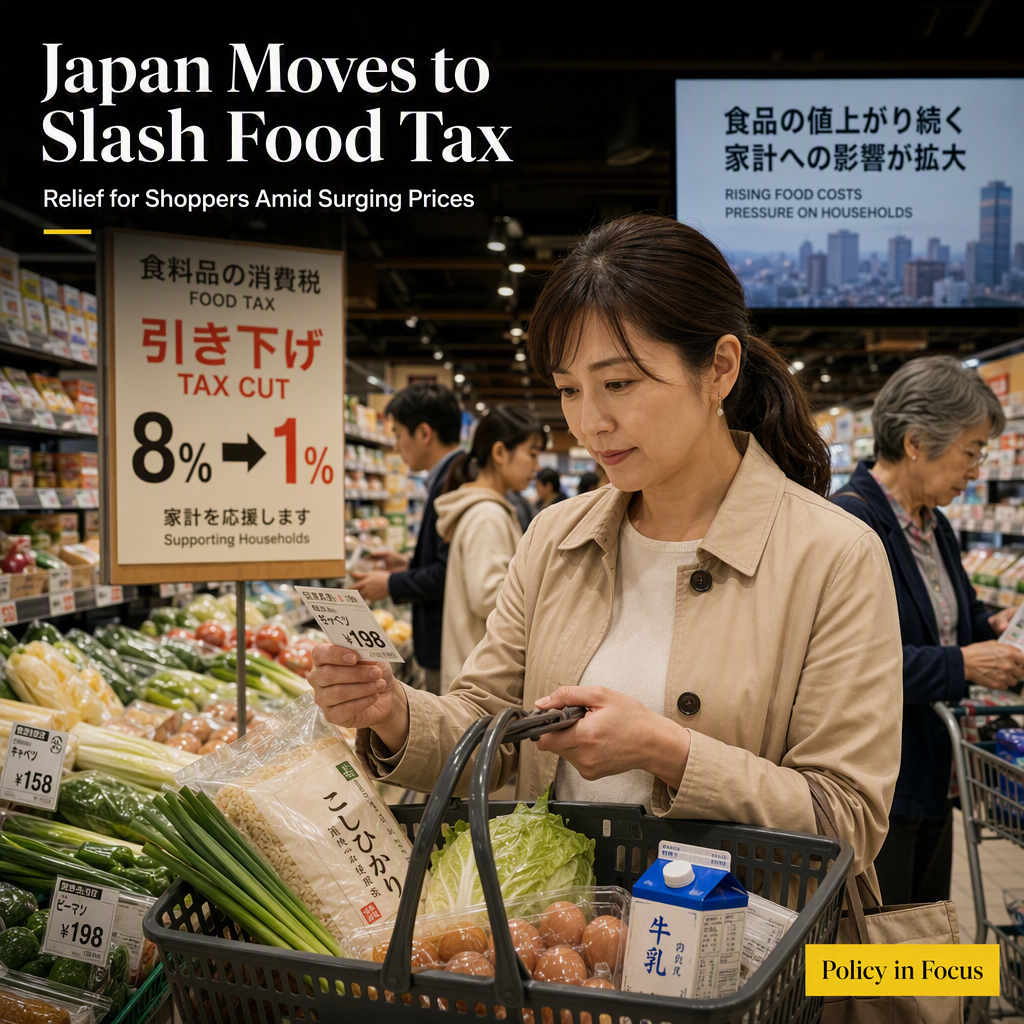
Japan's ruling Liberal Democratic Party (LDP) has moved a step closer to implementing a significant reduction in the consumption tax on food, with key party committees approving a proposal to cut the rate from 8% to 1% for two years starting in April [1]. This initiative is intended to provide temporary relief to households facing rising food prices and persistent inflation, fulfilling a major campaign pledge by the LDP [1].
The proposed tax cut is expected to create an approximately $30 billion funding gap, prompting concerns among some ruling party members about the absence of a clear plan to offset the lost revenue [1]. Lawmakers and government officials are actively discussing potential sources of revenue or spending cuts to address this shortfall, but no definitive solution has been presented [1].
Despite fiscal uncertainties, proponents within the LDP argue that the tax reduction is essential for supporting consumers and maintaining public trust in the party's promises, especially as food prices continue to climb [1]. The proposal has now advanced to the next stage of parliamentary deliberation, where further debate is anticipated regarding its fiscal implications and implementation details [1].
CONCLUSION
Japan's ruling party is pushing forward with a major food tax cut to support consumers amid inflation, but the plan faces scrutiny over its fiscal sustainability. The outcome of upcoming parliamentary debates will be crucial in determining how the government addresses the projected $30 billion funding gap.