
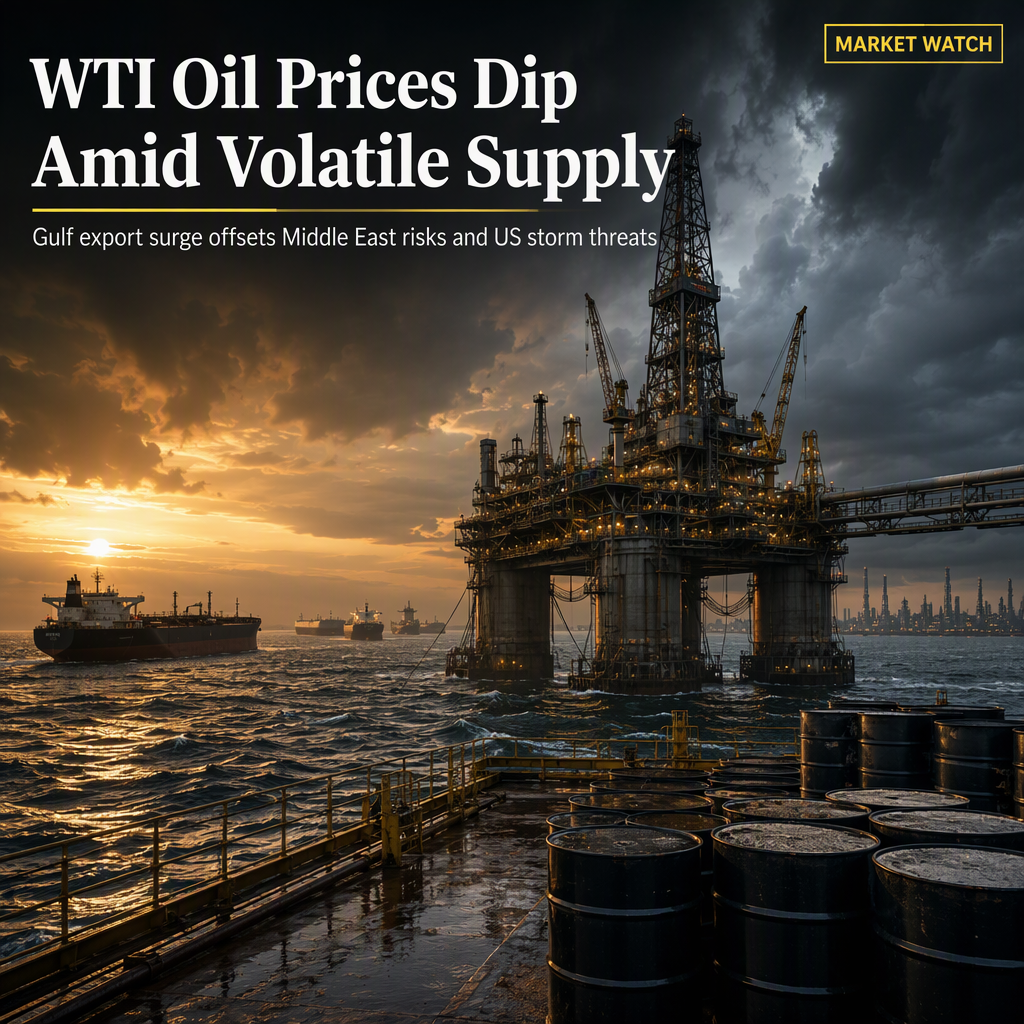
West Texas Intermediate (WTI) oil prices declined, trading around $89.00 per barrel during European hours on Wednesday, after initially paring daily gains. The drop in crude prices was attributed to increased Gulf exports, which counterbalanced ongoing supply risks from the Middle East conflict and concerns over a developing storm in the United States. ING commodity strategists noted that the market remains nervous due to continued attacks on ships, which keep Middle East supply risks significant [1].
Saudi Arabia’s Energy Minister, Prince Abdulaziz bin Salman, confirmed that the country’s East-West pipeline expanded its flows to 5.8 million barrels per day. The head of Vitol reported that approximately 12 million barrels per day of crude and 2 million barrels per day of refined products have successfully departed the Middle East over the past 7 to 10 days. Danske Bank analysts, citing Reuters, highlighted a marked recovery in Middle East crude exports, with shipments rising to around 19 million barrels per day in September—up by 4 million barrels per day compared to August and reaching roughly three quarters of pre-war levels, with Saudi Arabia driving most of the rebound. This export increase has supported the recent stabilization in Brent prices after a brief dip below $100, despite ongoing market concerns about regional energy flows [1].
In response to global market pressures, the International Energy Agency's (IEA) governing board scheduled an informal meeting for Wednesday to discuss a proposed release of oil and diesel stockpiles, following preliminary talks among European Union diplomats. This follows a G7 agreement last week to release 100 million barrels of crude and diesel after President Donald Trump warned that not releasing reserves could prompt a US export ban on diesel [1].
Potential supply interruptions in North America remain a risk, as national forecasters warned that a weather system forming in the Gulf of Mexico is expected to intensify into the Atlantic’s first hurricane of 2026 within 48 hours, threatening US offshore oil and gas infrastructure. The US Energy Information Administration (EIA) raised its oil price forecasts for this year and next, citing rapidly declining global inventories, tight diesel markets amid the ongoing Iran war, and recent attacks on Saudi infrastructure as factors highlighting persistent threats to physical energy flows [1].
CONCLUSION
WTI oil prices are currently under pressure from a recovery in Gulf exports, which is offsetting persistent supply risks from the Middle East and potential US storm disruptions. Market sentiment remains cautious, with ongoing geopolitical tensions and weather threats keeping volatility elevated. Forward-looking statements from the EIA and IEA indicate continued market vigilance and the potential for further strategic reserve releases.