
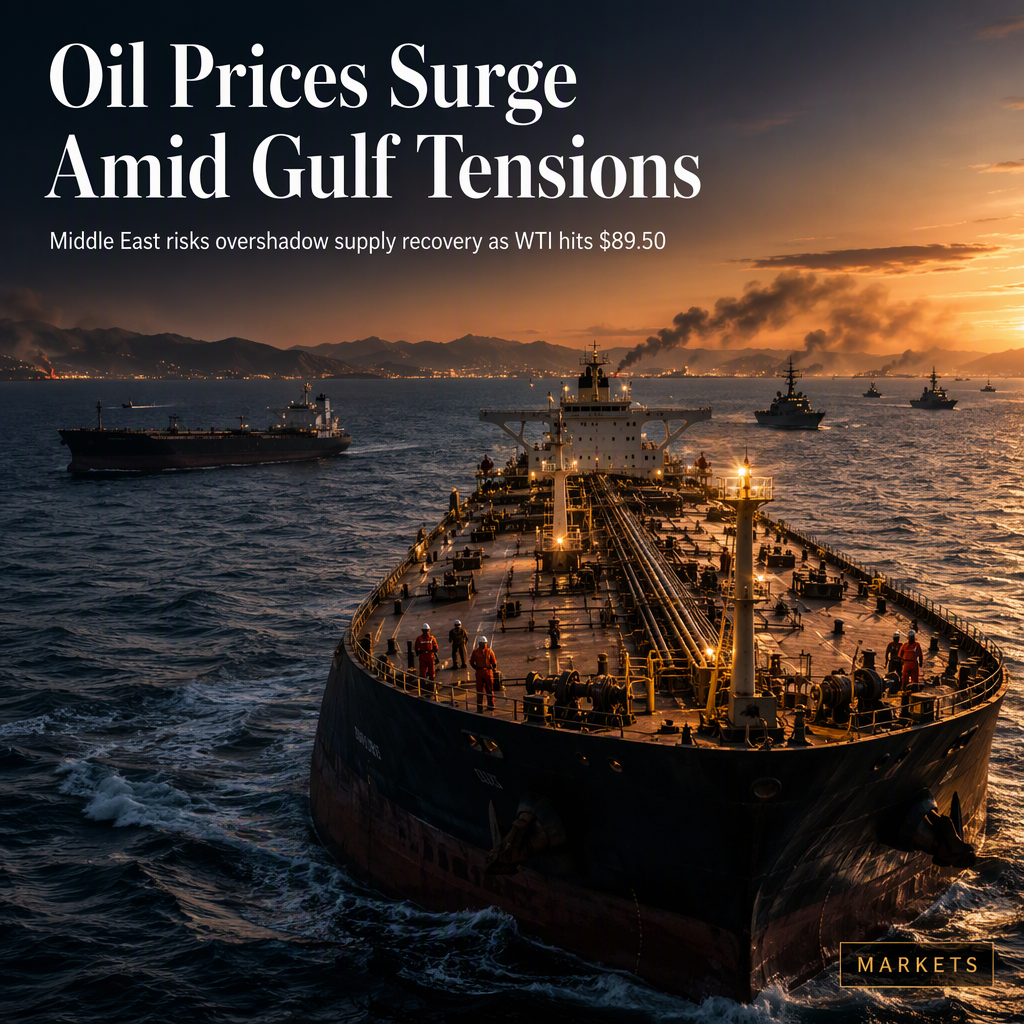
West Texas Intermediate (WTI) oil prices extended gains for the second consecutive day, trading around $89.50 per barrel during Asian hours on Wednesday [1]. The rise in crude oil prices was primarily driven by persistent risks to Middle East energy flows, which overshadowed signs of increasing supply from the region [1].
Recent escalations include Iran intensifying attacks on tankers in the Strait of Hormuz, with the UK Maritime Trade Operations reporting nine incidents so far this month [1]. Additionally, a Saudi-led coalition intercepted and destroyed a ballistic missile launched by the Houthis toward Khamis Mushait in Saudi Arabia [1]. These developments have contributed to heightened concerns over energy security and supply disruptions in the region.
Despite these risks, the upward momentum in oil prices may be limited as energy flows from the Persian Gulf show signs of recovery. Tankers are discreetly passing through the Strait of Hormuz despite the increased risks, and Saudi Arabia’s East-West oil pipeline has restored its crude pumping capacity to 5.8 million barrels per day [1].
According to TD Securities, while crude oil is being weighed down by increasing flows, these additional barrels are being absorbed by both higher demand and ongoing disruptions linked to Iranian and Houthi activity. This dynamic is leaving the broader balance for crude benchmarks tighter than headline flow data alone might suggest [1].
CONCLUSION
WTI oil prices are being supported by ongoing geopolitical risks in the Middle East, despite signs of supply recovery from the Persian Gulf. The market remains tightly balanced as increased supply is offset by stronger demand and persistent regional disruptions. Investors are closely monitoring developments for further impact on oil prices.